Research Instruments and Research Hypotheses (Coursera)

Research Instruments and Research Hypotheses (Coursera)

This course concentrates on the design and development of different research instruments. In this vein, the focus will be placed on the development of an instrument design strategy, scales of measurement and the components of the research report. The course begins by looking at the questionnaire development process with a focus on questionnaire design, question type and wording, pretesting and revising.

Class Deals by MOOC List - Click here and see Coursera's Active Discounts, Deals, and Promo Codes.

We will consider the identification of scales of measurement and operationalisation, and the design of an online questionnaire. We are going to discuss sources of measurement differences, and the assessment of the reliability of measurements. The issue of the validity of measurements and the various types of validity will also be explored, as well as attitude measurement. We will discuss data preparation and processing, data coding, adjustment, and data analysis using multivariate data approaches. We are also going to explore frequency distribution and measures of location, variability and shape. The course ends with a discussion on hypothesis testing and the use of statistics relevant to cross-tabulations. We will discuss parametric and non-parametric tests in hypothesis testing and group comparison as well as the different sections of the research report.
Course 3 of 4 in the Market Research Specialization.

What You Will Learn

  • Develop an instrument design strategy
  • Design and use research instruments
  • Reflect on basic data analysis approaches

Syllabus

Week 1
This week focuses on the questionnaire development process with a focus on questionnaire design, question type and wording, pretesting and revising. The week ends with a discussion regarding identification of scales of measurement and operationalisation and design of an online questionnaire.

Week 2
The week commences with a discussion on sources of measurement differences, and the assessment of reliability of measurements. The issue of validity of measurements is discussed and the various types of validity are discussed. The week ends with a discussion of attitude measurement.

Week 3
The week commences with a discussion on data preparation and processing. We are going to discuss data coding, adjustment, and data analysis using multivariate data approaches. The week ends with an exploration of frequency distribution and measures of location, variability and shape.

Week 4
The week commences with a discussion on hypothesis testing and the use of statistics relevant to cross tabulations. We will discuss parametric and non-parametric tests in hypothesis testing and group comparison. The week ends with an exploration of the different sections of the research report.


Go to Class
MOOC List is learner-supported. When you buy through links on our site, we may earn an affiliate commission.

Related Courses

Data-Driven Decisions with Power BI (Coursera) Coursera
Knowledge Accelerators

Data-Driven Decisions with Power BI (Coursera)

New Power BI users will begin the course by gaining a conceptual understanding of the Power BI desktop application and the Power BI service. Learners will explore the Power BI interface while learning how to manage pages and understand the basics of visualizations. Learners will engage in numerous hands-on experiences to discover how to import, connect, clean, transform, and model their own data in the Power BI desktop application.

Oct 12th 2026
5-12 Weeks
Pre-MBA Statistics (Coursera) Coursera
Indian Institute of Management Ahmedabad (IIMA)

Pre-MBA Statistics (Coursera)

Welcome to the Pre-MBA Statistics course! By the end of this course, you will be able to describe how statistics can be used to summarize, analyze, and interpret data. This course introduces you to some aspects of descriptive and inferential statistics. You will learn to distinguish between various data types and describe the operations that you can execute with each type of data and the right tools to use.

Oct 12th 2026
5-12 Weeks
Redes Ecológicas (Coursera) Coursera
Universidade de São Paulo, Brasil

Redes Ecológicas (Coursera)

Todos os seres vivos estão conectados entre si por interações ecológicas, formando a “colina emaranhada” de Darwin, metáfora inspirada pela “teia da vida” de Humboldt. Desemaranhar essa complexidade é uma tarefa desafiadora, mas factível, desde que você use ferramentas adequadas. A ciência de redes nos ajuda com excelentes ferramentas conceituais e operacionais.

Oct 12th 2026
4 Weeks
Matrix Methods (Coursera) Coursera
University of Minnesota

Matrix Methods (Coursera)

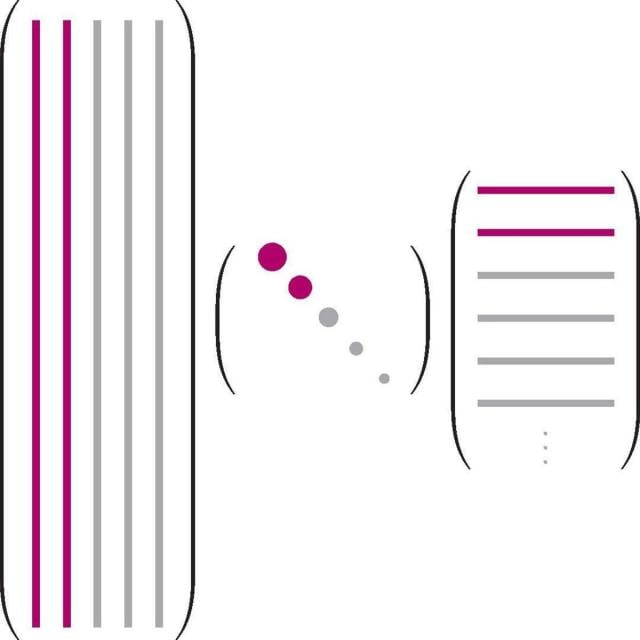
Mathematical Matrix Methods lie at the root of most methods of machine learning and data analysis of tabular data. Learn the basics of Matrix Methods, including matrix-matrix multiplication, solving linear equations, orthogonality, and best least squares approximation. Discover the Singular Value Decomposition that plays a fundamental role in dimensionality reduction, Principal Component Analysis, and noise reduction.

Oct 12th 2026
5-12 Weeks
Introduction to PySpark (Coursera) Coursera
Edureka

Introduction to PySpark (Coursera)

Welcome to Introduction to PySpark, a short course strategically crafted to empower you with the skills needed to assess the concepts of Big Data Management and efficiently perform data analysis using PySpark. Throughout this short course, you will acquire the expertise to perform data processing with PySpark, enabling you to efficiently handle large-scale datasets, conduct advanced analytics, and derive valuable insights from diverse data sources.

Oct 12th 2026
1 Week
Analytics in Healthcare Management and Administration (Coursera) Coursera
Northeastern University

Analytics in Healthcare Management and Administration (Coursera)

This course is the continuation of Healthcare Analytics Essentials . If you have not yet taken the Healthcare Analytics Essentials course, it is recommended that you complete that course prior to this course. The foundational knowledge to support the project are carried through in this deeper dive into using healthcare analytics in management and administration.

Oct 12th 2026
4 Weeks
Earth Economics (Coursera) Coursera
Erasmus University Rotterdam

Earth Economics (Coursera)

After this course you will be an Earth Economist that can provide evidence-based advise on the best global policy. As an Earth Economist you will better understand the behavior and advice of economists, have become a better economist yourself and know where to find Earth's data and how to analyze these world observations. Our planet is too important: we need you to get engaged!

Oct 12th 2026
5-12 Weeks
Structural Equation Model and its Applications | 结构方程模型及其应用 (普通话) (Coursera) Coursera
The Chinese University of Hong Kong

Structural Equation Model and its Applications | 结构方程模型及其应用 (普通话) (Coursera)

在社会学、心理学、教育学、经济学、管理学、市场学等研究领域的数据分析中,结构方程建模是当前最前沿的统计方法中应用最广、研究最多的一个。它包含了方差分析、回归分析、路径分析和因子分析,弥补了传统回归分析和因子分析的不足,可以分析多因多果的联系、潜变量的关系,

Oct 12th 2026
5-12 Weeks