Rehabilitation after COVID-19 (Coursera)

Rehabilitation after COVID-19 (Coursera)

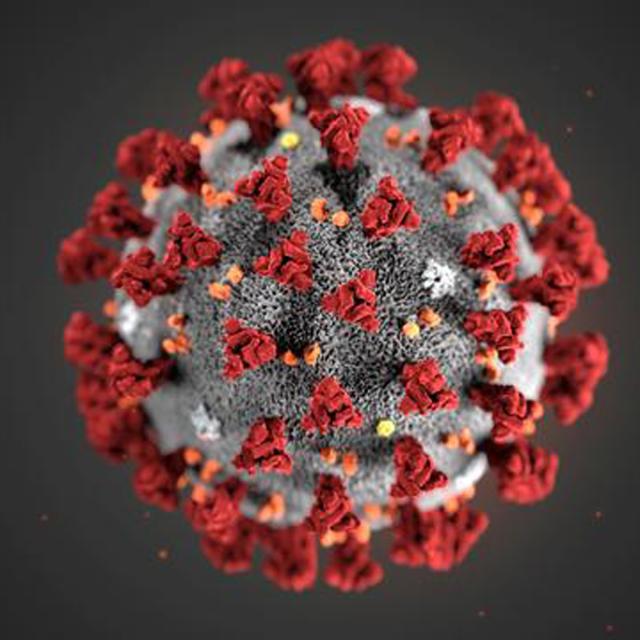
COVID-19 (Corona Virus Disease 2019) has significantly resulted in a large number of medical, social and psychological consequences. After COVID-19 disease people can experience a variety of problems with normal functioning and will require rehabilitation services to overcome these problems.

Class Deals by MOOC List - Click here and see Coursera's Active Discounts, Deals, and Promo Codes.

This course includes recommendations from the multidisciplinary expert team for evidence-based interventions for adults. It is designed for healthcare professionals who may have relatively limited understanding of rehabilitation – the process, the interventions, and its positive impact. It is also relevant to patients and their families. By the end of the course you will receive crucial knowledge necessary to provide safe, effective quality rehabilitation after COVID-19.

What You Will Learn

  • You'll receive crucial knowledge about the direct (physical) and indirect (psychological and social) effects associated with COVID-19
  • You'll learn to provide basic medical and psychological rehabilitation for people who are recovering from COVID-19 and/or suffering from COVID-stress
  • You'll learn to recognize factors that contribute to mental and physical well-being and get control over them

Syllabus

WEEK 1
The Science Of SARS-CoV-2
This module covers several topics associated with COVID-19 origins, clinical signs and symptoms, transmission, course, treatment and prognosis.

WEEK 2
Medical Rehabilitation
This module provides basic medical rehabilitation techniques and advise to improve physical state after COVID-19 disease.

WEEK 3
COVID-19 Stress and Adaptation
This module outlines significant factors associated with rehabilitation for COVID-19 patients and strategies to address risks.

WEEK 4
Managing Emotional Impairments
This module provides advice on strategies to help patients and their families manage emotional impairment. As well as detect alarming symptoms requiring immediate special assistance.

WEEK 5
Managing Cognitive Impairments And Behavioral
This module describes factors that contribute to mental and physical well-being. It highlights cognitive problems common for people after recovery and proposes techniques to asses and improve cognitive functioning. Evidence-based techniques to reduce behavioral impairments are provided.
Go to Class
MOOC List is learner-supported. When you buy through links on our site, we may earn an affiliate commission.

Related Courses

Rastreamento de contato da COVID-19 (Coursera) Coursera
Johns Hopkins University

Rastreamento de contato da COVID-19 (Coursera)

A crise da COVID-19 criou uma necessidade sem precedentes de rastreamento de contato em todo o país, exigindo que milhares de pessoas aprendessem rapidamente as principais habilidades. As qualificações para os cargos de rastreamento de contato diferem em todo o país e no mundo, com alguns novos cargos abertos a indivíduos com diploma de ensino médio ou equivalente.

Jun 1st 2026
1 Week
Easing Physical Symptoms: It's Not Just Hospice Anymore (Coursera) Coursera
University of Colorado System

Easing Physical Symptoms: It's Not Just Hospice Anymore (Coursera)

Palliative care provides important support for people living with serious or life-limiting illnesses and their family caregivers. In this course, you will learn to use symptom assessment tools to better understand which symptoms are present and which are most distressing. In subsequent weeks you will learn about some of the most common and distressing symptoms such as anorexia (loss of appetite), dyspnea (shortness of breath), fatigue (weakness), delirium(confusion) and constipation and nausea/vomiting.

May 25th 2026
5-12 Weeks
Introduction to Digital health (Coursera) Coursera
Imperial College London

Introduction to Digital health (Coursera)

This course introduces the field of digital health and the key concepts and definitions in this emerging field. The key topics include Learning Health Systems and Electronic Health Records and various types of digital health technologies to include mobile applications, wearable technologies, health information systems, telehealth, telemedicine, machine learning, artificial intelligence and big data. These technologies are assessed in terms of the key opportunities and challenges to their use and the evidence of their effectiveness in the field of digital health in relation to public health and healthcare globally. The use and application of digital health for COVID-19 forms a case study demonstrating the use of different types of digital health technologies to address key aspects of the response to the virus globally.

Jun 1st 2026
4 Weeks
Lecture Series for Preventing and Controlling COVID-19 (Coursera) Coursera
Xi'an Jiaotong University

Lecture Series for Preventing and Controlling COVID-19 (Coursera)

In December 2019, a cluster of patients with pneumonia of unknown cause appeared in Wuhan, Hubei. Governments at all levels and Department of Health Administration highly valued and rapidly organized the centers for Disease Control and Prevention (CDC), medical institutions, and scientific research academies to conduct a survey, rescue, and collaborative research. This new antigen was quickly identified as a novel coronavirus, named as 2019-nCoV by World Health Organization (WHO).

May 11th 2026
3 Weeks
COVID-19: What You Need to Know (CME Eligible) (Coursera) Coursera
Osmosis

COVID-19: What You Need to Know (CME Eligible) (Coursera)

COVID-19 is a global pandemic that has already resulted in hundreds of thousands of infections and thousands of deaths, with many more anticipated. This course is a go-to resource that will be regularly updated with all of the current information put forth by the CDC, WHO, and other leading agencies and covers the basics, personal protective equipment, diagnostics, and other material.

May 24th 2026
1 Week
Community Awareness Course: Sexuality and Disability (Coursera) Coursera
University of Minnesota

Community Awareness Course: Sexuality and Disability (Coursera)

This community awareness course from the University of Minnesota Program on Human Sexuality will provide you with a solid introduction to human sexuality for those living with disabilities. Often there are assumptions that the disabled or differently abled people are not sexual, do not have sexual needs, or cannot be involved sexually. In this professionally produced one-hour course, you'll learn about the basics of disabilities and human sexuality.

May 18th 2026
5-12 Weeks
The City and You: Find Your Best Place (Coursera) Coursera
University of Toronto

The City and You: Find Your Best Place (Coursera)

Welcome to The City and You: Find Your Best Place. I'm excited to have you in the class and look forward to your contributions to the other learners in our community. This free course will provide the knowledge and the tools needed to understand what cities do, why they matter, the forces shaping the greatest wave of urbanization in history, and how to pick the right place for you.

Apr 27th 2026
5-12 Weeks
Intro to AR/VR/MR/XR: Technologies, Applications & Issues (Coursera) Coursera
University of Michigan

Intro to AR/VR/MR/XR: Technologies, Applications & Issues (Coursera)

This first course in the XR for Everybody specialization creates a foundational understanding of the differences between AR, VR, MR, and XR. The course provides learners with a broad overview of the rapidly evolving XR space and the tools to characterize future XR developments and assess their potential and limitations. It establishes key concepts and dives into the XR device landscape, helping learners to differentiate current and future platforms and devices as well as critique the use of VR or AR in applications. The course pivots in the second half to look more at how to shape the future of XR, by analyzing trends and raising issues such as COVID-19, social and ethical concerns, accessibility and equity, as well as privacy and security.

May 25th 2026
4 Weeks
Business Models for Innovative Care for Older People (Coursera) Coursera
University of Copenhagen,Copenhagen Business School

Business Models for Innovative Care for Older People (Coursera)

This course will introduce you to healthcare innovation within the field of healthy living and active aging. By following two specific cases on diabetes and rehabilitation, this interdisciplinary course will provide you with key theories, tools and concepts for analyzing and developing viable innovative solutions for aging populations. The lectures will cover demographic, biological, economic, social and cultural aspects of active aging and healthy living, along with lectures on current innovation theories and methods.

May 25th 2026
5-12 Weeks
Strategies for Senior Housing Communities during COVID-19 (Coursera) Coursera
Johns Hopkins University

Strategies for Senior Housing Communities during COVID-19 (Coursera)

SARS-CoV-2, the virus that causes COVID-19, poses a high risk for senior housing communities and the people who live and work there. The COVID-19 response has largely focused on nursing homes, leaving independent living communities serving older adults in the United States with fragmented guidance on how to respond to COVID-19 challenges. This course provides comprehensive instruction and resources for property owners and managers, senior housing staff, service coordinators and providers, community housing leaders, and other senior housing stakeholders to build upon their emergency preparedness and response strategies related to COVID-19. The course lectures, interviews, and assignments are largely geared toward federally-subsidized, multifamily senior housing providers, but the material is relevant for all senior housing providers. **Free enrollment available until December 31, 2021. Valid for one enrollment per person.**

May 25th 2026
1 Week
Reflections from 40 Years Fighting International Epidemics (Coursera) Coursera
Dartmouth College

Reflections from 40 Years Fighting International Epidemics (Coursera)

Reflections on patients, policies, pan-epidemics, prose and medical humanities from a 40-year career fighting epidemics around the world by an infectious disease public health physician. Examples include HIV/AIDS, Anthrax, SARS, MERS, H5N1 and H1N1 influenza, Nipah, Ebola (with MSF 2014), Zika, Plague (with WHO 2017) and COVID-19. Working side-by-side with international colleagues to provide hands-on patient care and to share stories is an expression of medical humanities.

May 11th 2026
5-12 Weeks