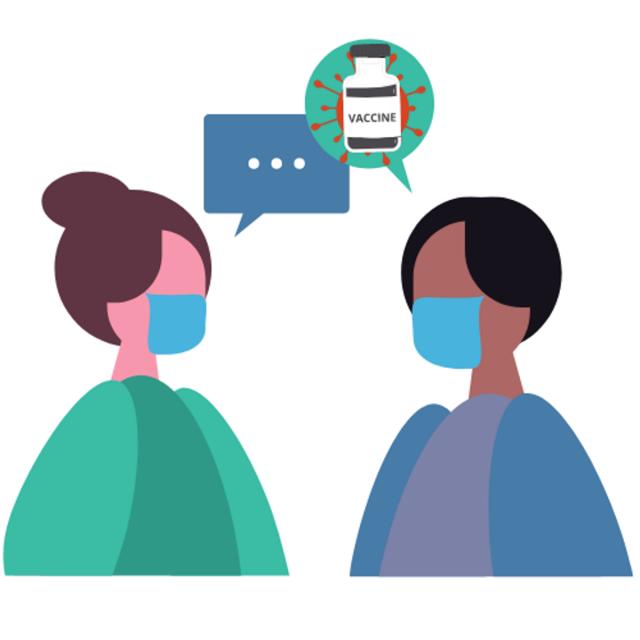
COVID Vaccine Ambassador Training: How to Talk to Parents (Coursera)

COVID Vaccine Ambassador Training: How to Talk to Parents (Coursera)

Vaccination is a key strategy for preventing serious illness and death from COVID-19. COVID-19 vaccines are available for children 5 and older, but many parents have questions about vaccinations. This training course prepares parents of school-age children, PTAs, community members, and school staff to be Vaccine Ambassadors and promote vaccine acceptance in their communities. Free enrollment available until December 31, 2022. Valid for one enrollment per person.

Class Deals by MOOC List - Click here and see Coursera's Active Discounts, Deals, and Promo Codes.

After completing the course, Vaccine Ambassadors will be able to share knowledge about COVID-19 and the COVID-19 vaccine, engage in conversations about vaccine hesitancy in a respectful and empathetic way, and direct people to credible sources for further information about COVID-19 vaccines.

What You Will Learn

  • Share knowledge about COVID-19 and the COVID-19 vaccine.
  • Engage in conversations about vaccine hesitancy in a respectful and empathetic way.
  • Direct people to credible sources for further information about the COVID-19 vaccine.
  • Recognize and respond to misinformation about the COVID-19 vaccine.

Syllabus

WEEK 1
Why are people hesitant about vaccines and how can we effectively communicate with people who are hesitant?
This module will review vaccine hesitancy including some of the most common reasons individuals are hesitant, and why scientific facts are not enough to reduce hesitancy. Next, we will focus on effective communication approaches when discussing vaccines with hesitant individuals. Finally, we will discuss the importance of building trust and using empathy in communication.
What is the immune system and what is the SARS CoV-2 virus?
In this module we will cover some of the basics of the human immune system. We will also will share a general overview of the SARS CoV-2 virus including transmission, impacts, and prevention.
What are vaccines, how are they developed, and which COVID-19 vaccines will be distributed in the US?
In this module we will cover some of the basics of vaccines including how vaccines work, common misconceptions, vaccine regulation and development, and the emergency use authorization (EUA) process. This section will also cover the safety and efficacy of COVID-19 vaccines.
How to spot and respond to misinformation online
In this module we will cover some of the basics of misinformation including different types of misinformation and why individuals create misleading news content. We will also focus on how to identify misinformation and common COVID-19 myths and misconceptions. Lastly, we will discuss effective ways to respond to misinformation about COVID-19 vaccines.
Vaccines for 5-11 year olds
This module will address concerns for vaccinating the 5-11 year old age group. We will discuss the importance of vaccinating this group for their health and the health of those around them.

Go to Class
MOOC List is learner-supported. When you buy through links on our site, we may earn an affiliate commission.

Related Courses

Water Supply and Sanitation Policy in Developing Countries Part 1: Understanding Complex Problems (Coursera) Coursera
University of Manchester

Water Supply and Sanitation Policy in Developing Countries Part 1: Understanding Complex Problems (Coursera)

Our course explores what can be done to solve the complex problem that half a billion people worldwide do not have improved water supplies and two billion do not have improved sanitation. We look forward to you joining us. We want to help you develop the skills you need to address this major global challenge of the 21st century.

Sep 28th 2026
5-12 Weeks
Manejo del enfermo semicrítico y crítico por COVID-19 (Coursera) Coursera
University of Barcelona

Manejo del enfermo semicrítico y crítico por COVID-19 (Coursera)

Después de realizar este curso serás capaz de conocer los elementos clave del abordaje del paciente crítico y semicrítico por COVID-19, basados en la evidencia científica disponible y que puedan ayudarte en la toma de decisiones clínicas. Curso dirigido a los profesionales de medicina y enfermería, con conocimientos básicos en la atención a pacientes críticos y, que debido a la crisis sanitaria, atienden en las áreas de críticos o semicríticos COVID-19 y/o a estos pacientes fuera de su ubicación habitual.

Oct 5th 2026
5-12 Weeks
The City and You: Find Your Best Place (Coursera) Coursera
University of Toronto

The City and You: Find Your Best Place (Coursera)

Welcome to The City and You: Find Your Best Place. I'm excited to have you in the class and look forward to your contributions to the other learners in our community. This free course will provide the knowledge and the tools needed to understand what cities do, why they matter, the forces shaping the greatest wave of urbanization in history, and how to pick the right place for you.

Oct 12th 2026
5-12 Weeks
Essentials of Global Health (Coursera) Coursera
Yale University

Essentials of Global Health (Coursera)

Essentials of Global Health is a comprehensive introduction to global health. It is meant to introduce you to this topic in well-structured, clear and easy to understand ways. Much of the course will focus on five questions: What do people get sick, disabled and die from; Why do they suffer from these conditions? Which people are most affected? Why should we care about such concerns? What can be done to address key health issues, hopefully at least cost, as fast as possible, and in sustainable ways?

Oct 5th 2026
5-12 Weeks
Systems Thinking In Public Health (Coursera) Coursera
Johns Hopkins University

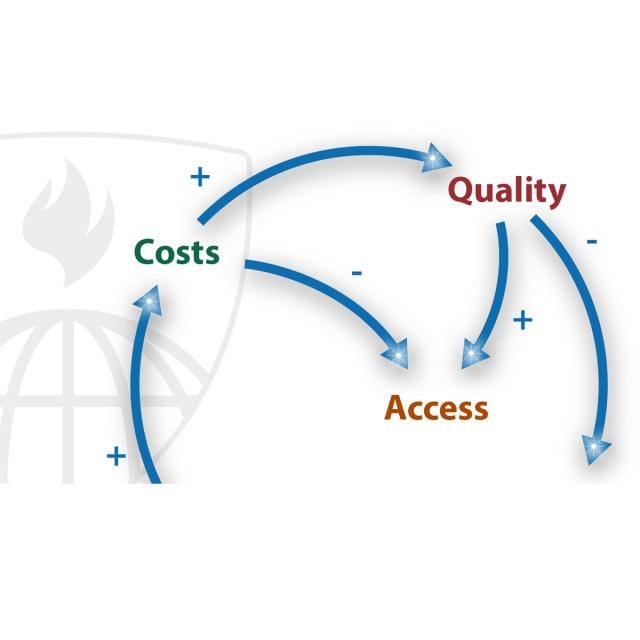
Systems Thinking In Public Health (Coursera)

This course provides an introduction to systems thinking and systems models in public health. Problems in public health and health policy tend to be complex with many actors, institutions and risk factors involved. If an outcome depends on many interacting and adaptive parts and actors the outcome cannot be analyzed or predicted with traditional statistical methods. Systems thinking is a core skill in public health and helps health policymakers build programs and policies that are aware of and prepared for unintended consequences.

Oct 5th 2026
4 Weeks
Global Health Policy (Coursera) Coursera
The University of Tokyo

Global Health Policy (Coursera)

In this course, learners will become familiar with principles and theories of global health problems, and major challenges and controversies in improving global population health as well as practical applications of quantitative methods to analyze and interpret issues and challenges for policy. Topics will include health and foreign policy, health governance, acute disease surveillance, non-communicable diseases, burden of disease, universal health coverage, health systems strengthening, health financing, and human resources for health and ageing.

Oct 5th 2026
4 Weeks
Major Depression in the Population: A Public Health Approach (Coursera) Coursera
Johns Hopkins University

Major Depression in the Population: A Public Health Approach (Coursera)

Public Mental Health is the application of the principles of medicine and social science to prevent the occurrence of mental and behavioral disorders and to promote mental health of the population. This course illustrates the principles of public health applied to depressive disorder, including principles of epidemiology, transcultural psychiatry, health services research, and prevention. It is predicted that by 2020 depressive disorder will be the most important cause of disease burden in the entire world! Every human being suffers from feeling depressed at some point or other, but only about one fifth of the population will experience an episode of depressive disorder over the course of their lives.

Sep 28th 2026
5-12 Weeks
Life After COVID-19: Get Ready for our Post-Pandemic Future (Coursera) Coursera
Institute for the Future

Life After COVID-19: Get Ready for our Post-Pandemic Future (Coursera)

The pandemic will create long-lasting and surprising ripple effects, even after vaccines are widely available. Are you ready for what's next? This course will give you a clear forecast of the challenges and opportunities you’re most likely to encounter over the next 3-5 years, as a direct result of the ongoing COVID-19 pandemic. Find out what risks still lie ahead; Make a plan for resilience; Play future forecasting games to stretch your imagination about what's possible; Build your post-pandemic confidence; Envision the world you want to live in when we’re all finally on the other side of COVID-19. How can you take advantage of this unprecedented moment of disruption to make positive change in your community, company or other organization?

Sep 28th 2026
4 Weeks
Communicating During Global Emergencies (Coursera) Coursera
Emory University

Communicating During Global Emergencies (Coursera)

In collaboration with the Rollins School of Public Health and the CDC's Division of Global Health Protection, Emergency Response, and Recovery Branch, this course introduces basic concepts and principles of communicating during a global crisis or emergency. It explores why communication during an emergency is different and the importance of adapting emergency messages to the needs of affected populations.

Oct 5th 2026
3 Weeks
Inclusión social de personas con discapacidad desde un enfoque de derechos (Coursera) Coursera
Universidad de Chile

Inclusión social de personas con discapacidad desde un enfoque de derechos (Coursera)

La OMS en el año 2011 publicó el Informe Mundial sobre la Discapacidad, en el cual se evidencia un aumento en la prevalencia de discapacidad de un 15% (anteriormente se estimaba entre un 7 y un 10% de la población). Las personas que viven en situación de discapacidad presentan mayores niveles de deprivación en diferentes ámbitos: inserción al mercado del trabajo, nivel educacional, etc.

Sep 28th 2026
5-12 Weeks
Lecture Series for Preventing and Controlling COVID-19 (Coursera) Coursera
Xi'an Jiaotong University

Lecture Series for Preventing and Controlling COVID-19 (Coursera)

In December 2019, a cluster of patients with pneumonia of unknown cause appeared in Wuhan, Hubei. Governments at all levels and Department of Health Administration highly valued and rapidly organized the centers for Disease Control and Prevention (CDC), medical institutions, and scientific research academies to conduct a survey, rescue, and collaborative research. This new antigen was quickly identified as a novel coronavirus, named as 2019-nCoV by World Health Organization (WHO).

Sep 28th 2026
3 Weeks
Tratando los síntomas urinarios por HPB (Coursera) Coursera
Universidad de los Andes

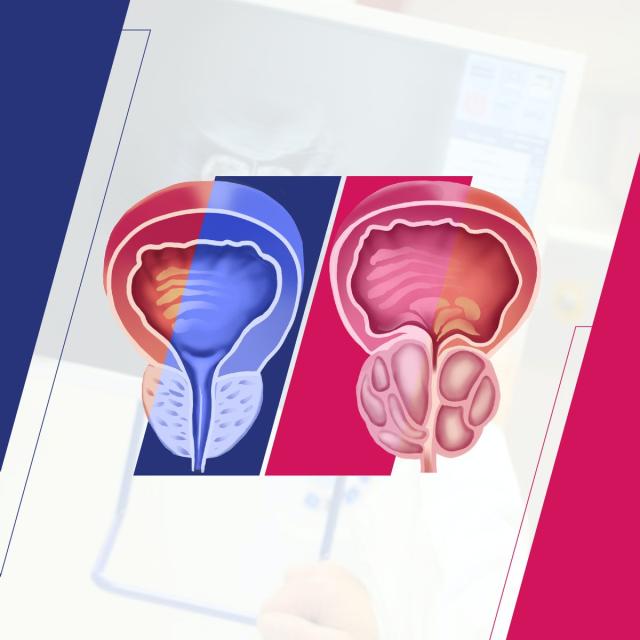
Tratando los síntomas urinarios por HPB (Coursera)

El curso Tratando los síntomas urinarios por Hiperplasia Prostática Benigna (HPB) es un curso completamente integral en donde se abordarán todos los aspectos necesarios para entender la frecuencia de los síntomas en nuestra sociedad, la necesidad que tienen los pacientes para buscar ayuda en una patología que afecta mucho la calidad de vida.

Oct 5th 2026
4 Weeks