Responsible Reporting on Suicide for Journalists (Coursera)

Responsible Reporting on Suicide for Journalists (Coursera)

Responsible Reporting on Suicide for Journalists is designed to give working journalists and students who are interested in the field an understanding of how news media can impact suicide trends and how that power can be used to improve public health. An extensive body of research shows that certain methods of reporting on suicide deaths can increase the number of subsequent suicides among the public. Conversely, responsible methods of reporting on suicide can increase the likelihood of people seeking help.

Class Deals by MOOC List - Click here and see Coursera's Active Discounts, Deals, and Promo Codes.

The World Health Organization and the Centers for Disease Control and Prevention have both identified responsible suicide reporting among the media as a key mechanism for suicide prevention. This course aims to give journalists the concrete tools they need to fulfill that goal and make a positive public health impact with their reporting.

Syllabus

WEEK 1
Suicide as a Global Public Health Issue
How Media Reports Can Affect Suicide Trends
Applying Suicide Reporting Guidelines in the Field


Go to Class
MOOC List is learner-supported. When you buy through links on our site, we may earn an affiliate commission.

Related Courses

Become a Peer Sponsor: Intro to Military Transition Support (Coursera) Coursera
Columbia University

Become a Peer Sponsor: Intro to Military Transition Support (Coursera)

The Department of Veterans Affairs’ Veteran Sponsorship Initiative (VSI) provides manualized, certification training to individuals interested in supporting service members and veterans as they transition from military service. The VSI is an evidence-based program designed to reduce transition stressors by matching service members with a community-based sponsor who helps them rejoin their civilian communities by assisting with housing, employment, educational opportunities, and access to mental health support.

Oct 5th 2026
5-12 Weeks
Breastfeeding: Public Health Perspectives (Coursera) Coursera
University of Michigan

Breastfeeding: Public Health Perspectives (Coursera)

Engaging in this course will provide you with the opportunity to think about breastfeeding and its public health implications. The Socio-Ecological Model will be the framework of the course as we think about how each level of the Model (individual, interpersonal, community, organizational, and public policy) impacts breastfeeding practices in the United States, and globally.

Sep 28th 2026
4 Weeks
Health Across the Gender Spectrum (Coursera) Coursera
Stanford University

Health Across the Gender Spectrum (Coursera)

This course offers an intimate, story-based introduction to the experiences of six transgender children and their families. Through illustrated stories and short teaching videos, learners will gain a better understanding of gender identity and the gender spectrum. Stanford physicians, K-12 educators, and transgender faculty members offer practical tips for parents, teachers, healthcare providers and anyone who wants to help create a more gender-expansive environment - one in which all people can live authentically. As a global community of unique individuals, we can begin to build a world that is ready to nurture and love each and every child.

Sep 28th 2026
3 Weeks
The New Nordic Diet - from Gastronomy to Health (Coursera) Coursera
University of Copenhagen

The New Nordic Diet - from Gastronomy to Health (Coursera)

The New Nordic Diet is a new food culture developed in 2009-13 with key emphasis on gastronomy, health, and environment. Major research in its effect on acceptability, behaviour and learning skills, and disease prevention have been conducted by the OPUS centre at the University of Copenhagen and the people behind the award-winning restaurant Noma in Copenhagen. This course will give the participants the opportunity to experience a healthy and palatable new food and eating concept diet “The New Nordic Diet” and an understanding of how food and diets can affect mental and physical health and ensure the foundation for a healthier life style for future generations with a regional based diet and food culture.

Sep 28th 2026
5-12 Weeks
Public Health in Humanitarian Crises 1 (Coursera) Coursera
Johns Hopkins University

Public Health in Humanitarian Crises 1 (Coursera)

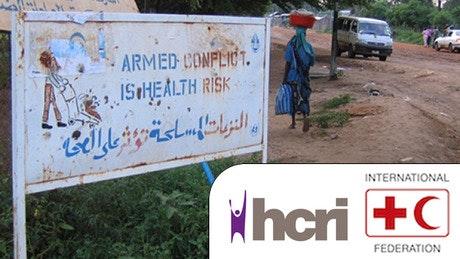
This course, Public Health in Humanitarian Crises 1, introduces discussions about the public health approach to problems experienced by people affected by disasters, both natural and related to conflict. The course discusses the many changes which occur in people’s lives when they are uprooted by a disaster, ranging from changes in disease patterns, access to health care, livelihoods, shelter, sanitary conditions, nutritional status, etceteras. We will explore what humanitarian interventions could look like if we want to mitigate the effects of disasters. The course content is a mix of theoretical knowledge and many practical examples from recent disasters. We think this course is unique because it contains so many practical ‘real-life’ examples and is taught by instructors and guest lecturers who together have over 200 years of experience in this field.

Sep 28th 2026
5-12 Weeks
Journalism, the future, and you! (Coursera) Coursera
Michigan State University

Journalism, the future, and you! (Coursera)

You will learn about the career paths that are available in journalism, and what opportunities the skill sets of a journalist can offer in other fields. You will explore areas such as being an international correspondent, self-publishing in journalism, as well as how to freelance in the field. You will be empowered to develop your own path in journalism, from being an active and informed consumer, to being a journalist.

Sep 28th 2026
5-12 Weeks
HI-FIVE: Health Informatics For Innovation, Value & Enrichment (Clinical Perspective) (Coursera) Coursera
Columbia University

HI-FIVE: Health Informatics For Innovation, Value & Enrichment (Clinical Perspective) (Coursera)

HI-FIVE (Health Informatics For Innovation, Value & Enrichment) Training is a 12-hour online course designed by Columbia University in 2016, with sponsorship from the Office of the National Coordinator for Health Information Technology (ONC). The training is role-based and uses case scenarios. Also, it has additional, optional modules on other topics of interest or relevance. Although we suggest to complete the course within a month's timeframe, the course is self-paced and so you can start and finish the course at anytime during a month's time period. No additional hardware or software are required for this course.

Sep 28th 2026
4 Weeks
Compreendendo o Zika e doenças emergentes (Coursera) Coursera
Universidade de São Paulo, Brasil

Compreendendo o Zika e doenças emergentes (Coursera)

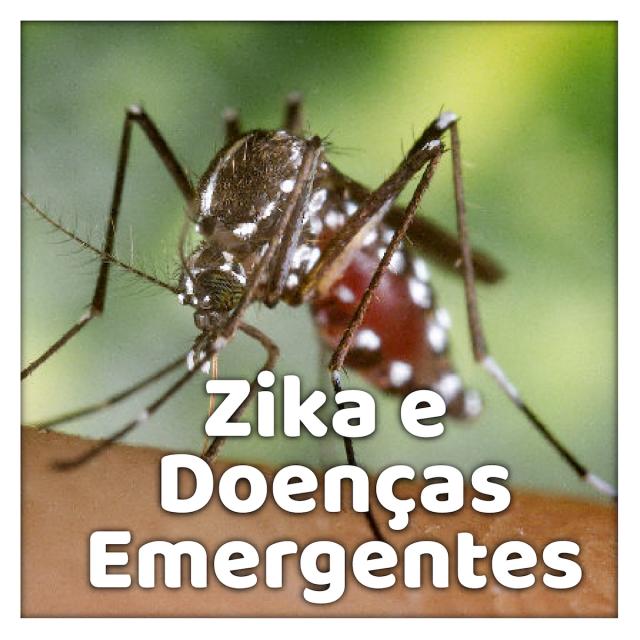
Através deste curso você vai saber porque tantas doenças que surgiram atualmente (doenças emergentes) são causadas por vírus, como elas surgem e se espalham. Veremos como vírus causadores de doenças entram em contato com o ser humano e como se espalham, principalmente aqueles transmitidos por mosquitos, como os vírus da Dengue e Zika.

Oct 5th 2026
5-12 Weeks
Data and Health Indicators in Public Health Practice (Coursera) Coursera
Johns Hopkins University

Data and Health Indicators in Public Health Practice (Coursera)

Epidemiology is often described as the cornerstone science in public health. Epidemiology in public health practice uses study design and analyses to identify causes in an outbreak situation, guides interventions to improve population health, and evaluates programs and policies. In this course, we'll define the role of the professional epidemiologist as it relates to public health services, functions, and competencies. With that foundation in mind, we'll introduce you to the problem solving methodology and demonstrate how it can be used in a wide variety of settings to identify problems, propose solutions, and evaluate interventions.

Oct 5th 2026
4 Weeks