COVID-19 Contact Tracing (Coursera)

COVID-19 Contact Tracing (Coursera)

The COVID-19 crisis has created an unprecedented need for contact tracing across the country, requiring thousands of people to learn key skills quickly. The job qualifications for contact tracing positions differ throughout the country and the world, with some new positions open to individuals with a high school diploma or equivalent.

Class Deals by MOOC List - Click here and see Coursera's Active Discounts, Deals, and Promo Codes.

100% off - Original price: €42
Sale price: €0 with 100 percent off
Free enrollment available until December 31, 2021. Valid for one enrollment per person.

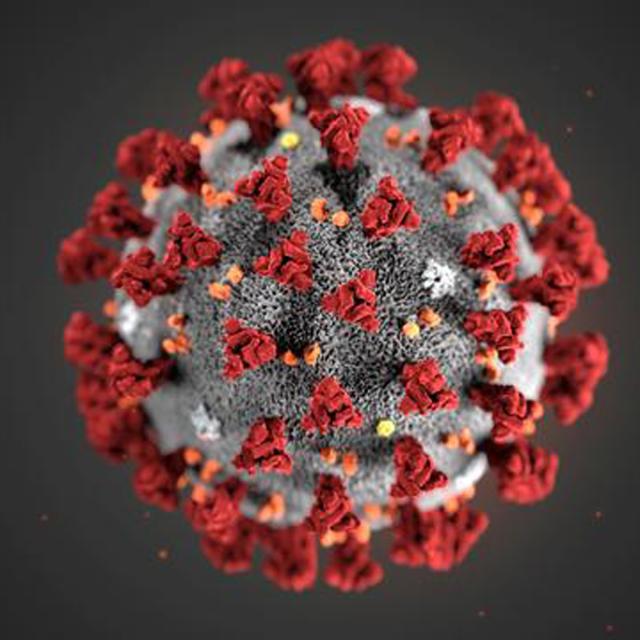
In this introductory course, students will learn about the science of SARS-CoV-2 , including the infectious period, the clinical presentation of COVID-19, and the evidence for how SARS-CoV-2 is transmitted from person-to-person and why contact tracing can be such an effective public health intervention. Students will learn about how contact tracing is done, including how to build rapport with cases, identify their contacts, and support both cases and their contacts to stop transmission in their communities. The course will also cover several important ethical considerations around contact tracing, isolation, and quarantine. Finally, the course will identify some of the most common barriers to contact tracing efforts -- along with strategies to overcome them.

What You Will Learn

  • Describe the natural history of SARS-CoV-2 , including the infectious period, the presentation of COVID-19, and evidence for how it is transmitted.
  • Define an infectious contact and timeline for public health intervention through contact tracing.
  • Demonstrate the utility of case investigation and contact tracing, identify common barriers, and possible strategies to overcome them.
  • Present some ethical considerations around contact tracing, isolation and quarantine.

Syllabus

WEEK 1
Basics of COVID-19
In this first module, we'll dig into the science of COVID-19, including what we know about its origins, clinical signs and symptoms, risk factors, diagnosis, transmission, and infectious period.
Basics of Contact Tracing for COVID-19
Now that you've learned about the basics of COVID-19, we'll turn our attention to some of the tools being used to stop the spread: contact tracing, isolation, and quarantine. We'll also show you how what you've already learned about infection and transmission informs the use of these critical public health tools.
Steps to Investigate Cases and Trace Their Contacts
In this module, we'll walk through the steps of the contact tracing process and provide examples. You'll also get to watch demonstrations of basic interactions with a case and and a contact.
Ethics of Contact Tracing and Technological Tools
In this module, you'll learn about the important ethical dimensions of contract tracing, including how we balance the protection of the public's health with limits on personal privacy and autonomy. We'll walk through some specific examples to prepare you for some of the issues contact tracers encounter during the course of their work.
Skills for Effective Communication
Effective communication is the cornerstone of a successful contact tracing interaction. That includes building rapport with cases and contacts, active listening, and asking the right kinds of questions. In this module, you'll watch and read several example interactions that demonstrate both how and how not to conduct yourself as a contact tracer.
Final Assessment (Graded)
Go to Class
MOOC List is learner-supported. When you buy through links on our site, we may earn an affiliate commission.

Related Courses

Managing Supply Chain Disruption During COVID-19 (Coursera) Coursera
University of Illinois at Urbana-Champaign

Managing Supply Chain Disruption During COVID-19 (Coursera)

In this course, you will learn about why and how supply chains become susceptible to a disruption. We will examine this by discussing supply side and demand side issues, primary supply chain flows, complexity, risk management and a combination of solid theoretical supply chain perspectives and current real-world stories. You will learn about the structural, relational and operational factors that come into play during a supply chain disruption and the mechanisms for the effective management of these factors.

Aug 17th 2026
4 Weeks
Virology and Epidemiology in the Time of COVID-19 (Coursera) Coursera
American Museum of Natural History

Virology and Epidemiology in the Time of COVID-19 (Coursera)

This course covers the science and social impacts of viral infectious diseases. We will begin by covering the basics: what a virus is, the structural and functional diversity of viruses, and how viruses use our bodies and the bodies of other organisms to replicate. Then we will dive into the human response: how our immune systems work to protect us from pathogenic viruses and how we use science and social systems to fend off viruses through vaccines and public health measures.

Aug 17th 2026
5-12 Weeks
Foundations of Health Equity Research (Coursera) Coursera
Johns Hopkins University

Foundations of Health Equity Research (Coursera)

Introduces students to the core principles of health equity research. Covers topics such as defining health equity, engaging community and policy stakeholders, patient-centeredness, cultural competence, and dissemination of research findings. Content will recognize different geographic, cultural, and social contexts where health inequities occur.

Aug 17th 2026
5-12 Weeks
GIS Applications Across Industries (Coursera) Coursera
University of California, Davis

GIS Applications Across Industries (Coursera)

Geographic Information Systems (GIS) is becoming an essential business skill across a variety of different disciplines. In this course, you will explore how GIS skills are commonly applied and used in a variety of industries focusing specifically on: environmental studies, public health, emergency management, and business development. You will be empowered to conduct GIS-based analyses that are commonly used in these areas and benefit from how each industry uses GIS to tackle common analysis needs. Additionally, you will work through a series of hands-on exercises that will improve your knowledge of the advanced analysis capabilities of ArcGIS Pro.

Aug 17th 2026
4 Weeks
Anticorrupción: Introducción a conceptos y perspectiva práctica (Coursera) Coursera
Universidad Nacional Autónoma de México

Anticorrupción: Introducción a conceptos y perspectiva práctica (Coursera)

La corrupción es uno de los principales problemas en México. Los eventos de corrupción afectan de manera directa la calidad de vida de las personas, su desarrollo, el crecimiento económico y social del país, así como la confianza en el gobierno. El objetivo del curso es presentar los conceptos centrales del fenómeno social denominado corrupción, analizar su relación con la ética e integridad en el servicio público, así como con los derechos humanos.

Aug 17th 2026
4 Weeks
Leading with Impact: Team Dynamics, Strategy and Ethics (Coursera) Coursera
Coursera Instructor Network

Leading with Impact: Team Dynamics, Strategy and Ethics (Coursera)

This course provides the foundational concepts and frameworks to understand and apply leadership principles, team dynamics, strategic thinking, and ethical decision-making. Gain insights into the different types of leadership styles, and the roles and responsibilities of leaders. The course will explore how leaders can apply the principles of strategic thinking during the decision-making process. It will also dig into the complexities of team interaction and the importance of ethical considerations in decision-making.

Aug 17th 2026
1 Week
Professional Responsibility and Ethics for Accountants (Coursera) Coursera
University of Illinois at Urbana-Champaign

Professional Responsibility and Ethics for Accountants (Coursera)

Accountants perform a wide variety of activities which include, but are not limited to, accounting, auditing, tax, management consulting, and financial management. However, a professional accountant’s responsibility is not exclusively to satisfy the needs of an employer or professional services client. One of the distinguishing characteristics of the accounting profession is its acceptance of the responsibility to act in the public interest.

Aug 17th 2026
4 Weeks
Epidemics (Coursera) Coursera
University of Hong Kong

Epidemics (Coursera)

“If history is our guide, we can assume that the battle between the intellect and will of the human species and the extraordinary adaptability of microbes will be never-ending.” Despite all the remarkable technological breakthroughs that we have made over the past few decades, the threat from infectious diseases has significantly accelerated. In this course, we will learn why this is the case by looking at the fundamental scientific principles underlying epidemics and the public health actions behind their prevention and control in the 21st century.

Aug 17th 2026
5-12 Weeks
Stories of Infection (Coursera) Coursera
Stanford University

Stories of Infection (Coursera)

This course introduces learners to a variety of infectious diseases using a patient-centered, story-based approach. Through illustrated, short videos, learners will follow the course of each patient’s illness, from initial presentation to resolution. Integrating the relevant microbiology, pathophysiology and immunology, this course aims to engage and entice the learner towards future studies in microbiology, immunology and infectious diseases.

Aug 17th 2026
5-12 Weeks
Building Alliances in Global Health: From Global to Local (Coursera) Coursera
Johns Hopkins University

Building Alliances in Global Health: From Global to Local (Coursera)

This hands-on course will prepare you to overcome the challenges associated with alliance building within the global health sector. Using The Global Polio Eradication Initiative as a case study, you’ll address the themes of political advocacy, policymaking, health communications, and community engagement, and explore the politics and interpersonal relations required to build a global health program. The Global Polio Eradication Initiative is an exemplar of global partnerships between UN agencies, the private sector, non-governmental actors, civil society organizations, and local communities.

Aug 17th 2026
5-12 Weeks
Ethical Leadership Through Giving Voice to Values (Coursera) Coursera
University of Virginia

Ethical Leadership Through Giving Voice to Values (Coursera)

This course offers an action-oriented introduction to Giving Voice to Values (or GVV), an exciting new approach to values-driven leadership development in the workplace, in business education and in life. GVV is not about persuading people to be more ethical, but instead it starts from the premise that most of us already want to act on our values, but that we also want to feel that we have a reasonable chance of doing so effectively.

Aug 17th 2026
4 Weeks