Strategies for Senior Housing Communities during COVID-19 (Coursera)

Strategies for Senior Housing Communities during COVID-19 (Coursera)

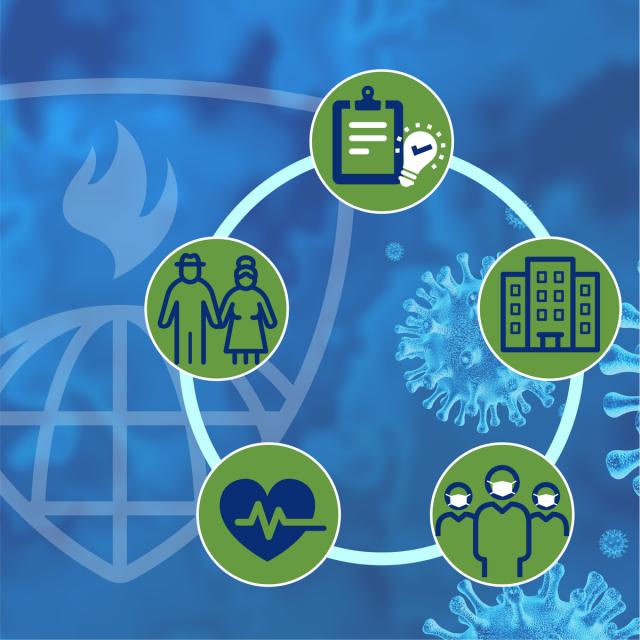
SARS-CoV-2, the virus that causes COVID-19, poses a high risk for senior housing communities and the people who live and work there. The COVID-19 response has largely focused on nursing homes, leaving independent living communities serving older adults in the United States with fragmented guidance on how to respond to COVID-19 challenges. This course provides comprehensive instruction and resources for property owners and managers, senior housing staff, service coordinators and providers, community housing leaders, and other senior housing stakeholders to build upon their emergency preparedness and response strategies related to COVID-19. The course lectures, interviews, and assignments are largely geared toward federally-subsidized, multifamily senior housing providers, but the material is relevant for all senior housing providers. Free enrollment available until December 31, 2021. Valid for one enrollment per person.

Class Deals by MOOC List - Click here and see Coursera's Active Discounts, Deals, and Promo Codes.

100% off - Original price: €40
Sale price: €0 with 100 percent off
Free enrollment available until December 31, 2021. Valid for one enrollment per person.

Learners will hear from experts about best practices to prevent COVID-19 outbreaks and promote well-being. Topics discussed include unique challenges for senior housing communities, development of emergency preparedness plans, outbreak prevention, and coronavirus-adapted housing operations. The course also covers strategies for communicating with stakeholders, promoting pandemic-safe behavior on site, and leveraging health departments and other agency resources. Learners are encouraged to concurrently develop and enhance their own community’s policies, procedures, and practices.
This course was developed in partnership with the Baltimore City Health Department.

What You Will Learn

  • Develop emergency preparedness plans related to COVID-19 policies, practices and procedures
  • Employ effective COVID-related infection prevention strategies and communication methods
  • Understand regulations around managing occupancy, community access, and behavior
  • Identify methods for promoting staff and resident well-being during COVID-19

Syllabus

WEEK 1
COVID-19 Background and Senior Housing Challenges
This module provides a foundational understanding of Coronavirus Disease 2019 (COVID-19), challenges specific to Senior Housing communities, and how to structure your pandemic emergency preparedness response strategies.
Infection Prevention
This module covers several infection prevention topics to help you develop and implement practices to reduce COVID-19 transmission. First, it distinguishes how policies, procedures and practices each play a role in preventing and responding to COVID-19. Then it describes factors that contribute to COVID-19 outbreaks and how to prevent them, mask usage, cleaning and disinfection, staffing considerations, and communication strategies for different stakeholders.
Senior Housing Operation
This module covers how senior housing operations are impacted by the pandemic and suggests adaptations to occupancy procedures, community access, and behavior management to lower the risk of COVID-19 transmission on site.
Promoting Mental Health and Well-being
This module discusses reasons for increased stress, anxiety, and feelings of isolation among staff and residents during this time and what types of programs and policies can be implemented to promote well-being.
Collaborating with Public Health Departments and Other Agencies
This module discusses how to create partnerships with local and state health agencies to support your community’s response to COVID-19.
The Final Assessment asks about changes you've made to your community's emergency response strategies while taking this course. Prior to starting the Quiz, read the Overarching Resources section and revisit any uncompleted assignments or items that may have required follow up with others in your community.

Go to Class
MOOC List is learner-supported. When you buy through links on our site, we may earn an affiliate commission.

Related Courses

Air Pollution – a Global Threat to our Health (Coursera) Coursera
University of Copenhagen

Air Pollution – a Global Threat to our Health (Coursera)

We all have to breathe to live. But the air we breathe is polluted both outdoors and indoors. Each year, this pollution costs 7 million lives across the globe – and a lot of suffering. 1 in 8 deaths is due to air pollution. This course will provide you with an introduction to the most recent research in the field of health effects of air pollution as well as a broader understanding of sources and spread of air pollution and what we should do about it.

Oct 5th 2026
3 Weeks
Ecosystems of California (Coursera) Coursera
University of California, Santa Cruz

Ecosystems of California (Coursera)

This course surveys the diversity, structure and functioning of California’s ecosystems through time and the ways they have influenced and responded to human activities and stewardship. Topics include ecosystem drivers such as climate, soils, and land use history; human and ecological prehistory of the state; comparative marine, freshwater, and terrestrial ecosystem dynamics; and managed ecosystems such as range, fisheries and agriculture in California.

Oct 5th 2026
5-12 Weeks
Data Science in Stratified Healthcare and Precision Medicine (Coursera) Coursera
University of Edinburgh

Data Science in Stratified Healthcare and Precision Medicine (Coursera)

An increasing volume of data is becoming available in biomedicine and healthcare, from genomic data, to electronic patient records and data collected by wearable devices. Recent advances in data science are transforming the life sciences, leading to precision medicine and stratified healthcare. In this course, you will learn about some of the different types of data and computational methods involved in stratified healthcare and precision medicine.

Oct 5th 2026
5-12 Weeks
Essentials of Global Health (Coursera) Coursera
Yale University

Essentials of Global Health (Coursera)

Essentials of Global Health is a comprehensive introduction to global health. It is meant to introduce you to this topic in well-structured, clear and easy to understand ways. Much of the course will focus on five questions: What do people get sick, disabled and die from; Why do they suffer from these conditions? Which people are most affected? Why should we care about such concerns? What can be done to address key health issues, hopefully at least cost, as fast as possible, and in sustainable ways?

Oct 5th 2026
5-12 Weeks
Introduction to Systems Biology (Coursera) Coursera
Icahn School of Medicine at Mount Sinai

Introduction to Systems Biology (Coursera)

This course will introduce the student to contemporary Systems Biology focused on mammalian cells, their constituents and their functions. Biology is moving from molecular to modular. As our knowledge of our genome and gene expression deepens and we develop lists of molecules (proteins, lipids, ions) involved in cellular processes, we need to understand how these molecules interact with each other to form modules that act as discrete functional systems.

Oct 5th 2026
5-12 Weeks
Communicating During Global Emergencies (Coursera) Coursera
Emory University

Communicating During Global Emergencies (Coursera)

In collaboration with the Rollins School of Public Health and the CDC's Division of Global Health Protection, Emergency Response, and Recovery Branch, this course introduces basic concepts and principles of communicating during a global crisis or emergency. It explores why communication during an emergency is different and the importance of adapting emergency messages to the needs of affected populations.

Oct 5th 2026
3 Weeks
Tropical Parasitology: Protozoans, Worms, Vectors and Human Diseases (Coursera) Coursera
Duke University,Kilimanjaro Christian Medical University College

Tropical Parasitology: Protozoans, Worms, Vectors and Human Diseases (Coursera)

This course provides students an understanding of important human parasitic diseases, including their life cycles, vectors of transmission, distribution and epidemiology, pathophysiology and clinical manifestations, treatment, and prevention and control. Tropical Parasitology is taught by faculty from an area highly impacted by tropical parasites- the Kilimanjaro Christian Medical University College in Moshi, Tanzania. The faculty include Drs. Frank Mosha and Mramba Nyindo (and two lecturers, Drs. Johnson Matowo and Jovin Kitau). Dr. John Bartlett, Professor of Medicine, Global Health and Nursing at Duke University, joins his faculty colleagues in this effort.

Oct 5th 2026
5-12 Weeks
Violence Against Healthcare (Coursera) Coursera
University of Geneva

Violence Against Healthcare (Coursera)

At the global level, there are many countries marked by violence affecting health care. The 'Health care in danger' project aims to establish practical measures and recommendations that can be implemented on the ground by policy-makers, humanitarian organizations and health professionals. In view of the multiplicity of actors and latitudes concerned, it is essential to be able to make available the tools needed to make informed decisions, guide behaviour in high-risk areas and provide everyone the means to create and optimize the dialogue between humanitarian professionals and health on the one hand and relevant authorities or other armed actors.

Oct 5th 2026
5-12 Weeks
Introduction to Dental Medicine (Coursera) Coursera
University of Pennsylvania

Introduction to Dental Medicine (Coursera)

The mouth is the window into human health. This course provides an overview of dental medicine to engage, educate, excite and assist you in improving the oral health of your patients and members of your community. We will review topics in dental medicine including scope of the field, what to expect in function, and some of the many ways that dysfunction may present for different patients.

Oct 5th 2026
5-12 Weeks
Population Health: Alternative Payment Models (Coursera) Coursera
Leiden University

Population Health: Alternative Payment Models (Coursera)

The way we currently pay our care providers lead to suboptimal outcomes and unnecessary spending. Consequently, we fail to maximize the value of our health care services. We need to change provider payment models in order to keep health care systems financial sustainability. Doing nothing is not an option. But the question is, how do we do it?

Oct 5th 2026
4 Weeks