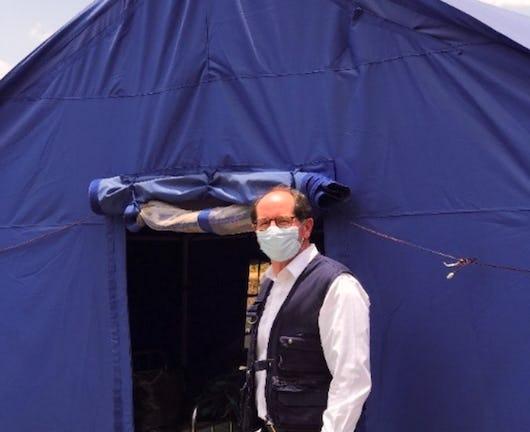
Reflections from 40 Years Fighting International Epidemics (Coursera)

Offered by Dartmouth College,
Reflections from 40 Years Fighting International Epidemics (Coursera)

Reflections on patients, policies, pan-epidemics, prose and medical humanities from a 40-year career fighting epidemics around the world by an infectious disease public health physician. Examples include HIV/AIDS, Anthrax, SARS, MERS, H5N1 and H1N1 influenza, Nipah, Ebola (with MSF 2014), Zika, Plague (with WHO 2017) and COVID-19. Working side-by-side with international colleagues to provide hands-on patient care and to share stories is an expression of medical humanities.

Class Deals by MOOC List - Click here and see Coursera's Active Discounts, Deals, and Promo Codes.

Dr. Lucey is the originator of the Smithsonian Museum Exhibit on Epidemics 2018-2022, an advocate of One Health, and author of 170 blogs on COVID and other new epidemics since January 2020 on the Science Speaks website of the Infectious Disease Society of America. One best career lesson is to “Anticipate, Recognize, Act” because “What’s next is already here, we just haven’t recognized it”.

What you'll learn

  • Anticipate, Recognize, Act
  • What's Next is Already Here
  • Create Synergies of Strengths

Syllabus

Course Orientation
Module 1
Reflections on patients, policies, pan-epidemics, prose and medical humanities from a 40-year career fighting epidemics around the world by an infectious disease public health physician. Examples include HIV/AIDS, Anthrax, SARS, MERS, H5N1 and H1N1 influenza, Nipah, Ebola (with MSF 2014), Zika, Plague (with WHO 2017) and COVID-19. Working side-by-side with international colleagues to provide hands-on patient care and to share stories is an expression of medical humanities. Dr. Lucey is the originator of the Smithsonian Museum Exhibit on Epidemics 2018-2022, an advocate of One Health, and author of 170 blogs on COVID and other new epidemics since January 2020 on the Science Speaks website of the Infectious Disease Society of America. One best career lesson is to “Anticipate, Recognize, Act” because “What’s next is already here, we just haven’t recognized it”.

Module 1: Reflections on Fighting Epidemics and Medical Humanities
Module 2
Module One provides you with an introduction to the context and perspective of Dr. Lucey. He is a public health and infectious disease physician and epidemiologist who has helped fight epidemics around the world beginning in 1982 in San Francisco before the HIV virus was discovered but long after the virus discovered us. This module offers a chronology of his field experience in over 10 epidemics in 5 regions of the world. A Medical Humanities perspective is included using his own list of 40 one-phrase reflections on epidemics, distilled from 1982-2022, and the first of several narrative stories from the 2014 Ebola pan-epidemic in West Africa. These stories in module 1 and module 4 illustrate some of the 40 one-phrase reflections and their origins. A summary is also provided of the exhibit (2018-2022) proposed in 2014 by Dr. Lucey at the Smithsonian National Museum of Natural History on viral epidemics that originated in animals, using the “One Health” approach that integrates human, animal, and environmental health.

Module 2: What's Next Is Already Here, But We Haven't Recognized It Yet
Module 3
Module Two provides six examples of epidemics that began months, years or decades before they were first recognized or their viral cause “discovered”. These include HIV-1 (< 1959-1983), Nipah (1998-1999), SARS (2002-2003), MERS (2012-2013), Ebola in Guinea (2013-2014), and Zika clusters of neurological diseases (2014-2016). The unifying theme of this module focusing on past epidemics is: “What’s next is already here, we just haven’t recognized it yet” (refection # 40 of 40). One key objective of this module is to lead the learner to ask what epidemics are already here today in the world, but have not yet been recognized or their cause “discovered”.

Module 3: A Guideline for the Future: Anticipate, Recognize and Act
Module Three focuses on the theme of “anticipate, recognize, act” to build on the previous module with its six past examples of epidemics that were not recognized quickly. Examples are provided of the process and policies whereby the World Health Organization (WHO) evaluates recently recognized epidemics to determine if they should be declared a “Public Health Emergency of International Concern" (PHEICS). Two examples of potential future epidemics and information that should be anticipated and that will be important on Day One (1) are presented. These examples, of the many potential ones, are (1) A Nipah virus epidemic outside south Asia and SE Asia where all past Nipah outbreaks have occurred (e.g., China, Africa, Europe, or the Americas); (2) A multidrug-resistant anthrax epidemic due to the Bacillus anthracis bacteria. In addition, links to over 10 additional outbreaks around the world that have occurred in 2020-2023 are provided in blogs written by the instructor on the “Science Speaks” website of the Infectious Disease Society of America (IDSA). Examples are analyzed from the contextual framework of “anticipate, recognize, act”. They include mpox (many nations), melioidosis (USA), Langya henipavirus (China), H5N8 avian influenza (Russia), unexplained pneumonia (Argentina), unexplained hepatitis (Europe and USA) and more.

Module 4: Career Reflections and Medical Humanities
Module 5
Module Four focuses on Medical Humanities and literature regarding both patients and healthcare providers. Several sources of such information include writings by Albert Schweitzer (“Reverence for Life”) Alexander Solzhenitsyn (“Cancer Ward”). In addition, some of the 40 reflections regarding both patients and healthcare worker colleagues from Liberia and the USA. Lastly, a general reference is made to an ongoing 2-volume ‘library collection’ of over 180 medical wisdom stories shared by alumni from the instructor’s Geisel School of Medicine at Dartmouth with its graduating medical students each year beginning in 2017.

Go to Class
MOOC List is learner-supported. When you buy through links on our site, we may earn an affiliate commission.

Related Courses

Antibiotic Stewardship (Coursera) Coursera
Stanford University

Antibiotic Stewardship (Coursera)

Antibiotics are among the most frequently prescribed classes of drugs and it is estimated that approximately 50% of antibiotic use, in both the outpatient and inpatient settings, is inappropriate. At the same time, in contrast to any other class of drugs, every antibiotic use has a potential public health consequence – inappropriate use may not harm only the individual patient, but contributes to societal harm by exerting an unnecessary selective pressure that may lead to antibiotic resistance among bacteria. This video based course will introduce learners to the basic principles of appropriate antibiotic use, demonstrate how to apply these principles to the management of common infections, and outline how to develop and maintain an antimicrobial stewardship program.

Aug 17th 2026
4 Weeks
The People, Power, and Pride of Public Health (Coursera) Coursera
Johns Hopkins University

The People, Power, and Pride of Public Health (Coursera)

The People, Power, and Pride of Public Health provides an engaging overview of the incredible accomplishments and promise of the public health field. The first module includes interviews with legendary public health figures whose work led to millions of lives saved with vaccines, air bags and car seats, and the federal Women Infants and Children (WIC) nutrition program.

Aug 10th 2026
3 Weeks
Chemicals and Health (Coursera) Coursera
Johns Hopkins University

Chemicals and Health (Coursera)

This course covers chemicals in our environment and in our bodies and how they impact our health. It addresses policies and practices related to chemicals, particularly related to how they get into our bodies (exposures), what they do when they get there (toxicology), how we measure them (biomonitoring) and their impact on our health. Most examples are drawn from the US.

Aug 17th 2026
5-12 Weeks
Infectious Disease Modeling in Practice (Coursera) Coursera
Johns Hopkins University

Infectious Disease Modeling in Practice (Coursera)

Mathematical modeling is an increasingly widespread tool for understanding infectious disease transmission and informing public health decision making. This course provides an in depth overview of the practical uses of mathematical modeling for a range of diseases and scenarios. We cover the basic principles of infectious disease models, how models are adapted to be specific to the disease and question of interest, and important assumptions of different models.

Aug 17th 2026
3 Weeks
Stories of Infection (Coursera) Coursera
Stanford University

Stories of Infection (Coursera)

This course introduces learners to a variety of infectious diseases using a patient-centered, story-based approach. Through illustrated, short videos, learners will follow the course of each patient’s illness, from initial presentation to resolution. Integrating the relevant microbiology, pathophysiology and immunology, this course aims to engage and entice the learner towards future studies in microbiology, immunology and infectious diseases.

Aug 17th 2026
5-12 Weeks
GIS Applications Across Industries (Coursera) Coursera
University of California, Davis

GIS Applications Across Industries (Coursera)

Geographic Information Systems (GIS) is becoming an essential business skill across a variety of different disciplines. In this course, you will explore how GIS skills are commonly applied and used in a variety of industries focusing specifically on: environmental studies, public health, emergency management, and business development. You will be empowered to conduct GIS-based analyses that are commonly used in these areas and benefit from how each industry uses GIS to tackle common analysis needs. Additionally, you will work through a series of hands-on exercises that will improve your knowledge of the advanced analysis capabilities of ArcGIS Pro.

Aug 17th 2026
4 Weeks
Systems Thinking In Public Health (Coursera) Coursera
Johns Hopkins University

Systems Thinking In Public Health (Coursera)

This course provides an introduction to systems thinking and systems models in public health. Problems in public health and health policy tend to be complex with many actors, institutions and risk factors involved. If an outcome depends on many interacting and adaptive parts and actors the outcome cannot be analyzed or predicted with traditional statistical methods. Systems thinking is a core skill in public health and helps health policymakers build programs and policies that are aware of and prepared for unintended consequences.

Aug 10th 2026
4 Weeks
Impacting the Opioid Crisis: Prevention, Education, and Practice for Non-Prescribing Providers (Coursera) Coursera
University of Michigan

Impacting the Opioid Crisis: Prevention, Education, and Practice for Non-Prescribing Providers (Coursera)

This course will empower non-prescribing providers to directly impact the ongoing opioid crisis in the United States through increased knowledge and tools that will transform practice and policies. The course will inform you about the opioid epidemic and provide information and research about evidence-based strategies that are focused on prevention, intervention, education, or policy.

Aug 17th 2026
5-12 Weeks
COVID-19 - A clinical update (Coursera) Coursera
University of Florida

COVID-19 - A clinical update (Coursera)

As an expert in infectious diseases, editor of the Journal of Infectious Diseases and author of the textbook Infectious Diseases: A clinical short course, McGraw-Hill April 2020, I have been concerned about the misinformation being shared about the COVID-19 epidemic. How did this disease develop? Where did it come from? How does it cause diseases? The answers to these questions will be answered in the first video of module 1.

Aug 14th 2026
4 Weeks
Strategies for Assisted Living Communities during COVID-19 (Coursera) Coursera
Johns Hopkins University

Strategies for Assisted Living Communities during COVID-19 (Coursera)

SARS-CoV-2, the virus that causes COVID-19, poses a high risk for assisted living communities due to residents’ age, health status, and communal living environment. The COVID-19 response has largely focused on nursing homes, leaving assisted living communities in the United States with fragmented guidance on how to respond to COVID-19 challenges. This course provides comprehensive instruction and resources for administrators and direct-care staff of assisted living communities.

Aug 17th 2026
1 Week
Epidemiology: The Basic Science of Public Health (Coursera) Coursera
University of North Carolina

Epidemiology: The Basic Science of Public Health (Coursera)

Often called “the cornerstone” of public health, epidemiology is the study of the distribution and determinants of diseases, health conditions, or events among populations and the application of that study to control health problems. By applying the concepts learned in this course to current public health problems and issues, students will understand the practice of epidemiology as it relates to real life and makes for a better appreciation of public health programs and policies. This course explores public health issues like cardiovascular and infectious diseases – both locally and globally – through the lens of epidemiology.

Aug 17th 2026
5-12 Weeks