EdX

Reacciones rédox en la industria y la naturaleza (edX)

Reacciones rédox en la industria y la naturaleza (edX)

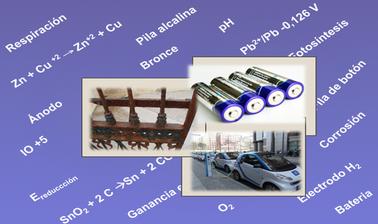
Las reacciones de oxidación-reducción son de las reacciones más frecuentes en el mundo que nos rodea. En el curso en línea las conocerás a traves de algunas de sus aplicaciones más comunes, como las pilas, las baterías o la forma de prevenir la corrosión. Las reacciones de oxidación-reducción (rédox) se explican como una transferencia de electrones entre diferentes especies químicas. Son, junto a los procesos ácido-base, los tipos de transformaciones químicas más habituales en el mundo que nos rodea.

Class Deals by MOOC List - Click here and see EdX's Active Discounts, Deals, and Promo Codes.

La electroquímica describe y explica los procesos que nos permiten obtener energía eléctrica de una reacción (pilas), asi como también el proceso inverso: usar la energía eléctrica para provocar una reacción rédox (electrólisis).
Pormenorizando, el curso online trata sobre las pilas galvánicas (fuente de energía eléctrica) y los tipos más habituales de importancia comercial y tecnológica.
En cuanto a la electrólisis, se estudiarán sus fundamentos y el tratamiento cuantitativo de la misma. Se describirán distintas aplicaciones industriales, como la obtención de productos, y en la vida cotidiana, como el niquelado de piezas de acero o los sistemas para mantener el agua de las piscinas.
También se abordará otro problema de enorme trascendencia económica en las sociedades industriales: la corrosión, tanto para explicar su origen como para proteger de ella las estructuras metálicas.
Por último, se describirán diferentes aspectos de importancia biológica relacionados con las reacciones rédox. Al tratar todos estos temas se fundamentarán los hechos explicados con los conceptos básicos relacionados con las reacciones rédox.
This course is part of the Fundamentos de Química XSeries.

What you'll learn

  • Una mejor comprensión de las reacciones de oxidación-reducción a través de sus aplicaciones
  • La separación de una reaccion rédox en dos semiceldas (pilas)
  • Los distintos tipos de pilas, tanto recargables como no recargables
  • Diferencias entre pilas de litio o de hidrógeno como alimentación en vehículos eléctricos
  • El fundamento de los fenómenos de electrólisis y su uso en diferentes aplicaciones
  • El fenómeno de la corrosión como causa del deterioro de infraestructuras y maquinarias
  • La interpretación de los procesos de respiración y fotosíntesis como reacciones rédox
  • El ciclo en la naturaleza de elementos tan importantes como el nitrógeno y el carbono

Syllabus

  1. Celdas electroquímicas
  2. Pilas y baterías comerciales
  3. Electrólisis
  4. Los procesos rédox en tecnología y en la naturaleza
  5. Examen Final
Go to Class
MOOC List is learner-supported. When you buy through links on our site, we may earn an affiliate commission.

Related Courses

Basic Analytical Chemistry (edX) EdX
The University of Tokyo,UTokyoX

Basic Analytical Chemistry (edX)

Gain a physical understanding of the principles of analytical chemistry and their application in scientific research. Analytical chemistry takes a prominent position among all fields of experimental sciences, ranging from fundamental studies of Nature to industrial or clinical applications. Analytical chemistry covers the fundamentals of experimental and analytical methods and the role of chemistry around us.

Self Paced
Self-Paced
Science & Cooking: From Haute Cuisine to Soft Matter Science (chemistry) (edX) EdX
HarvardX,Harvard University

Science & Cooking: From Haute Cuisine to Soft Matter Science (chemistry) (edX)

Top chefs and Harvard researchers explore how everyday cooking and haute cuisine can illuminate basic principles in chemistry, physics, and engineering. Learn about food molecules and how chemical reactions can affect food texture and flavor. During each module of this course, chefs reveal the secrets behind some of their most famous culinary creations — often right in their own restaurants. Inspired by such cooking mastery, the Harvard team will then explain the science behind the recipe.

Self Paced
Self-Paced
Protecting the World: Introducing Corrosion Science and Engineering (Coursera) Coursera
University of Manchester

Protecting the World: Introducing Corrosion Science and Engineering (Coursera)

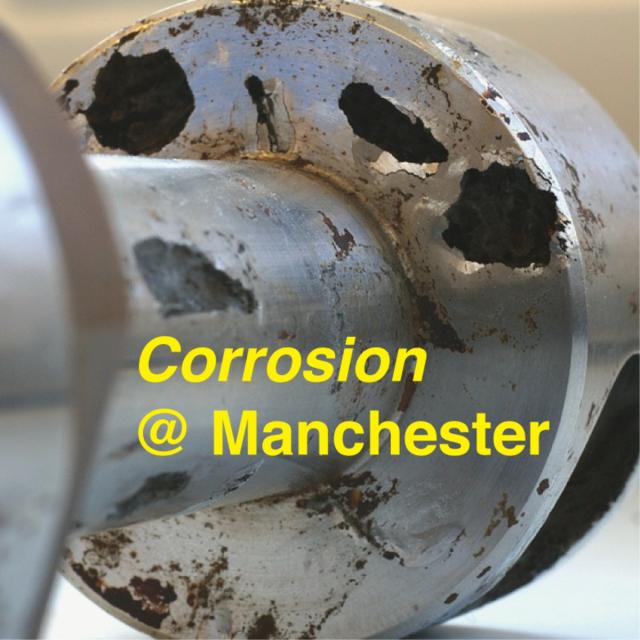
If you have ever encountered rusty car bodies, leaking pipes, tarnished silverware or the green patina of a copper roof then you have experienced corrosion in action. This course, from the Corrosion@Manchester team in collaboration with AkzoNobel, will teach you why metals corrode, what the environmental consequences are, how much corrosion costs and how corrosion can be controlled. It is designed for students, householders, teachers, professionals and anyone in-between.

Jul 27th 2026
4 Weeks
World of Wine: From Grape to Glass (edX) EdX
University of Adelaide,AdelaideX

World of Wine: From Grape to Glass (edX)

Learn about the principles and practices of how grapes are grown and wine is made. Whether you’re a wine novice or a seasoned oenophile, you’ll learn to confidently describe wine appearance, aroma, flavour and taste. Think about your favourite wine. Imagine the brilliance of its colour in the glass, the ripe fruit aromas on the nose, a hint of toasty oak and lingering tannins on the back palate.

Self Paced
Self-Paced
Introduction to Pharmacokinetics: From ADME to PK/PD (edX) EdX
Davidson College,DavidsonX

Introduction to Pharmacokinetics: From ADME to PK/PD (edX)

A critical aspect of a drug involves how a drug is dosed and circulates throughout the body of a patient. These qualities are aspects of a drug’s pharmacokinetics or PK. Pharmacokinetics encompasses how a drug is absorbed and flows through a patient until it is ultimately eliminated. While pharmacokinetics covers drug behavior in a living organism, PK properties can often be predicted through laboratory tests for a compound’s ADME properties. ADME stands for absorption, distribution, metabolism, and excretion. The PK and ADME properties of potential drug are closely monitored throughout the discovery and early development stages of a drug campaign.

Self Paced
Self-Paced
Industrial Biotechnology (edX) EdX
Delft University of Technology,DelftX

Industrial Biotechnology (edX)

Learn the basics of sustainable processing for biobased products to further understand their impact on global sustainability. As fossil-based fuels and raw materials contribute to climate change, the use of renewable materials and energy as an alternative is increasingly important and common. This transition is not a luxury, but rather a necessity.

Self Paced
Self-Paced
Microcápsulas: Aplicación y Caracterización (edX) EdX
Universitat Politècnica de València,UPValenciaX

Microcápsulas: Aplicación y Caracterización (edX)

¿Quieres aprender como incorporar nuevas propiedades a los tejidos mediante la adición de microcápsulas? Las microcápsulas son partículas micrométricas con materiales de distinta naturaleza en su interior que permiten incorporar nuevas propiedades a distintos materiales en múltiples sectores productivos. El empleo de las microcápsulas permite funcionalizar productos tan diversos como los empleados en medicina, alimentación, cosmética, agricultura, pinturas, plásticos, textiles o automoción entre otros.

Self Paced
Self-Paced
The Chemistry of Life (edX) EdX
Kyoto University,KyotoUx

The Chemistry of Life (edX)

Learn how to generate ideas at the interface between chemistry and biology. Chemistry and biology are traditionally taught as separate subjects at the high school level, where students memorize fundamental scientific principles that are universally accepted. However, at the university level and in industry, we learn that science is not as simple as we once thought. We are constantly confronted by questions about the unknown and required to use creative, integrated approaches to solve these problems.

Self Paced
Self-Paced
Reacciones químicas y cálculos estequiométricos (edX) EdX
Universitat Politècnica de València,UPValenciaX

Reacciones químicas y cálculos estequiométricos (edX)

Aprenderás los conceptos básicos de las reacciones químicas y profundizarás en su estudio cuantitativo (estequiometría). Con este curso aprenderás los conceptos básicos relacionados con las reacciones químicas y profundizarás en su estudio desde el punto de vista cuantitativo, es decir su estequiometría. Entenderás el comportamiento de los gases y las disoluciones y aplicarás las leyes que regulan su comportamiento en los procesos químicos en los que participan.

Self Paced
Self-Paced