EdX

El enlace químico y las interacciones moleculares (edX)

El enlace químico y las interacciones moleculares (edX)

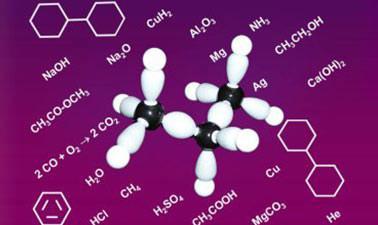
Aprenderemos a identificar los tipos de enlace presentes en los compuestos químicos y a relacionar la estructura de éstos con sus propiedades. Los materiales que utilizamos diariamente y los objetos que nos rodean están formados por sustancias químicas cuyas propiedades, aplicaciones y transformaciones dependen del tipo de enlace que las caracteriza. El tipo de enlace condiciona la interacción entre las moléculas de un compuesto.

Class Deals by MOOC List - Click here and see EdX's Active Discounts, Deals, and Promo Codes.

El estudio del enlace típico de un compuesto y de las interacciones entre sus moléculas es competencia de la Química, una materia básica que se estudia en muchas titulaciones universitarias. Este curso va dirigido a los alumnos que acceden a la Universidad, especialmente aquellos que no han cursado Química y que requieren de los conocimientos básicos en estos aspectos.

En este curso aprenderás a identificar los tipos de enlace que pueden presentarse en los diferentes compuestos químicos y a predecir qué tipo de enlace predomina en un compuesto en base a las características de los elementos que lo constituyen. Así mismo, podrás deducir qué enlace presenta un compuesto observando sus características y comportamiento. Profundizarás en el estudio del enlace covalente y entenderás la relación entre las interacciones moleculares y las propiedades físicas de los compuestos. En definitiva, adquirirás las habilidades necesarias para reconocer todo tipo de enlaces y relacionar la estructura de un compuesto con las propiedades físicas que manifiesta.
En el curso trataremos:

  • Enlace químico y tipos
  • Enlace iónico y metálico
  • Enlace covalente. Geometría y propiedades de las moléculas
  • Interacciones moleculares

This course is part of the Fundamentos de Química XSeries

What you'll learn:

  • Aprenderás a identificar los tipos de enlace que pueden presentarse en los diferentes compuestos químicos
  • Aprenderás a predecir qué tipo de enlace predomina en un compuesto en base a las características de los elementos que lo constituyen
  • Podrás deducir qué enlace presenta un compuesto observando sus características y comportamiento
  • Profundizarás en el estudio del enlace covalente y entenderás la relación entre las interacciones moleculares y las propiedades físicas de los compuestos
Go to Class
MOOC List is learner-supported. When you buy through links on our site, we may earn an affiliate commission.

Related Courses

Food Fermentation: The Science of Cooking with Microbes (edX) EdX
HarvardX,Harvard University

Food Fermentation: The Science of Cooking with Microbes (edX)

In Food Fermentation: The Science of Cooking with Microbes, explore the history of food and beverage fermentations and how tiny microbes change and enhance flavors, aromas, and tastes in our food. What’s living in your food? Many of the foods that we consume daily owe their distinct characteristics and flavors to microbes, specifically through a biochemical process of fermentation (using bacteria, fungi, and other microorganisms to produce diverse foods).

Self Paced
Self-Paced
Quantum Mechanics (edX) EdX
Georgetown University,GeorgetownX

Quantum Mechanics (edX)

Learn the quantum mechanics needed to prepare you for the second quantum revolution (focused on quantum sensing). We use a new way to teach quantum for undergraduates by focusing on conceptual ideas and operator manipulations. This allows us to discuss more applications to experiment usually done. You need a background in the full calculus sequence and in math methods. Freshman physics and modern physics is recommended. This course is appropriate for physicists, chemists and engineers.

Aug 21st 2023
13-24 Weeks
Food for Thought (edX) EdX
McGill,McGillX

Food for Thought (edX)

A course that offers a scientific framework for understanding food and its impact on health and society from past to present. Eating and understanding the nuances of food has become a complicated and often confusing experience. Virtually every day brings news about some “miracle food” that we should be consuming or some "poison" we should be avoiding.

No sessions available
5-12 Weeks
Reacciones de oxidación-reducción: conceptos básicos (edX) EdX
Universitat Politècnica de València,UPValenciaX

Reacciones de oxidación-reducción: conceptos básicos (edX)

En este curso online reconocerás las reacciones rédox, su ajuste y sus cálculos estequiométricos, comprenderás el funcionamiento de las celdas electroquímicas y los conceptos más importantes relacionados con las celdas electrolíticas. Las reacciones de oxidación-reducción, comunmente denominadas reacciones rédox, se producen diariamente en numerosos procesos.

Self Paced
Self-Paced
Thermodynamics (edX) EdX
IIT Bombay,IITBombayX

Thermodynamics (edX)

Introduction to basic concepts and applications of thermodynamics in mechanical engineering. ME209x is a basic course in thermodynamics, designed for students of mechanical engineering. We will study the terms and concepts used in thermodynamics, with precise definitions. The three laws of thermodynamics (zeroth, first, and second) will be explored in detail, and the properties of materials will be studied.

No sessions available
5-12 Weeks
Global Warming Science (edX) EdX
MIT,MITx

Global Warming Science (edX)

Learn about the physics, chemistry, biology, and geology of the earth’s climate system. Global Warming Science teaches you about the risks and uncertainties of future climate change by examining the science behind the earth’s climate. You will be able to answer such questions as, “What is the Greenhouse Effect?” and “How and why has earth’s climate changed through geologic history?”

No sessions available
13-24 Weeks
Science in Art: The Chemistry of Art Materials and Conservation (edX) EdX
Trinity College, Hartford

Science in Art: The Chemistry of Art Materials and Conservation (edX)

Learn the chemistry behind the visual arts, and how an understanding of art’s material properties helps preserve our cultural heritage. How do artists create visual effects? In order to create an artistic impression, artists select materials that allow image formation, and that lend color, emphasis, shape, and size to the object created.

No sessions available
5-12 Weeks
Introducción a la Estructura de la Materia (edX) EdX
Universitat Politècnica de València,UPValenciaX

Introducción a la Estructura de la Materia (edX)

Estudiaremos la estructura de la materia, los elementos que la forman y sus propiedades e introduciremos el concepto de la reacción química. Todos lo que nos envuelve y los materiales que utilizamos diariamente están formados por mezclas de compuestos químicos, cuyas propiedades, aplicaciones y transformaciones dependen de los elementos que los forman y de su estructura.

Self Paced
Self-Paced