EdX

Ácidos y bases: reacciones químicas y aplicaciones (edX)

Ácidos y bases: reacciones químicas y aplicaciones (edX)

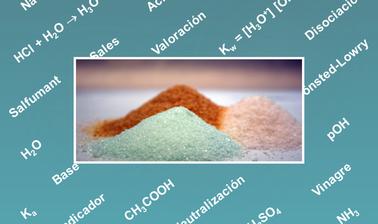
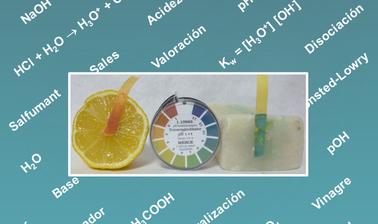
Los ácidos y las bases son sustancias muy comunes en el entorno cotidiano (vinagre, bicarbonato, amoniaco, Aspirina®). En este curso se presentan aplicaciones relacionadas con estos conceptos en aspectos tecnológicos, biológicos y de la vida cotidiana.

Class Deals by MOOC List - Click here and see EdX's Active Discounts, Deals, and Promo Codes.

Los ácidos y las bases son sustancias muy comunes en el entorno cotidiano, con frecuencia las utilizamos sin ser conscientes de que son compuestos con carácter ácido o básico, por ejemplo:

  • el vinagre
  • el bicarbonato
  • la Aspirina®
  • el amoníaco

Los ácidos y las bases tienen un papel fundamental en los sistemas biológicos, están presentes en algunos fenómenos de contaminación ambiental y forman parte de numerosos productos medicinales, domésticos, industriales, etc. En este curso en línea se tratan los aspectos generales de las reacciones ácido-base en medio acuoso, en el contexto de la teoría de Brönsted-Lowry.
En este curso de química se enfatiza en la comprensión del concepto de ácido y de base y su fortaleza, de los pares conjugados ácido-base, de la escala del pH y su determinación experimental, así como de los procesos de neutralización entre ácidos y bases que dan lugar a la formación de las sales. Se aplican estas ideas a los cálculos de pH en disoluciones de diferentes tipos de ácidos y de bases. Se presentan aplicaciones relacionadas con estos conceptos en aspectos tecnológicos, biológicos y de la vida cotidiana
This course is part of the Fundamentos de Química XSeries.

What you'll learn

  • Identificar distintos compuestos por su carácter ácido o básico
  • Estudiar el concepto de pH, su determinación experimental
  • Calcular el pH en disoluciones acuosas de ácidos y bases
  • Comprender la formación de las sales
  • Comprender las reacciones de hidrólisis de las sales

Syllabus

Módulo 1. Importancia de los ácidos y las bases
Módulo 2. Conceptos generales de ácido base
Módulo 3. El pH en disolución acuosa

Prerequisites:
Sería conveniente haber seguido los cursos Reacciones Químicas y Cálculos Estequiométricos, también ofertados en edX.
Go to Class
MOOC List is learner-supported. When you buy through links on our site, we may earn an affiliate commission.

Related Courses

Effects of Radiation: An Introduction to Radiation and Radioactivity (edX) EdX
OECx,Open Education Consortium - OEC

Effects of Radiation: An Introduction to Radiation and Radioactivity (edX)

There are many practical applications of radiation and radioactivity in various fields, including medical, scientific, and industrial activities. In some parts of Japan, people continue to experience environmental radioactivity caused by the nuclear accident at the Fukushima Daiichi Nuclear Power Plant on a daily basis. Understanding the basic science of radiation and radioactivity will form the base of the course, with specific examples from Japan and elsewhere in the world to illustrate concepts.

No sessions available
4 Weeks
Cellular Polymers: Structure, Properties, Processing, Applications (edX) EdX
University of Bayreuth,BayreuthX

Cellular Polymers: Structure, Properties, Processing, Applications (edX)

Take our MOOC and dive deep into Cellular Polymers. Understand what makes them superior to other materials, how they are processed and why they are used in countless applications in our everyday life. This MOOC is your first step in the pioneering field of Cellular Polymers that connects chemistry, physics, materials science, engineering, and technology. Get yourself ready and enroll now.

Self Paced
Self-Paced
Quantum Mechanics (edX) EdX
Georgetown University,GeorgetownX

Quantum Mechanics (edX)

Learn the quantum mechanics needed to prepare you for the second quantum revolution (focused on quantum sensing). We use a new way to teach quantum for undergraduates by focusing on conceptual ideas and operator manipulations. This allows us to discuss more applications to experiment usually done. You need a background in the full calculus sequence and in math methods. Freshman physics and modern physics is recommended. This course is appropriate for physicists, chemists and engineers.

Aug 21st 2023
13-24 Weeks
Solid State Devices 1 (edX) EdX
Purdue University,PurdueX

Solid State Devices 1 (edX)

Semiconductor are everywhere in human activities, from your credit card to space exploration. This graduate-level introduction brings aspects of physics, chemistry, and engineering together to understand, analyze, and design transistors and solar cells. This course provides the graduate-level introduction to understand, analyze, characterize and design the operation of semiconductor devices such as transistors, diodes, solar cells, light-emitting devices, and more.

Jan 9th 2023
13-24 Weeks
Food for Thought (edX) EdX
McGill,McGillX

Food for Thought (edX)

A course that offers a scientific framework for understanding food and its impact on health and society from past to present. Eating and understanding the nuances of food has become a complicated and often confusing experience. Virtually every day brings news about some “miracle food” that we should be consuming or some "poison" we should be avoiding.

No sessions available
5-12 Weeks
Synchrotrons and X-Ray Free Electron Lasers (part 2) (edX) EdX
École Polytechnique Fédérale de Lausanne,EPFLx

Synchrotrons and X-Ray Free Electron Lasers (part 2) (edX)

The first MOOC to provide an extensive introduction to synchrotron and XFEL facilities and associated techniques and applications. Are you interested in investigating materials and their properties with unsurpassed accuracy and fidelity? Synchrotrons and XFELs count as Science’s premier microscopic tool in scientific endeavours as diverse as molecular biology, environmental science, cultural heritage, catalytical chemistry, and the electronic properties of novel materials, to name but a few examples.

Self Paced
Self-Paced
Science & Cooking: From Haute Cuisine to Soft Matter Science (chemistry) (edX) EdX
HarvardX,Harvard University

Science & Cooking: From Haute Cuisine to Soft Matter Science (chemistry) (edX)

Top chefs and Harvard researchers explore how everyday cooking and haute cuisine can illuminate basic principles in chemistry, physics, and engineering. Learn about food molecules and how chemical reactions can affect food texture and flavor. During each module of this course, chefs reveal the secrets behind some of their most famous culinary creations — often right in their own restaurants. Inspired by such cooking mastery, the Harvard team will then explain the science behind the recipe.

Self Paced
Self-Paced
Food Fermentation: The Science of Cooking with Microbes (edX) EdX
HarvardX,Harvard University

Food Fermentation: The Science of Cooking with Microbes (edX)

In Food Fermentation: The Science of Cooking with Microbes, explore the history of food and beverage fermentations and how tiny microbes change and enhance flavors, aromas, and tastes in our food. What’s living in your food? Many of the foods that we consume daily owe their distinct characteristics and flavors to microbes, specifically through a biochemical process of fermentation (using bacteria, fungi, and other microorganisms to produce diverse foods).

Self Paced
Self-Paced