NAU

Prevenir para não Cair: Guia de Exercícios (NAU)

Prevenir para não Cair: Guia de Exercícios (NAU)

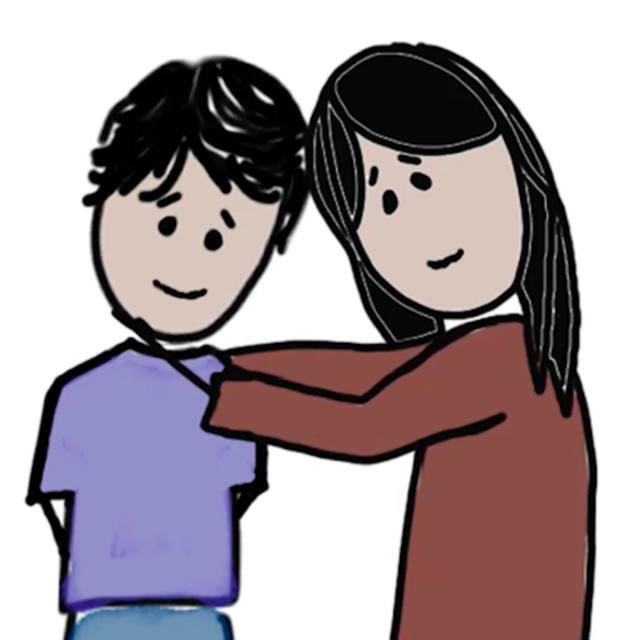
Fazer exercício faz bem! O curso Prevenir Para Não Cair vai ajudá-lo a manter a sua capacidade funcional e a prevenir quedas. Prevenir Para Não Cair é um curso onde vai encontrar muitos exercícios e conselhos, para que possa aprender a cuidar da sua saúde física e mental. As modificações relacionadas com o processo de envelhecimento incluem perda de força muscular, alterações de equilíbrio e mobilidade e declínio funcional, aumentando a probabilidade de ocorrência de quedas. Este curso fornece as orientações necessárias para que seja capaz de realizar os seus exercícios de prevenção de quedas de forma regular, e fornece, também, alguns conselhos médicos e de nutrição que o irão ajudar a manter-se ativo e mais saudável.

A investigação científica mostrou que o exercício físico, para além de contribuir para reduzir o risco do desenvolvimento de algumas doenças, está também associado à redução do número de quedas.

Reforce a sua força muscular, a sua flexibilidade, a sua capacidade funcional e, consequentemente, vai estar mais apto para prevenir quedas.
Vamos começar este desafio?

Carga Horária
O curso tem uma carga total de (cerca de) 6 horas.

Objetivos de Aprendizagem
No final do curso, os formandos deverão ser capazes de:

  • Realizar exercícios adequados para prevenir quedas;
  • Realizar os seus exercícios em segurança;
  • Tomar os seus medicamentos de forma segura;
  • Identificar os alimentos mais adequados para manter os seus músculos saudáveis.

Programa

Módulo I: Introdução
Módulo II: Exercícios de Mobilidade
Módulo III: Exercícios de Fortalecimento
Módulo IV: Exercícios de Flexibilidade
Módulo V: Aconselhamento Médico e Nutricional

Go to Class
MOOC List is learner-supported. When you buy through links on our site, we may earn an affiliate commission.

Related Courses

Psychological First Aid (Coursera) Coursera
Johns Hopkins University

Psychological First Aid (Coursera)

Learn to provide psychological first aid to people in an emergency by employing the RAPID model: Reflective listening, Assessment of needs, Prioritization, Intervention, and Disposition. Utilizing the RAPID model (Reflective listening, Assessment of needs, Prioritization, Intervention, and Disposition), this specialized course provides perspectives on injuries and trauma that are beyond those physical in nature. The RAPID model is readily applicable to public health settings, the workplace, the military, faith-based organizations, mass disaster venues, and even the demands of more commonplace critical events, e.g., dealing with the psychological aftermath of accidents, robberies, suicide, homicide, or community violence.

Oct 5th 2026
5-12 Weeks
Prevenção de Infeções e Resistência aos Antibióticos (NAU) NAU
Direcção-Geral da Saúde - DGS

Prevenção de Infeções e Resistência aos Antibióticos (NAU)

O curso “Prevenção de Infeções e Resistência aos Antibióticos” tem como finalidade promover a capacitação e literacia para a prevenção de infeções e da resistência aos antibióticos. Sabe que cuidados ter para prevenir infeções? Ou o porquê de o antibiótico já não atuar em prol da sua saúde? Cuide de si!

No sessions Available
Self-Paced
Critérios de Elegibilidade para Pessoas Candidatas à Dádiva de Sangue (NAU) NAU
IPST-Instituto Português do Sangue e da Transplantação

Critérios de Elegibilidade para Pessoas Candidatas à Dádiva de Sangue (NAU)

Encontre neste curso o Como e o Porquê de ser dador de sangue. Não fique com dúvidas! Ser dador de sangue é muito mais do que dar sangue. É uma dádiva de vida! São muitas as questões que se colocam à população. Todas as pessoas podem dar sangue? Quais as condições para o fazer? Quais os seus direitos e deveres enquanto dador de sangue? Porque não podem dar sangue quando tomam antibióticos?

Self Paced
Self-Paced
Hacking Exercise For Health. The surprising new science of fitness. (Coursera) Coursera
McMaster University

Hacking Exercise For Health. The surprising new science of fitness. (Coursera)

Renowned exercise physiologists Martin Gibala and Stuart Phillips of McMaster University teach the surprising new science of cardio fitness and strength-building—and then provide you with hacks to get fit and strong (and healthy!) in less time than you ever thought possible. What’s the right mix of exercise between cardio and strength? How do you know if you’re working out hard enough? What’s better, heavy or light weights? These questions and more are addressed through a course designed to provide even the most inexperienced of exercisers the tools you need to design time-efficient workouts that can be done virtually anywhere, from your own home to a city park or even at your workplace.

Oct 5th 2026
4 Weeks
Air Pollution – a Global Threat to our Health (Coursera) Coursera
University of Copenhagen

Air Pollution – a Global Threat to our Health (Coursera)

We all have to breathe to live. But the air we breathe is polluted both outdoors and indoors. Each year, this pollution costs 7 million lives across the globe – and a lot of suffering. 1 in 8 deaths is due to air pollution. This course will provide you with an introduction to the most recent research in the field of health effects of air pollution as well as a broader understanding of sources and spread of air pollution and what we should do about it.

Oct 5th 2026
3 Weeks
La Solución del Conflicto Ético (Coursera) Coursera
Universidad Nacional Autónoma de México

La Solución del Conflicto Ético (Coursera)

En este curso los participantes lograrán identificar y tomar decisiones sobre casos clínicos con conflictos éticos en el área de la salud por medio de la aplicación del razonamiento ético desde una perspectiva universal y considerando los aspectos médicos y éticos, el marco jurídico y la decisión ética.

Oct 5th 2026
5-12 Weeks
Acute and Chronic Rhinosinusitis: A Comprehensive Review (Coursera) Coursera
Icahn School of Medicine at Mount Sinai

Acute and Chronic Rhinosinusitis: A Comprehensive Review (Coursera)

This course is designed to inform primary care physicians and general otolaryngologists about the differences between acute and chronic rhinosinusitis and how to distinguish and treat them. It is also applicable to individuals who wish to broaden their knowledge and vernacular about this disease process, especially those who may suffer from this condition.

Oct 5th 2026
5-12 Weeks
Autism Spectrum Disorder (Coursera) Coursera
University of California, Davis

Autism Spectrum Disorder (Coursera)

Understanding the characteristics of autism spectrum disorder (ASD) and their implications for behavior, learning and the ability to process information is critical for anyone working or interacting with those on the spectrum -- educators, clinicians, counselors, therapists, medical staff, family and employers. This course will give you a fundamental understanding of what ASD is, how it is diagnosed, the primary areas of impairment, and why prevalence is increasing.

Oct 5th 2026
5-12 Weeks
Population Health: Alternative Payment Models (Coursera) Coursera
Leiden University

Population Health: Alternative Payment Models (Coursera)

The way we currently pay our care providers lead to suboptimal outcomes and unnecessary spending. Consequently, we fail to maximize the value of our health care services. We need to change provider payment models in order to keep health care systems financial sustainability. Doing nothing is not an option. But the question is, how do we do it?

Oct 5th 2026
4 Weeks
Tropical Parasitology: Protozoans, Worms, Vectors and Human Diseases (Coursera) Coursera
Duke University,Kilimanjaro Christian Medical University College

Tropical Parasitology: Protozoans, Worms, Vectors and Human Diseases (Coursera)

This course provides students an understanding of important human parasitic diseases, including their life cycles, vectors of transmission, distribution and epidemiology, pathophysiology and clinical manifestations, treatment, and prevention and control. Tropical Parasitology is taught by faculty from an area highly impacted by tropical parasites- the Kilimanjaro Christian Medical University College in Moshi, Tanzania. The faculty include Drs. Frank Mosha and Mramba Nyindo (and two lecturers, Drs. Johnson Matowo and Jovin Kitau). Dr. John Bartlett, Professor of Medicine, Global Health and Nursing at Duke University, joins his faculty colleagues in this effort.

Oct 5th 2026
5-12 Weeks