Prediction and Control with Function Approximation (Coursera)

Prediction and Control with Function Approximation (Coursera)

In this course, you will learn how to solve problems with large, high-dimensional, and potentially infinite state spaces. You will see that estimating value functions can be cast as a supervised learning problem---function approximation---allowing you to build agents that carefully balance generalization and discrimination in order to maximize reward.

Class Deals by MOOC List - Click here and see Coursera's Active Discounts, Deals, and Promo Codes.

We will begin this journey by investigating how our policy evaluation or prediction methods like Monte Carlo and TD can be extended to the function approximation setting. You will learn about feature construction techniques for RL, and representation learning via neural networks and backprop. We conclude this course with a deep-dive into policy gradient methods; a way to learn policies directly without learning a value function. In this course you will solve two continuous-state control tasks and investigate the benefits of policy gradient methods in a continuous-action environment.
By the end of this course, you will be able to:
-Understand how to use supervised learning approaches to approximate value functions
-Understand objectives for prediction (value estimation) under function approximation
-Implement TD with function approximation (state aggregation), on an environment with an infinite state space (continuous state space)
-Understand fixed basis and neural network approaches to feature construction
-Implement TD with neural network function approximation in a continuous state environment
-Understand new difficulties in exploration when moving to function approximation
-Contrast discounted problem formulations for control versus an average reward problem formulation
-Implement expected Sarsa and Q-learning with function approximation on a continuous state control task
-Understand objectives for directly estimating policies (policy gradient objectives)
-Implement a policy gradient method (called Actor-Critic) on a discrete state environment
Course 3 of 4 in the Reinforcement Learning Specialization.
Prerequisites:
This course strongly builds on the fundamentals of Courses 1 and 2, and learners should have completed these before starting this course. Learners should also be comfortable with probabilities & expectations, basic linear algebra, basic calculus, Python 3.0 (at least 1 year), and implementing algorithms from pseudocode.

Syllabus

WEEK 1
Welcome to the Course!
Welcome to the third course in the Reinforcement Learning Specialization: Prediction and Control with Function Approximation, brought to you by the University of Alberta, Onlea, and Coursera. In this pre-course module, you'll be introduced to your instructors, and get a flavour of what the course has in store for you. Make sure to introduce yourself to your classmates in the "Meet and Greet" section!
On-policy Prediction with Approximation
This week you will learn how to estimate a value function for a given policy, when the number of states is much larger than the memory available to the agent. You will learn how to specify a parametric form of the value function, how to specify an objective function, and how estimating gradient descent can be used to estimate values from interaction with the world.

WEEK 2
Constructing Features for Prediction
The features used to construct the agent’s value estimates are perhaps the most crucial part of a successful learning system. In this module we discuss two basic strategies for constructing features: (1) fixed basis that form an exhaustive partition of the input, and (2) adapting the features while the agent interacts with the world via Neural Networks and Backpropagation. In this week’s graded assessment you will solve a simple but infinite state prediction task with a Neural Network and TD learning.

WEEK 3
Control with Approximation
This week, you will see that the concepts and tools introduced in modules two and three allow straightforward extension of classic TD control methods to the function approximation setting. In particular, you will learn how to find the optimal policy in infinite-state MDPs by simply combining semi-gradient TD methods with generalized policy iteration, yielding classic control methods like Q-learning, and Sarsa. We conclude with a discussion of a new problem formulation for RL---average reward---which will undoubtedly be used in many applications of RL in the future.

WEEK 4
Policy Gradient
Every algorithm you have learned about so far estimates a value function as an intermediate step towards the goal of finding an optimal policy. An alternative strategy is to directly learn the parameters of the policy. This week you will learn about these policy gradient methods, and their advantages over value-function based methods. You will also learn how policy gradient methods can be used to find the optimal policy in tasks with both continuous state and action spaces.

Go to Class
MOOC List is learner-supported. When you buy through links on our site, we may earn an affiliate commission.

Related Courses

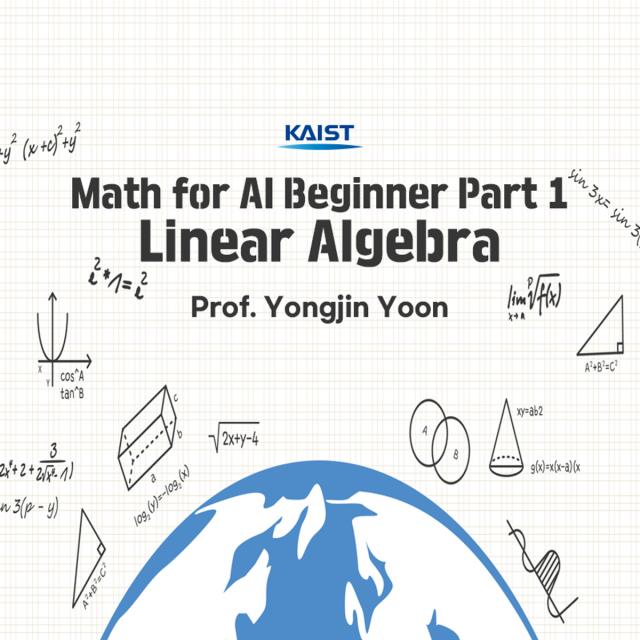
Math for AI beginner part 1 Linear Algebra (Coursera) Coursera
Korea Advanced Institute of Science and Technology - KAIST

Math for AI beginner part 1 Linear Algebra (Coursera)

'Learn concept of AI such as machine learning, deep-learning, support vector machine which is related to linear algebra. Learn how to use linear algebra for AI algorithm. After completing this course, you are able to understand AI algorithm and basics of linear algebra for AI applications.

Sep 28th 2026
5-12 Weeks
Legal Tech and the Digital Transformation of Law (Coursera) Coursera
Universidad Austral

Legal Tech and the Digital Transformation of Law (Coursera)

The digital revolution changed the way we communicate and trade. Now, it is coming into the world of law. This program will give you a broad overview of the main trends that are affecting the legal industry: the birth of the legal tech market and the application of technology in law; the role of artificial intelligence in the automation of the work of lawyers; blockchain technology and its impact on the way we sign and execute contracts; initiatives to ensure access to justice through virtual courts and robot judges.

Oct 5th 2026
5-12 Weeks
Building Trust: Ethics for AI-powered Chatbots (Coursera) Coursera
Coursera Instructor Network

Building Trust: Ethics for AI-powered Chatbots (Coursera)

Many organizations with websites are using chatbots to engage with customers. While this strategy has proved profitable and efficient, there are ethical issues that can arise if users are unaware that their interaction is with an AI bot and not a human. This course will take the learner through the evolution of chatbots, so they are equipped with an appropriate sense of incremental improvements.

Oct 5th 2026
1 Week
Google Cloud Product Fundamentals en Español (Coursera) Coursera
Google Cloud

Google Cloud Product Fundamentals en Español (Coursera)

Este curso, que es una continuación de Business Transformation with Google Cloud, le permitirá conocer la perspectiva tecnológica de la transformación de una organización. Para ser más específicos, explicaremos cómo la tecnología de Google Cloud puede transformar digitalmente una organización en los siguientes aspectos: modernizar la infraestructura de TI; mejorar la forma en que los equipos desarrollan las aplicaciones que utiliza la empresa; saber cómo aprovechar el aprendizaje automático y la inteligencia artificial para generar más valor; advertir el rol fundamental de las herramientas de productividad basadas en la nube, como G Suite, para cumplir con el trabajo, y comprender los desafíos y las oportunidades de la administración de costos que trae aparejados una infraestructura de TI cambiante basada en la nube.

Sep 28th 2026
5-12 Weeks
Artificial Intelligence in Marketing (Coursera) Coursera
University of Virginia

Artificial Intelligence in Marketing (Coursera)

AI is everywhere! By harnessing the power of Artificial Intelligence, businesses and marketers have amazing growth potential, and the opportunities to enhance marketing with AI are always expanding. But how can businesses use AI tools to drive their success and gain sustainable competitive advantages? What are the challenges faced by businesses as they implement AI into their marketing strategies? In this course, developed at the Darden School of Business at the University of Virginia, and delivered by Professor of Business Administration Raj Venkatesan, you will explore an important frontier of digital transformation in marketing.

Sep 28th 2026
4 Weeks
Machine Teaching for Autonomous AI (Coursera) Coursera
University of Washington

Machine Teaching for Autonomous AI (Coursera)

Just as teachers help students gain new skills, the same is true of artificial intelligence (AI). Machine learning algorithms can adapt and change, much like the learning process itself. Using the machine teaching paradigm, a subject matter expert (SME) can teach AI to improve and optimize a variety of systems and processes. The result is an autonomous AI system.

Oct 5th 2026
4 Weeks
Data Science in Stratified Healthcare and Precision Medicine (Coursera) Coursera
University of Edinburgh

Data Science in Stratified Healthcare and Precision Medicine (Coursera)

An increasing volume of data is becoming available in biomedicine and healthcare, from genomic data, to electronic patient records and data collected by wearable devices. Recent advances in data science are transforming the life sciences, leading to precision medicine and stratified healthcare. In this course, you will learn about some of the different types of data and computational methods involved in stratified healthcare and precision medicine.

Oct 5th 2026
5-12 Weeks
Probabilistic Graphical Models 3: Learning (Coursera) Coursera
Stanford University

Probabilistic Graphical Models 3: Learning (Coursera)

Probabilistic graphical models (PGMs) are a rich framework for encoding probability distributions over complex domains: joint (multivariate) distributions over large numbers of random variables that interact with each other. These representations sit at the intersection of statistics and computer science, relying on concepts from probability theory, graph algorithms, machine learning, and more. They are the basis for the state-of-the-art methods in a wide variety of applications, such as medical diagnosis, image understanding, speech recognition, natural language processing, and many, many more. They are also a foundational tool in formulating many machine learning problems.

Sep 28th 2026
5-12 Weeks
Business Implications of AI: A Nano-course (Coursera) Coursera
EIT Digital

Business Implications of AI: A Nano-course (Coursera)

In this course you will learn what Artificial Intelligence is, from a leaders point of view. How shall we, as leaders, understand it from a corporate strategy point of view? What is it and how can it be used? What are the crucial strategic decisions we have to make, and how to make them? What consequences can we expect if we decide on doing AI-projects and what kind of competences do we need? Where shall we start, and what could be a good second as well as third step? What implications for the organization can we expect? These are the questions answered in this course.

Oct 5th 2026
4 Weeks
Build AI Apps with ChatGPT, Dall-E, and GPT-4 (Coursera) Coursera
Scrimba

Build AI Apps with ChatGPT, Dall-E, and GPT-4 (Coursera)

By the end of this course, you'll know how to use the OpenAI API to add mind-blowing AI features to your apps. You will learn how to use the Dall-E, GPT-4, and ChatGPT APIs, and get the expertise to fine-tune a model with your own data. In the first project, MoviePitch, you will get a primer on the OpenAI API and harness the power of artificial intelligence to generate ideas and images.

Oct 5th 2026
3 Weeks
Foundations of Data Science: K-Means Clustering in Python (Coursera) Coursera
University of London,Goldsmiths, University of London

Foundations of Data Science: K-Means Clustering in Python (Coursera)

This MOOC, designed by an academic team from Goldsmiths, University of London, will quickly introduce you to the core concepts of Data Science to prepare you for intermediate and advanced Data Science courses. It focuses on the basic mathematics, statistics and programming skills that are necessary for typical data analysis tasks.

Oct 5th 2026
5-12 Weeks