FUN

Politics and Economics of International Energy (FUN)

Offered by Sciences Po,
Politics and Economics of International Energy (FUN)

The course aims at providing students whose main interest is in international relations a background on energy resources, technology and economic realities.

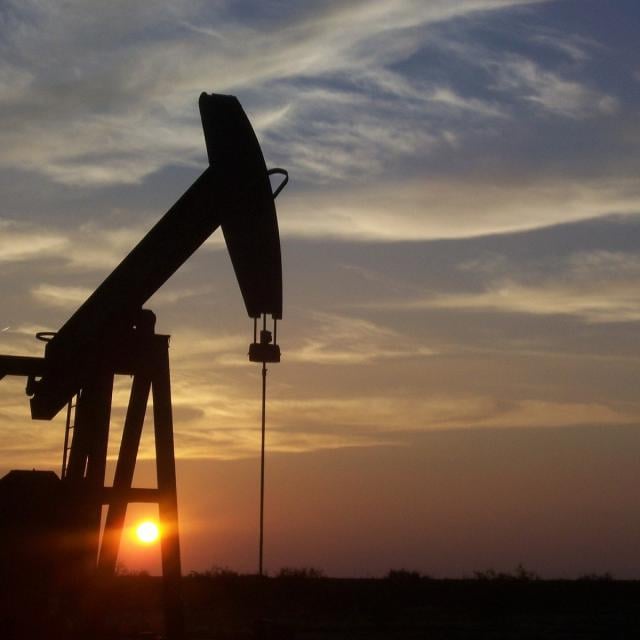
Energy issues have always been important in international relations, but in recent years may have become even more important than in the past due to the widespread awareness of existing limits to energy sources and negative climate impacts. The course discusses global trends in energy consumption and production, various available scenarios for potential developments in the coming decades, the availability of oil reserves and the evolution of the oil industry. It then discusses natural gas and highlights the differences between oil and gas. It will also discuss renewable energy sources, nuclear energy and EU energy policy.
The course aims at providing students whose main interest is in international relations a background on energy resources, technology and economic realities to allow them to correctly interpret the political impact of current developments. It also aims at providing students, who already have a technical background in energy science or engineering, with the broad global view of energy issues that will allow them to better understand the social, economic and political impact of their technical knowledge.
Note: This course is currently not available.

Related Courses

Global Energy and Climate Policy (Coursera) Coursera
University of London,SOAS University of London

Global Energy and Climate Policy (Coursera)

The Global Energy and Climate Policy course offers an introduction to the theoretical and practical understanding of how energy and climate change policies are designed, shaped, advocated and implemented. As energy markets go truly global, domestic energy policies are becoming more and more entangled with wider issues of international governance. Concurrently, the urgent need to mitigate and adapt to climate change and transition to a low-carbon future is adding a further layer of complexity.

Jun 29th 2026
5-12 Weeks
La gouvernance territoriale (FUN) FUN
Centre National de la Fonction Publique Territoriale - CNFPT

La gouvernance territoriale (FUN)

La gouvernance territoriale se trouve au carrefour de deux mutations, toutes les deux décisives pour réconcilier les citoyens avec la politique, pour répondre aux exigences d'un monde de plus en plus complexe, pour conduire la transition vers des sociétés durables. La première de ces mutations est celle de la gouvernance. La seconde est celle des territoires.

No sessions available
5-12 Weeks
Migrations internationales : un enjeu mondial (Coursera) Coursera
Sciences Po

Migrations internationales : un enjeu mondial (Coursera)

Le monde bouge, mais les opinions et les gouvernements ne sont pas tous prêts à accepter cette réalité mal connue. La question affecte à la fois les Etats, mais aussi la planète, dans un processus de mondialisation et de régionalisation des migrations, et pose de nouvelles questions aux relations internationales, en y incluant le sud. Ce cours cherche à la fois à parfaire la connaissance sur le sujet, à traiter les thèmes essentiels induits par les migrations internationales et à dresser les tendances de demain.

Jun 29th 2026
5-12 Weeks
General Chemistry: Concept Development and Application (Coursera) Coursera
Rice University

General Chemistry: Concept Development and Application (Coursera)

This course will cover the topics of a full year, two semester General Chemistry course. We will use a free on-line textbook, Concept Development Studies in Chemistry, available via Rice’s Connexions project. The fundamental concepts in the course will be introduced via the Concept Development Approach developed at Rice University. In this approach, we will develop the concepts you need to know from experimental observations and scientific reasoning rather than simply telling you the concepts and then asking you to simply memorize or apply them.

Jun 29th 2026
5-12 Weeks
La transition énergétique : les clés du développement durable de l'Europe et de l'Afrique (FUN) FUN
le cnam

La transition énergétique : les clés du développement durable de l'Europe et de l'Afrique (FUN)

La transition énergétique désigne le passage du système énergétique, dominant depuis la seconde révolution industrielle, reposant sur l’utilisation des énergies fossiles (le pétrole, le charbon, et le gaz naturel) vers un bouquet énergétique donnant la part belle aux énergies renouvelables et à l’efficacité énergétique.

No sessions available
5-12 Weeks
Planet Earth ... and You! (Coursera) Coursera
University of Illinois at Urbana-Champaign

Planet Earth ... and You! (Coursera)

Earthquakes, volcanoes, mountain building, ice ages, landslides, floods, life evolution, plate motions—all of these phenomena have interacted over the vast expanses of deep time to sculpt the dynamic planet that we live on today. Planet Earth presents an overview of several aspects of our home, from a geological perspective. We begin with earthquakes—what they are, what causes them, what effects they have, and what we can do about them. We will emphasize that plate tectonics—the grand unifying theory of geology—explains how the map of our planet's surface has changed radically over geologic time, and why present-day geologic activity—including a variety of devastating natural disasters such as earthquakes—occur where they do. We consider volcanoes, types of eruptions, and typical rocks found there.

Jun 29th 2026
5-12 Weeks
Inequality and Democracy (Coursera) Coursera
Universiteit Utrecht

Inequality and Democracy (Coursera)

Most countries are getting more and more unequal. But the core of democracy is political equality: that everyone should have an equal say in how their country is run. Can we really expect these things to go together? Can people have equal political power while economic inequality grows and grows? Take this course and decide for yourself.

Jun 29th 2026
5-12 Weeks
Model Thinking (Coursera) Coursera
University of Michigan

Model Thinking (Coursera)

We live in a complex world with diverse people, firms, and governments whose behaviors aggregate to produce novel, unexpected phenomena. We see political uprisings, market crashes, and a never ending array of social trends. How do we make sense of it? Models. Evidence shows that people who think with models consistently outperform those who don't. And, moreover people who think with lots of models outperform people who use only one. Why do models make us better thinkers? Models help us to better organize information - to make sense of that fire hose or hairball of data (choose your metaphor) available on the Internet.

Jun 29th 2026
5-12 Weeks
Défis énergétiques et risques sanitaires dans les transports (FUN) FUN
le cnam

Défis énergétiques et risques sanitaires dans les transports (FUN)

Savez-vous comment fonctionne un moteur de voiture ou d'avion ? Pensez-vous qu'un moteur à essence pollue moins qu'un moteur diesel ? Croyez-vous que le respect de l'environnement passe par les voitures électriques ? Qu'en est-il de l'avion, du train, du bateau ? Ce Mooc labellisé "COP22" traite toutes ces questions. Il aborde les défis énergétiques et sanitaires à relever dans le domaine des transports : la nécessité d'améliorer l'efficacité énergétique des systèmes de production d'énergie, l'impact des émissions de polluants sur la santé, le déséquilibre climatique ...

No sessions available
5-12 Weeks
Introduction to solar cells (Coursera) Coursera
Technical University of Denmark - DTU

Introduction to solar cells (Coursera)

How do solar cells work, why do we need, and how can we measure their efficiency? These are just some of the questions Introduction to solar cells tackles. Whether you are looking for general insight in this green technology or your ambition is to pursue a career in solar, “Introduction to Solar Cells” is an excellent starting point. The course is a tour through the fundamental disciplines including solar cell history, why we need solar energy, how solar cells produce power, and how they work. During the course we cover mono- and multi-crystalline solar cells, thin film solar cells, and new emerging technologies.

Jun 29th 2026
5-12 Weeks