
The course gives you an introduction to using R.
The course will cover the basics from getting your own development environment setup all the way to doing basic computational tasks.
Note: This course is currently not available.
The course gives you an introduction to using R.
The course will cover the basics from getting your own development environment setup all the way to doing basic computational tasks.
 Coursera
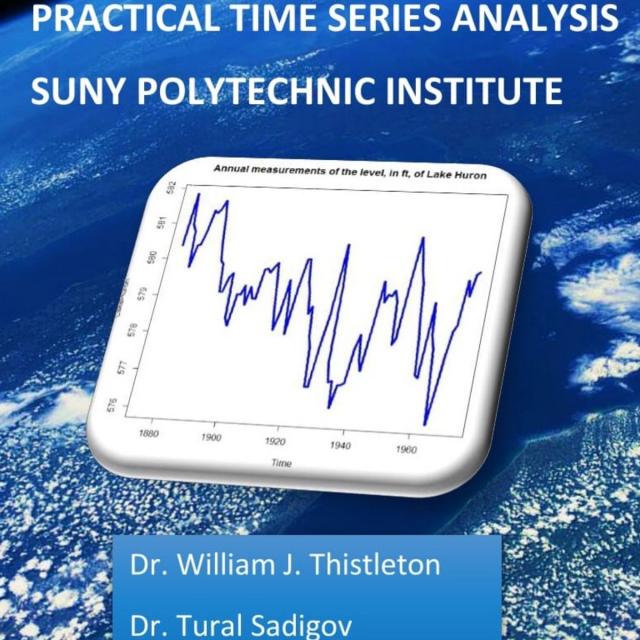
Many of us are "accidental" data analysts. We trained in the sciences, business, or engineering and then found ourselves confronted with data for which we have no formal analytic training. This course is designed for people with some technical competencies who would like more than a "cookbook" approach, but who still need to concentrate on the routine sorts of presentation and analysis that deepen the understanding of our professional topics.
 Coursera
Welcome to AWS Cloud Practitioner Essentials. If you’re new to the cloud, whether you’re in a technical or non-technical role such as finance, legal, sales, marketing, this course will provide you with an understand of fundamental AWS Cloud concepts to help you gain confidence to contribute to your organization’s cloud initiatives. This course is also the starting point to prepare for your AWS Certified Cloud Practitioner certification whenever it’s convenient for you.
 Coursera
This course is best suited for individuals currently in the healthcare sector, as a provider, payer, or administrator. Individuals pursuing a career change to the healthcare sector may also be interested in this course. This is the second part in a two-part course exploring concepts and topics related to improving the patient experience and reducing pain points in healthcare processes through analytic and decision support frameworks.
 Coursera
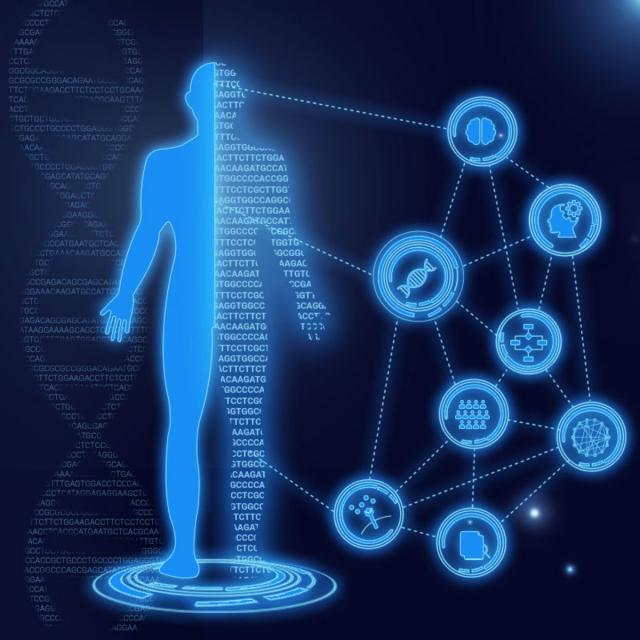
An increasing volume of data is becoming available in biomedicine and healthcare, from genomic data, to electronic patient records and data collected by wearable devices. Recent advances in data science are transforming the life sciences, leading to precision medicine and stratified healthcare. In this course, you will learn about some of the different types of data and computational methods involved in stratified healthcare and precision medicine.
 Coursera
Nossas boas-vindas ao Curso Ferramentas para Ciência de Dados: Introdução ao R. Neste curso, você aprenderá que o mundo evoluiu muito quando o assunto é tomada de decisão baseada em dados e já não é possível comparar a quantidade de informações a que temos acesso atualmente com o que tínhamos disponíveis décadas atrás.
 Coursera
Learn Tableau fundamentals, advanced visualizations, and integration with data science tools. Elevate your skills in creating impactful dashboards. Enroll now for hands-on experience and master the art of data storytelling. Unlock the potential for advanced analytics, exploring correlations and trends within your data. Build interactive dashboards that tell compelling data stories, utilizing filters, parameters, and actions for user engagement.
 Coursera
Predictive analytics has a longstanding tradition in medicine. Developing better prediction models is a critical step in the pursuit of improved health care: we need these tools to guide our decision-making on preventive measures, and individualized treatments. In order to effectively use and develop these models, we must understand them better. In this course, you will learn how to make accurate prediction tools, and how to assess their validity. First, we will discuss the role of predictive analytics for prevention, diagnosis, and effectiveness. Then, we look at key concepts such as study design, sample size and overfitting.
 Coursera
The Code Free Data Science class is designed for learners seeking to gain or expand their knowledge in the area of Data Science. Participants will receive the basic training in effective predictive analytic approaches accompanying the growing discipline of Data Science without any programming requirements. Machine Learning methods will be presented by utilizing the KNIME Analytics Platform to discover patterns and relationships in data.
 Coursera
Neurohacking describes how to use the R programming language and its associated package to perform manipulation, processing, and analysis of neuroimaging data. We focus on publicly-available structural magnetic resonance imaging (MRI). We discuss concepts such as inhomogeneity correction, image registration, and image visualization.
 Coursera
The COVID-19 pandemic is one of the first world-wide scenarios where data made a difference in capturing and analyzing the diffusion and impact of the disease. We offer an introductory course for decision makers, policy makers, public bodies, NGOs, and private organizations about methods, tools, and experiences on the use of data for managing current and future pandemic scenarios.
 Coursera
This course aims to provide a succinct overview of the emerging discipline of Materials Informatics at the intersection of materials science, computational science, and information science. Attention is drawn to specific opportunities afforded by this new field in accelerating materials development and deployment efforts.
 Coursera
In this course on global statistics, offered by the University of Geneva jointly with the ETH Zürich KOF, you will learn the general approach of constructing composite indices and some of resulting problems. We will discuss the technical properties, the internal structure (like aggregation, weighting, stability of time series), the primary data used and the variable selection methods. These concepts will be illustrated using a sample of the most popular composite indices. We will try to address not only statistical questions but also focus on the distinction between policy-, media- and paradigm-driven indicators.