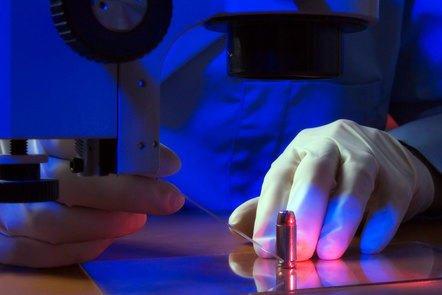
Introduction to Forensic Science (FutureLearn)

Introduction to Forensic Science (FutureLearn)

Explore the methods underpinning forensic science, from crime scene investigation to reporting evidential value within a case. The course addresses four major evidence types: drugs of abuse, DNA, firearms and impression evidence, and discusses these through the exploration of a case-based scenario presented across a six-week modular framework.

Class Deals by MOOC List - Click here and see FutureLearn's Active Discounts, Deals, and Promo Codes.

A murder case set on the murky shores of Loch Lomond provides the backbone to ‘Introduction to Forensic Science’. As the case unfolds each week, a number of evidence types, and the forensic science approaches that may be used to evaluate the evidence, are explored.

In the first week we will set the scene and look at how the initial crime scene is processed. Subsequent weeks will introduce various types of evidence including drugs of abuse, fingerprints, DNA, footwear marks and firearms.
Course material is supplemented with opportunities to check understanding and engage with fellow learners, as well as the course leaders, who have international reputations in the field of forensic science. You will be encouraged to formulate (and defend!) opinions on the case, based on your evaluation of the evidence. All will be revealed in the final week, so make sure you are there to find out the identity of the murderer!

What topics will you cover?

  • Explore the methods underpinning forensic science, from crime scene investigation to reporting evidential value within a case
  • Examine the four major evidence types: drugs of abuse, DNA, firearms and impression evidence
  • Learn how the initial crime scene is processed
  • Review various types of evidence including drugs of abuse, fingerprints, DNA, footwear marks and firearms
  • Formulate (and defend!) opinions on the case, based on your evaluation of the evidence

What will you achieve?
By the end of the course, you‘ll be able to...

  • Describe the fundamental principles applied to any investigation where forensic science is involved.
  • Summarise the basic principles of crime scene investigation.
  • Explain the theory of fingerprints, blood pattern analysis, DNA, footwear and tool mark impression evidence, and drugs of abuse in the context of Forensic Science.
  • Explore the nature and limitations of the evidence that scientific tests deliver.
  • Interpret the evidence presented as part of a case study by considering the subjective and objective nature of the evidence and what this may mean to the strength of your conclusions.
  • Reflect on the use of forensic science in the criminal justice system.
Go to Class
MOOC List is learner-supported. When you buy through links on our site, we may earn an affiliate commission.

Related Courses

Forensic Facial Reconstruction: Finding Mr. X (FutureLearn) FutureLearn
The University of Sheffield

Forensic Facial Reconstruction: Finding Mr. X (FutureLearn)

Learn about the forensic technique of facial reconstruction from the experts involved in a real crime case. On Saturday 22 January 2000, two men found a small holdall, abandoned on an industrial estate in the north of Sheffield. Upon opening the bag they made a gruesome discovery. A badly decomposed body. Who was this person? Why did they die? Where had the body been stored all of this time? On this course from The University of Sheffield, you’ll learn alongside the experts who worked to determine the identity of Mr. X. You’ll discover the forensic science techniques that were used to identify the body and understand the circumstances surrounding their death.

Sep 21st 2020
2 Weeks
Введение в биоинформатику (Introduction to Bioinformatics) (Coursera) Coursera
Saint Petersburg State University

Введение в биоинформатику (Introduction to Bioinformatics) (Coursera)

Курс «Введение в биоинформатику» адресован тем, кто хочет получить расширенное представление о том, что такое биоинформатика и как она помогает биологам и медикам в их работе. The course is aimed at those who would like to have a better idea of what bioinformatics is and how it helps biologists and medical scientists in research and clinical work.

Jul 27th 2026
5-12 Weeks
Computer Forensics (edX) EdX
Rochester Institute of Technology,RITx

Computer Forensics (edX)

Learn the process, techniques and tools for performing a digital forensics investigation to obtain data related to computer crimes. Digital forensics involves the investigation of computer-related crimes with the goal of obtaining evidence to be presented in a court of law.

Aug 17th 2026
5-12 Weeks
The Psychology of Criminal Justice (edX) EdX
University of Queensland,UQx

The Psychology of Criminal Justice (edX)

Learn how behavioural science can improve our criminal justice system. This course systematically explores the effectiveness of the law and justice system from a psychological perspective. By experiencing a fictional case first hand, you will learn about the psychology of law and some of the misconceptions commonly held about criminal justice.

Self Paced
Self-Paced
Forensic Psychology: Witness Investigation (FutureLearn) FutureLearn
The Open University

Forensic Psychology: Witness Investigation (FutureLearn)

How important are eyewitness testimonies in police investigations? Discover how forensic psychology prevents criminal injustice. Become a forensic psychologist and help solve crimes using eyewitness evidence. Have you ever questioned how reliable your own mind is? In this 8-week forensic psychology course, you’ll learn how the mind plays tricks on us and how this can impact criminal investigations. You’ll discover how cautious the police have to be during eyewitness investigation, and you’ll step into the shoes of a forensic psychologist.

Self Paced
5-12 Weeks
Bacterial Genomes: From DNA to Protein Function Using Bioinformatics (FutureLearn) FutureLearn
Wellcome Genome Campus Advanced Courses and Scientific Conferences

Bacterial Genomes: From DNA to Protein Function Using Bioinformatics (FutureLearn)

Use bioinformatics to explore DNA sequences and protein functions, to find the determinants of virulence in microbes. Join us in our quest to discover what makes microbes dangerous. Use bioinformatics to probe genomes, to explore and represent DNA and protein sequences. Then, use databases to find protein sequences’ conserved domains and investigate their functions.

No sessions available
2 Weeks
The Little Stuff: Energy, Cells, and Genetics (Coursera) Coursera
University of Colorado Boulder

The Little Stuff: Energy, Cells, and Genetics (Coursera)

In this course, we will explore the smaller side of biology: molecular biology. We’ll cover basic topics including cell biology and how cells can go “rogue” and turn into cancer, how energy from the sun is transferred to fuel our bodies, basics of genetics and inheritance, and genetic technologies. At the end of this course, we will discuss ethical and moral implications of several exciting and new genetic technologies.

Jul 27th 2026
4 Weeks
Classical papers in molecular genetics (Coursera) Coursera
University of Geneva

Classical papers in molecular genetics (Coursera)

You have all heard about the DNA double helix and genes. Many of you know that mutations occur randomly, that the DNA sequence is read by successive groups of three bases (the codons), that many genes encode enzymes, and that gene expression can be regulated. These concepts were proposed on the basis of astute genetic experiments, as well as often on biochemical results. The original articles were these concepts appeared are however not frequently part of the normal curriculum of biologists, biochemists and medical students.

Jul 27th 2026
5-12 Weeks
Inside Cancer: How Genes Influence Cancer Development (FutureLearn) FutureLearn
University of Bath

Inside Cancer: How Genes Influence Cancer Development (FutureLearn)

Understand how genetics influence the development and spread of cancer, with this free, introductory online course. What is the one thing that all cancers have in common? They begin as mutant or rebel cells! In this course we will explore how changes in cancer genetics and epigenetics enables these cells to grow uncontrollably, by exploiting our blood vessels and immune system along with other systemic changes.

Self Paced
4 Weeks