EdX

Introduction to Biomedical Imaging (edX)

Introduction to Biomedical Imaging (edX)

Discover how biomedical imaging technologies are complementary and what information they provide to health professionals. Imaging technologies form a significant component of the health budgets of all developed economies, and most people need advanced imaging such as MRIs, X-Rays and CT Scans (or CAT Scans) during their life. Many of us are aware of the misinformation sometimes offered in TV dramas, which either exaggerates the benefits or overemphasizes the risks.

Class Deals by MOOC List - Click here and see EdX's Active Discounts, Deals, and Promo Codes.

This medical imaging course provides an introduction to biomedical imaging and modern imaging modalities. The course also covers the basic scientific principals behind each modality, and introduces some of the key applications, from neurological diseases to cancers. This course includes modules specially designed for the general public, whilst also providing some advanced modules which could contribute to professional development in health, engineering and IT industries.

What you'll learn:

  • Why there is a need for different imaging modalities
  • The basic principles of each modality and the terminology used
  • The patient experience and why things happen during the imaging procedure
  • How to select the most suitable modality for a given clinical case
  • How to provide basic advice on imaging modalities to your peers

Additionally, in the 'advanced' sections in the course you'll learn:

  • How an image is reconstructed / visualized OR
  • The principles of image post-processing

Syllabus

The Introduction to Biomedical Imaging course incorporates a case study which is introduced at the start of each episode. This case study will follow a hypothetical patient required to undergo various imaging modalities for a medical condition.
For each episode we include information relevant to that modality and the basic scientific principles, hardware and technology, and clinical applications.

  • In episode 1, we'll consider x-rays.
  • In episode 2, we'll explore computerised tomography (CT).
  • In episode 3, you'll learn about ultrasound (U/S).
  • In episode 4, we'll discuss magnetic resonance imaging (MRI).
  • In episode 5, you'll learn about PET and SPECT.

Each episode will include several short quizzes which will not contribute to your final grade and will help you understand the key points.
To complete the course, the assessment is a marked quiz for each episode that will contribute to your final grade, plus a final assessment called Assessment Scenarios at the end of the course. Assessment Scenarios involve reviewing 2 case studies/scenarios and answering questions related to imaging modalities of relevance.
Go to Class
MOOC List is learner-supported. When you buy through links on our site, we may earn an affiliate commission.

Related Courses

The Einstein Revolution (edX) EdX
HarvardX,Harvard University

The Einstein Revolution (edX)

Traces Albert Einstein’s engagement with relativity, quantum mechanics, Nazism, nuclear weapons, philosophy, the arts, and technology. Albert Einstein has become the icon of modern science. Following his scientific, cultural, philosophical, and political trajectory, this course aims to track the changing role of physics in the 20th and 21st centuries.

Self Paced
Self-Paced
Fundamentals of Biomedical Imaging: Ultrasounds, X-ray, positron emission tomography (PET) and applications (edX) EdX
École Polytechnique Fédérale de Lausanne,EPFLx

Fundamentals of Biomedical Imaging: Ultrasounds, X-ray, positron emission tomography (PET) and applications (edX)

Learn how principles of basic science are integrated into major biomedical imaging modalities and the different techniques used, such as X-ray computed tomography (CT), ultrasounds and positron emission tomography (PET). This physics course covers the physical principles of major in vivo bio-imaging modalities and the different imaging techniques.

Self Paced
Self-Paced
SDG: Moving Towards Sustainable Work (edX) EdX
Universidad Carlos III de Madrid - UC3M,UC3Mx

SDG: Moving Towards Sustainable Work (edX)

Decent work is thecritical engine of sustainable development. This course explores the United Nations' Sustainable Development Goals and mechanisms for developing decent and sustainable work. The United Nations' Sustainable Development 2030 Agenda gives us the opportunity to change and improve the lives of millions of people. These widespread efforts won't juststem from organizations in the formal public or private sectors (governments, corporations, trade unions, etc.) but will also require participation from ordinary people and civil society as a whole.

Self Paced
Self-Paced
Electric Cars: Technology (edX) EdX
Delft University of Technology,DelftX

Electric Cars: Technology (edX)

Get an in-depth understanding of the technology behind electric cars. Electric cars are more than a novel means of mobility. They have been recognized as an essential building block of the energy transition. Fulfilling their promise will imply a significant change in the technical, digital and social dimensions of transport and energy infrastructure. If you are interested in learning about the state-of-the-art technology behind electric cars, then this is the course for you!

Self Paced
Self-Paced
Buscar en Internet (edX) EdX
Universitat Politècnica de València,UPValenciaX

Buscar en Internet (edX)

Aprenderás a planificar una búsqueda desde el comienzo y a utilizar las herramientas que Internet te ofrece para encontrar lo que buscas. En un mundo virtual en el que hay cientos de millones de páginas disponibles con informacion de todo tipo, buscar en Internet de forma eficaz es una habilidad cada día más necesaria. Aprende con nosotros a separar el grano de la paja usando las herramientas disponibles y realizando las preguntas de forma adecuada.

Self Paced
Self-Paced
Managing Study, Stress and Mental Health at University (edX) EdX
Curtin University,CurtinX

Managing Study, Stress and Mental Health at University (edX)

Develop a clearer understanding of what mental health is, and learn how best to recognise and respond to mental health concerns, such as negative thoughts and behaviours, in yourself and others. This short course is a German-Australian collaboration developed in response to the growing need to provide students with the knowledge, skills, and understanding to recognise, identify and respond to mental health challenges in themselves and others. The course is primarily for university students and those working in the tertiary education and local community sectors.

Self Paced
Self-Paced
Implant Dentistry (edX) EdX
University of Hong Kong,HKUx

Implant Dentistry (edX)

Learn Implant Dentistry from world-class specialists and researchers! Join the state of art in the biology, the technology and clinical management in implant dentistry today! Follow leading specialists, researchers and teachers of Implant Dentistry from more than 10 countries around the world led by HKU's Implant Dentistry MOOC team to explore the biology, the technology and clinical management in implant dentistry today.

Self Paced
Self-Paced
Essential Human Biology: Cells and Tissues (edX) EdX
University of Adelaide,AdelaideX

Essential Human Biology: Cells and Tissues (edX)

An introduction to the human body's most fundamental building blocks and their behaviours in health and disease. Are you preparing for a health-related career, or planning to study in the health sciences? Perhaps you're just keen to learn more about the wonders of the human body? Our bodies are amazing but complex biological machines. This course will provide you with an outstanding foundation of knowledge in human anatomy and physiology.

Self Paced
Self-Paced
Global Media, War, and Technology (edX) EdX
University of Queensland,UQx

Global Media, War, and Technology (edX)

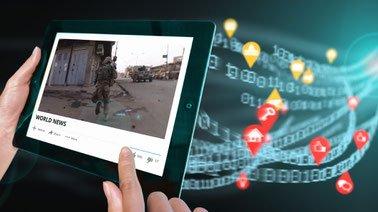
Explore the intersection of information technology, violent conflict, and resistance. The experience of war has changed fundamentally – not only for those fighting and reporting, but also for those on the home front. High-tech nations wage wars from a distance using satellite-guided weaponry while non-state military actors, terrorist organizations, and citizen journalists have increasingly added new voices and visual perspectives to the conversation about conflict.

Self Paced
Self-Paced
A Resilient Future: Science and Technology for Disaster Risk Reduction (edX) EdX
École Polytechnique Fédérale de Lausanne

A Resilient Future: Science and Technology for Disaster Risk Reduction (edX)

Discover how science and technology help us reduce disaster risk and increase resilience. This course aims to introduce participants to existing and emerging technologies suitable for disaster risk reduction while promoting the overall aim of sustainable development. The course focuses on three main natural hazards- floods, landslides and earthquakes. It also discusses the challenges and limits of adapting and adopting technologies depending on context (Global North and Global South) with examples from Switzerland, Nepal, Colombia, Philippines and other countries.

Self Paced
Self-Paced
Through my Eyes – Intellectual Disability Healthcare around the World (edX) EdX
University of Queensland,UQx

Through my Eyes – Intellectual Disability Healthcare around the World (edX)

Learn, from personal stories, the daily life and challenges faced by those with intellectual disabilities. This health course focuses on the stories of people with intellectual disabilities around the world, as well as their families and supporters. You will learn about the challenges and aid received in healthcare for people with intellectual disabilities, including their experience of specific syndromes and communication difficulties, and how they stay healthy.

Self Paced
Self-Paced
Improving Global Health: Focusing on Quality and Safety (edX) EdX
HarvardX,Harvard University

Improving Global Health: Focusing on Quality and Safety (edX)

An introduction to the emerging field of global healthcare quality. Access to healthcare services is critical – but is it enough? We are at a critical inflection point in global health. We have seen improvements in access to care, but struggle to improve human health. A key component of this equation is quality of care. Improving access to healthcare is only as useful as the quality of care provided. Many agree that quality is important – but what is it? How do we define it? How do we measure it? And most importantly, how might we make it better?

Self Paced
Self-Paced