International Organizations for Interpreters (Coursera)

Offered by University of Geneva,
International Organizations for Interpreters (Coursera)

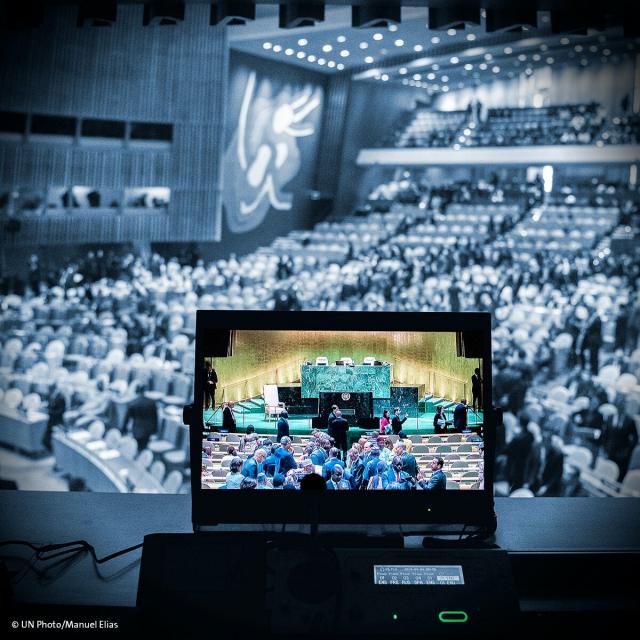
This course is primarily aimed at students of conference interpreting, or people who wish to begin studying conference interpreting. It is based on a long-standing lecture course given by the oldest interpreting school in the world, the Faculty of Translation and Interpreting at the University of Geneva. Our course looks at organizations from a viewpoint which very few people ever get to see; international organizations seen from the interpreting booth. You will learn about the history, development, structure and functions of international organizations, and of course the question of multilingualism.

Class Deals by MOOC List - Click here and see Coursera's Active Discounts, Deals, and Promo Codes.

The purpose of this course is to help you, as a budding interpreter or translator, to gain basic knowledge about the institutions which may be your future employers, and to give you the essential tools that you will need to easily and efficiently prepare yourself for working at an international organization. Naturally, Geneva – renowned for its uniquely high concentration of international organizations – takes centre stage in this course. Throughout this course, we will take you with us to visit a number of these organizations, and to benefit from interviews with various experts who will give us an insider’s view of multilateralism, multilingualism and the other topics broached in the course.

Syllabus

WEEK 1
International Geneva
Welcome to Module 1 of our course. In this Module you will find out how Geneva became a centre of multilateralism, learn about the main international organizations in Geneva, and learn how to identify different kinds of international organization.

WEEK 2
History, Evolution and Trends
Welcome to Module 2 of our course. In this Module you will learn about the founding of the first international organizations and the growth of the multilateral system. We will focus in particular on the League of Nations, the International Labour Organization (ILO) and the UN system as a whole.

WEEK 3
The Structure of International Organizations
Welcome to Module 3 of our course. In this Module you will learn about the legal status of international organizations and the functions of their basic texts. We will then examine the structure of organizations, focussing on identifying the various kinds of body found within them. Finally, you will learn about the different kinds of entity that make up the UN system, in particular the UN specialized agencies.

WEEK 4
The Competencies and Functioning of International Organizations
Welcome to Module 4 of our course. In this Module you will learn about the mandates and roles of international organizations. We will look at the tendency of organizations' mandates to gradually expand, and the problems that can ensue. You will also learn how international organizations make decisions.

WEEK 5
Multilingualism in International Organizations
Welcome to Module 5 of our course. The Module focusses on topics that are of particular interest to future conference interpreters: languages and multilingualism. You will first learn how the current multilingual system at the UN came to be, which, of course, would not have been possible without simultaneous interpreting. You will learn about the founding of our profession, and the important distinction between official and working languages. We will then examine two important issues linked to multilingualism: the increasing dominance of English and the cost of multilingualism within international organizations.

WEEK 6
Conclusion
Welcome to the final Module of our course. This Module will help you assess the benefits and shortcomings of international organizations. We will look at the numerous flaws of international organizations, and the cost of the multilateral system — including typical IO budgets — but we will also assess the importance of international organizations and the multilateral system as a whole.
Go to Class
MOOC List is learner-supported. When you buy through links on our site, we may earn an affiliate commission.

Related Courses

Questionnaire Design for Social Surveys (Coursera) Coursera
University of Michigan

Questionnaire Design for Social Surveys (Coursera)

This course will cover the basic elements of designing and evaluating questionnaires. We will review the process of responding to questions, challenges and options for asking questions about behavioral frequencies, practical techniques for evaluating questions, mode specific questionnaire characteristics, and review methods of standardized and conversational interviewing.

Jun 1st 2026
5-12 Weeks
Political Economy of Institutions and Development (Coursera) Coursera
Leiden University

Political Economy of Institutions and Development (Coursera)

This course is part of the SDG initiative addressing the UN Sustainable Development Goals, specifically for the following SDGs [1, 8, 10 and 16]. We hope you will join in our efforts to reach the SDG’s in small but measurable and actionable ways, cooperating with Development Done Differently. Expand your impact. You can create a better world. In today’s world, politics and economics are interconnected, but what is the nature of this connectivity?

May 18th 2026
5-12 Weeks
Multilingual Practices: Tackling Challenges and Creating Opportunities (FutureLearn) FutureLearn
University of Groningen

Multilingual Practices: Tackling Challenges and Creating Opportunities (FutureLearn)

Learn about central aspects of multilingualism in today's globalised societies, such as cognition, policies and education. In a world of globalisation, people who do not share the same language meet more often every day. Being able to deal with these multilingual practices in an effective way can give you an advantage in your daily life and work.

Oct 11th 2021
4 Weeks
Educación Supranacional: Descubriendo la Agenda Educativa de los Organismos Internacionales (edX) EdX
Universidad Autonoma de Madrid,UAMx

Educación Supranacional: Descubriendo la Agenda Educativa de los Organismos Internacionales (edX)

Análisis reflexivo y crítico de las políticas educativas de diferentes organismos internacionales y de su impacto ... Es imposible estudiar hoy los sistemas educativos contemporáneos sin adoptar su perspectiva supranacional. Las agendas educativas nacionales se ven influenciadas por las propuestas de los organismos internacionales (OI). Este curso ofrece una visión crítica de las acciones educativas principales OI y de cómo influyen en las reformas nacionales, para promover reflexión sobre la generación de corrientes educativas globales.

Self Paced
Self-Paced
Understanding Multilingual Children's Language Development (FutureLearn) FutureLearn
University of Reading

Understanding Multilingual Children's Language Development (FutureLearn)

Discover the benefits of multilingualism to enhance your practice in classroom, clinical, and home settings. Discover the value of multilingual environments at school and at home. Most people in the world speak more than one language and schools across the globe are becoming more and more multilingual as families move around. On this three-week course, you’ll gain the skills to support and nurture multilingual children.

Mar 6th 2023
3 Weeks
Introduction to Global Governance (edX) EdX
KU Leuven University,KULeuvenX

Introduction to Global Governance (edX)

Critical introduction to the concept, importance and analysis of global governance. In particular, this course provides an overview of the main actors involved in global governance and how these actors manage current key global challenges. Many of the most pressing challenges we are experiencing today are global. Consider climate change, supply chains, or cybersecurity for example – these challenges, like many others, don’t stop or start at the borders of any particular country.

Self Paced
Self-Paced
The Bible's Prehistory, Purpose, and Political Future (Coursera) Coursera
Emory University

The Bible's Prehistory, Purpose, and Political Future (Coursera)

With its walls razed to ground by Babylon’s armies, Jerusalem joined a long line of ancient vanquished cities—from Ur and Nineveh and Persepolis to Babylon itself. While some recovered from the destruction, others did not. But none responded to political catastrophe by fashioning the kind of elaborate and enduring monument to their own downfall that we find in the Bible. Most conquered populations viewed their subjugation as a source of shame. They consigned it to oblivion, opting instead to extol the golden ages of the past. The biblical authors in contrast reacted to loss by composing extensive writings that acknowledge collective failure, reflect deeply upon its causes, and discover thereby a ground for collective hope.

Jun 1st 2026
5-12 Weeks
Microeconomics: When Markets Fail (Coursera) Coursera
University of Pennsylvania

Microeconomics: When Markets Fail (Coursera)

Perfect markets achieve efficiency: maximizing total surplus generated. But real markets are imperfect. In this course we will explore a set of market imperfections to understand why they fail and to explore possible remedies including as antitrust policy, regulation, government intervention. Examples are taken from everyday life, from goods and services that we all purchase and use. We will apply the theory to current events and policy debates through weekly exercises. These will empower you to be an educated, critical thinker who can understand, analyze and evaluate market outcomes.

Jun 2nd 2026
5-12 Weeks
The Economics of AI (Coursera) Coursera
University of Virginia

The Economics of AI (Coursera)

The course introduces you to cutting-edge research in the economics of AI and the implications for economic growth and labor markets. We start by analyzing the nature of intelligence and information theory. Then we connect our analysis to modeling production and technological change in economics, and how these processes are affected by AI. Next we turn to how technological change drives aggregate economic growth, covering a range of scenarios including a potential growth singularity.

Jun 2nd 2026
5-12 Weeks
Foundations of Teaching for Learning: Planning for Teaching and Learning (Coursera) Coursera
Commonwealth Education Trust

Foundations of Teaching for Learning: Planning for Teaching and Learning (Coursera)

The Foundations of Teaching for Learning programme is for anyone who is teaching, or who would like to teach, in any subject and any context - be it at school, at home or in the workplace. With dynamic lessons taught by established and respected professionals from across the Commonwealth, this eight course programme will see you develop and strengthen your skills in teaching, professionalism, assessment, and more. As you carry on through the programme, you will find yourself strengthening not only your skills, but your connection with colleagues across the globe. A professional development opportunity not to be missed.

Jun 1st 2026
5-12 Weeks
International Organizations Management (Coursera) Coursera
University of Geneva

International Organizations Management (Coursera)

This course provides an introduction to International Organizations and the United Nations, and explores how business and management tools can be applied in these settings to achieve better, more effective results. With a focus on cross-sector partnerships in a changing world, the course offers you insights into the inner workings of international organizations and the challenges they face today.

May 18th 2026
5-12 Weeks
Social Computing (Coursera) Coursera
University of California, San Diego

Social Computing (Coursera)

People are social creatures and the modern Internet reflects that. Technology has made collaboration at a distance possible in new ways that present their own set of challenges. This course will introduce you to the major challenges and opportunities for creating online communities. What does the future hold? Learn how social computing can create collaboration experiences that go beyond what’s possible face to face.

Jun 1st 2026
3 Weeks