Innovation in Arable Farming: Technologies for Sustainable Farming Systems (FutureLearn)

Innovation in Arable Farming: Technologies for Sustainable Farming Systems (FutureLearn)

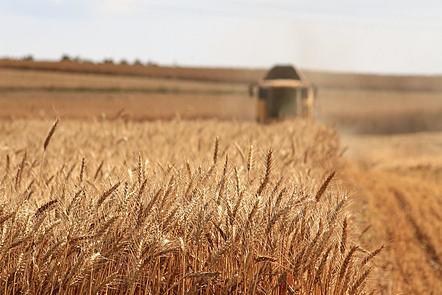
Explore how innovative, digital technologies can help achieve sustainable intensification of arable farming systems. Consider ways arable farmers in the EU can use agri-tech to benefit business. On this course, you’ll explore evidence-based information that outlines the benefits and challenges of adopting new technologies within the EU, and have the chance to read case study examples of some of these applications.

Class Deals by MOOC List - Click here and see FutureLearn's Active Discounts, Deals, and Promo Codes.

Intensification of arable farming systems can be achieved through the adoption of innovative technologies, without negatively impacting the environment. However, uptake of these technologies by farmers across the EU has been limited.
You’ll learn from other farmers who have already adopted agri-tech on their farm and hear how they overcame any barriers to adoption.
You’ll also evaluate the potential of agri-tech to enhance production while meeting environmental and social responsibilities.

What topics will you cover?
• Sustainable arable farming
• Case studies of data driven agri-tech solutions
• Precision agriculture
• Data collection technologies
• Financial considerations
• Social considerations
• Environmental considerations

What will you achieve?
By the end of the course, you‘ll be able to...

  • Improve your knowledge on the concepts of precision agriculture and sustainable intensification and the impact these can have on farming systems.
  • Compare the different technologies that can be used to increase productivity and know how to work out yields to profit.
  • Explore how to use agri-tech to help reduce environmental impacts of farm practices.
  • Identify which skills are necessary to implement new data-driven arable farming techniques.
  • Develop an action plan for precision farming.

Who is the course for?
This course would appeal to individuals working in the agricultural industry – including farmers, growers, and other primary producers.
It would also benefit environmental sector workers, farm advisors, agronomists, agricultural extension workers, inputs supply companies, agri-tech developers, and others who wish to develop their knowledge in this expanding area.

Go to Class
MOOC List is learner-supported. When you buy through links on our site, we may earn an affiliate commission.

Related Courses

Transforming Urban Mobility: Components of Transport Planning for Sustainable Cities (FutureLearn) FutureLearn
University College London,Transforming Urban Mobility Initiative - TUMI,GIZ

Transforming Urban Mobility: Components of Transport Planning for Sustainable Cities (FutureLearn)

Examine how different types of public transport can be employed to make urban transport more sustainable. Discover how urban transport can be made more sustainable. Good transport systems and projects are critical to the development of sustainable cities. On this course, you’ll consider the Avoid-Shift-Improve (ASI) framework – particularly the ‘Shift’ and ‘Improve’ dimensions – as key components of a sustainable urban mobility strategy.

Self Paced
5-12 Weeks
Blended Learning Essentials: Digitally-Enriched Apprenticeships (FutureLearn) FutureLearn
University of Leeds,UCL Institute of Education

Blended Learning Essentials: Digitally-Enriched Apprenticeships (FutureLearn)

A CPD course for apprenticeship providers looking to enhance their courses with digital technology for the modern workplace. Enhance apprentices’ experience with digital technology. Apprenticeships are changing. The UK Government has introduced new standards to ensure apprentices are receiving quality training. Discover how using digital technology can enrich your apprentices’ experience and open up opportunities for your organisation.

Self Paced
2 Weeks
Tackling Environmental Challenges for a Sustainable Future (FutureLearn) FutureLearn
University of York

Tackling Environmental Challenges for a Sustainable Future (FutureLearn)

Discover how environmental research can inform how we respond to and solve the major global environmental issues of today. Explore sustainable solutions to environmental issues like changing glaciers. Our energy use is unsustainable, we’re producing waste plastic that’s endangering oceans, and large parts of the natural world are disappearing. We know our planet is facing huge environmental challenges, but what are we doing to solve them?

Self Paced
4 Weeks
Utilising Social Science and Behaviour Change in Antimicrobial Stewardship Programmes: Improving Healthcare (FutureLearn) FutureLearn
British Society for Antimicrobial Chemotherapy - BSAC

Utilising Social Science and Behaviour Change in Antimicrobial Stewardship Programmes: Improving Healthcare (FutureLearn)

How can social science and behaviour change techniques be used within antimicrobial stewardship projects to bring about change. Hospital healthcare delivery is complex with changing priorities and demands. Improvements are required but how can we ensure they are delivered. Understanding behaviour is essential for change.

Self Paced
2 Weeks
Introduction to Sustainable Practices in Food Service (FutureLearn) FutureLearn
International Culinary Studio

Introduction to Sustainable Practices in Food Service (FutureLearn)

Create a more sustainable food service business and make a difference to your bottom line, your stakeholders, and the environment. Improve your sustainable practices within your organisation. Sustainability isn’t just about ‘greening’; sustainability actually means ‘meeting the needs of the present without compromising the ability of future generations to meet their needs.’ On this course, you’ll look at general global sustainability concepts, issues, and concerns, before focusing on sustainability specifically within food service and what you can do to reduce your impact.

Self Paced
2 Weeks
Environmental Challenges: Rights and Values in Ecosystem Services (FutureLearn) FutureLearn
University of Leeds

Environmental Challenges: Rights and Values in Ecosystem Services (FutureLearn)

Differences in values can create conflict. How can we learn to manage our natural resources with integrity? Humans are very innovative, but we’ve also created many ecological problems. We’ve changed the face of the planet, fished the oceans, and we’re causing climate change through emissions. Designing institutional arrangements that recognise ecosystem services in the values we place upon natural systems will be an important way to help governing the planet, for both present and future generations.

Self Paced
2 Weeks
Climate Solutions: India (FutureLearn) FutureLearn
University of Edinburgh,Climate Solutions,Edinburgh Climate Change Institute(ECCI)

Climate Solutions: India (FutureLearn)

Explore the effects of climate change and how to address the biggest challenge to our civilisation in the 21st century. Tackle the climate emergency in India. Climate Change is one of the greatest threats we face. The impacts of climate change are already being felt around the world, affecting both natural and human systems, and these impacts are expected to become greater in years to come.

Self Paced
5-12 Weeks
Environmental Challenges: Human Impact in the Natural Environment (FutureLearn) FutureLearn
University of Leeds

Environmental Challenges: Human Impact in the Natural Environment (FutureLearn)

Complexity in nature arises from a myriad of simple interactions. How can this lead to an unpredictable dynamism? Complex patterns in ecology are not always causal and predictable. Populations have their own dynamics that can be independent of external environmental conditions. In this course we look at the way that natural systems are organised; although living systems are complex, there are also some fairly constant patterns and relationships.

Self Paced
2 Weeks
Climate Change and Resilience in Food Systems (FutureLearn) FutureLearn
University of Leeds,Africap

Climate Change and Resilience in Food Systems (FutureLearn)

Learn new research-led strategies designed to mitigate the effects of climate change on agriculture and food systems. Learn about the effects of climate change and how to build resilience in agriculture and food systems. Even small climate changes can have large-scale consequences in agriculture and food systems with devastating effects for the people and their economies. On this course, you will learn strategies designed to mitigate the impact of climate change, develop resilient food systems and create sustainable development in local communities.

Self Paced
2 Weeks
Upcycling: From Green Ideas to Starting a Business (FutureLearn) FutureLearn
MINCA,Hands of Honour

Upcycling: From Green Ideas to Starting a Business (FutureLearn)

Explore the concept of upcycling, its link to sustainable development, and how you can start your own upcycling business. Understand upcycling, how to make upcycling products and start up a company. Have you ever turned unwanted objects or waste materials into entirely new products? Upcycling is the ideal way to combine creative ideas with a passion for sustainability and entrepreneurship.

Self Paced
3 Weeks
Social Innovation: Global Solutions for a Sustainable Future (FutureLearn) FutureLearn
MINCA,Biji-biji Initiative

Social Innovation: Global Solutions for a Sustainable Future (FutureLearn)

Discover the power of social innovation, and how it can change the world for the better. Explore the importance of social innovation in a changing world. Social innovation is the process by which new ways of doing things are created to respond to society’s needs. This can be technological – embracing open-source or online technology, for example – or it can be social, via encouraging local entrepreneurship.

Self Paced
3 Weeks