EdX

Hypersonics - from Shock Waves to Scramjets (edX)

Hypersonics - from Shock Waves to Scramjets (edX)

Understand flight at speeds greater than Mach 5 and discover how to analyse the performance of a scramjet. A flow is called hypersonic if the Mach number is greater than 5. This means that the flow speed is more than five times the speed of sound. In air at room temperature, the speed of sound is around 340 m/s, so a Mach 5 flow would have a flow speed of 1.7 km/s or just over 6,000 km/h. When a rocket launches a satellite into earth orbit, when a probe enters the atmosphere of another planet or when an aircraft is propelled by a supersonic combustion ramjet engine (a scramjet), hypersonic flows are encountered.

Class Deals by MOOC List - Click here and see EdX's Active Discounts, Deals, and Promo Codes.

Hypersonics – from Shock Waves to Scramjets introduces the basic concepts associated with flight at speeds greater than Mach 5 and takes students to the stage where they can analyse the performance of a scramjet engine that might be used in a future access-to-space system.

What you'll learn:

  • When compressible flow occurs, how it behaves and when a flow becomes hypersonic
  • How to model 1D compressible flows
  • The nature of shock waves
  • The effects on a flow when the flow is hypersonic
  • How scramjet propulsion fits within context of aerospace propulsion
  • How to model the performance of a simple 2D scramjet engine

Course Syllabus

Section 1. What is Hypersonics?
This section provides an introduction to the course. What we mean by “hypersonic speeds” is discussed and examples of vehicles that travel at such speeds are given. Shock waves and scramjets are also introduced. The rocket equation is introduced to show why staging of launch vehicles is used. The scramjet engine arrangement used throughout the course is outlined.

Section 2. Isentropic Flow
The times when a flow can be considered to be “isentropic” are introduced. This leads on to the fundamentals of compressible flow and steady adiabatic flows. We use the flow in a scramjet nozzle to demonstrate the principles.

Section 3. Shock Waves
Normal and oblique shock waves form when objects travel at close to, or in excess of, the speed of sound. In this section, methods for modelling the flow across shock waves are presented and discussed. Results from experiments are used to show the influence of flow deflection angle on the shock wave formed at hypersonic speeds. We use the flow in a scramjet intake to demonstrate the principles.

Section 4. Combustors in Scramjets
Flows with friction, heat addition and stoichiometry are important considerations for scramjet combustors. In this section example problems are worked through to show the importance of friction and heat addition to fluid flow at different Mach numbers. Stoichiometric concepts are developed so that the use of different fuels can be modelled.

Section 5. Hypersonics
This section looks at hypersonic flight, flight corridors and vehicle design. Hypersonics facilities, such as reflected shock tunnels and expansion tubes, are described since these are used to test scientific hypotheses related to hypersonic flight.

Section 6. Scramjets
This section describes the state of scramjet technology as it exists today, examines the history of scramjets and then looks at future possibilities of scramjet technology. The overall thrust of an air breathing engine is calculated.

Section 7. Project
In the final section, students are required to analyse the flow through an engine and determine the Specific Impulse for their own scramjet design.

Prerequisites
This is an open course and anyone can choose to participate and learn about hypersonics. If, however, you want to delve into the field deeply, it is recommended that you have a good understanding of introductory concepts in Calculus, Fluid Mechanics and Thermodynamics. These will enable you to fully participate in the course, particularly the assessment tasks. The following online courses could be useful for you to access before you start to get yourself up to speed:

  • Differential Equations (MIT Opencourse): Unit 1: Basic DE’s, Linear ODE’s, Integrating Factors
  • Calculus with Applications (MIT Opencourse): Any calculus related math required for our course
  • Thermodynamics and Kinetics (MIT Opencourse): Look up lecture notes to cover basic introductory thermodynamics
Go to Class
MOOC List is learner-supported. When you buy through links on our site, we may earn an affiliate commission.

Related Courses

Quantum Mechanics of Molecular Structures (edX) EdX
The University of Tokyo,UTokyoX

Quantum Mechanics of Molecular Structures (edX)

Learn two methods used to determine molecular structures and their properties in this introduction to Quantum Mechanics. Knowing the geometrical structure of the molecules around us is one of the most important and fundamental issues in the field of chemistry. This course introduces the two primary methods used to determine the geometrical structure of molecules: molecular spectroscopy and gas electron diffraction.

Self Paced
Self-Paced
Advanced Transport Phenomena (edX) EdX
Delft University of Technology,DelftX

Advanced Transport Phenomena (edX)

Learn how to tackle complex mass and heat transfer problems and apply the results in your own environment. How can you reduce the energy loss of your home? What is the underlying science of energy loss in pipes? Which heat and mass transfer problems do we have to tackle to make consumer products? In this engineering course, you will learn about the engineering principles that play an important role in all of these and more phenomena. You will learn about microbalances, radiation, convection, diffusion and more and their applications in everyday life.

Self Paced
Self-Paced
Railway Engineering: An Integral Approach (edX) EdX
Delft University of Technology,DelftX

Railway Engineering: An Integral Approach (edX)

Discover the science and complexity behind the exciting world of metro, tram and railway systems. Have you ever wondered what it takes to get your train on the right platform at the scheduled time every day? Understanding the complexity behind today’s sophisticated railway systems will give you a better insight into how this safe and reliable transportation system works. We will show you the many factors which are involved and how multiple people, behind the scenes, have a daily task that enables you to get from home to work. Journey with us into the world of rail - a complex system that connects people, cities and countries.

Oct 14th 2026
5-12 Weeks
Project Management of Engineering Projects: Preparing for Success (edX) EdX
Delft University of Technology,DelftX

Project Management of Engineering Projects: Preparing for Success (edX)

Create your own project plan and learn the importance of the early project phases in achieving project success. People are key! Are you a (project) engineer with a technical background but lack management knowledge? Are you eager to improve project performance and want to expand your knowledge? This business and management course will focus on the necessary project management skills to successfully manage projects.

Sep 24th 2026
5-12 Weeks
The Engineering of Structures Around Us (edX) EdX
DartmouthX,Dartmouth College

The Engineering of Structures Around Us (edX)

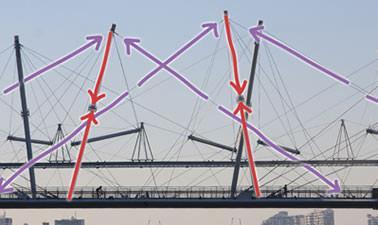
Explore how engineers design bridges and buildings in our communities and iconic structures around the world. In this introductory course, you’ll learn some engineering principles that can be applied to structural systems everywhere: in nature, in furniture, in mechanical and aerospace systems, and in any solid object that resists a load. Together we’ll explore how structures work, why they were designed the way they were designed, how they support loads, and where forces flow through them.

Self Paced
Self-Paced
A System View of Communications: From Signals to Packets (Part 3) (edX) EdX
The Hong Kong University of Science and Technology - HKUST,HKUSTx

A System View of Communications: From Signals to Packets (Part 3) (edX)

Explore the tradeoffs in designing communication systems like mobile phones, and the engineering tools to handle them. Have you ever wondered how information is transmitted using your mobile phone or a WiFi hotspot? Gain an understanding of the basic engineering tools used and tradeoffs encountered in the design of these communication systems.

Self Paced
Self-Paced
Water and Wastewater Treatment Engineering: Biochemical Technology (edX) EdX
Tsinghua University,TsinghuaX

Water and Wastewater Treatment Engineering: Biochemical Technology (edX)

Learn the basic principles and characteristics of biochemical technology in water and wastewater treatment engineering. Biochemical technology in water and wastewater treatment engineering is essential in the field of water treatment. In this environmental studies course you will learn the basic principles and characteristics of biochemical technology.

Self Paced
Self-Paced
Cement Chemistry and Sustainable Cementitious Materials (edX) EdX
École Polytechnique Fédérale de Lausanne,EPFLx

Cement Chemistry and Sustainable Cementitious Materials (edX)

Learn the basics of cement chemistry and laboratory best practices for assessment of its key properties. Every day, we see concrete used all around us – to build our houses, offices, schools, bridges, and infrastructure. But few people actually understand what gives concrete its strength, resistance, and utility. The aim of this course is to offer basic cement chemistry to practitioners, as well as new students in the fields of chemistry and engineering.

Self Paced
Self-Paced
Forensic Engineering: Learning from Failures (edX) EdX
Delft University of Technology,DelftX

Forensic Engineering: Learning from Failures (edX)

Don’t let good failures go to waste! Identify the causes of failure and use this knowledge to enhance safety and improve performance. What do collapsed buildings, infected hospital patients, and crashed airplanes have in common? If you know the causes of these events and conditions, they can all be prevented. In this course, you will learn how to use the TU Delft mind-set to investigate the causes of such events so you can prevent them in the future.

Self Paced
Self-Paced
Introducción a la Ingeniería del Software (edX) EdX
Universidad Autonoma de Madrid,UAMx

Introducción a la Ingeniería del Software (edX)

Conoce las distintas fases de desarrollo por las que pasa un proyecto informático, así como las actividades de gestión necesarias para lograr finalizar el proyecto con éxito. ¿Alguna vez te has preguntado qué es y para qué sirve la Ingeniería de Software? ¿Quieres saber por qué es tan necesaria esta disciplina y por qué se utiliza tanto en entornos tecnológicos? ¿O cuál es el motivo de que muchos proyectos informáticos no finalizan en tiempo y coste o con la calidad deseada?

Self Paced
Self-Paced
Science & Cooking: From Haute Cuisine to Soft Matter Science (chemistry) (edX) EdX
HarvardX,Harvard University

Science & Cooking: From Haute Cuisine to Soft Matter Science (chemistry) (edX)

Top chefs and Harvard researchers explore how everyday cooking and haute cuisine can illuminate basic principles in chemistry, physics, and engineering. Learn about food molecules and how chemical reactions can affect food texture and flavor. During each module of this course, chefs reveal the secrets behind some of their most famous culinary creations — often right in their own restaurants. Inspired by such cooking mastery, the Harvard team will then explain the science behind the recipe.

Self Paced
Self-Paced