EdX

Pre-University Physics (edX)

Pre-University Physics (edX)

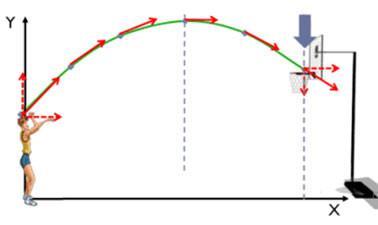
Prepare for your technical studies by reviewing the fundamentals of physics. Become familiar with the way physics and physics-related topics are taught at university level. Physics is the foundation of many important science and engineering disciplines. Understanding its basics is fundamental for advanced studies. In this course, you will have the chance to review the fundamentals either for your own interest, or to ensure you have a smooth start in the first year of your Bachelor’s degree.

Class Deals by MOOC List - Click here and see EdX's Active Discounts, Deals, and Promo Codes.

The course aims to close the readiness gap between high school and university. It was specifically developed for potential future students: it covers physics topics that are a prerequisite for many engineering programs, but will also show you how these topics are applied in the various follow-up studies (For example in Applied Physics, Aerospace Engineering, Mechanical Engineering or Electrical Engineering). The course not only covers the content needed for further study but also introduces the different ways in which physics is presented at university level to ensure an easy entry to a new degree program.
This course is intended for:

  • Prospective engineering students who want to refresh their physics knowledge before starting university
  • High school students who would like an additional challenge in physics not offered by their school
  • Engineering students already enrolled in university who realize that they have a gap in their physics knowledge
  • Other people who are interested in university level physics

This course is part of the Science and Engineering Prep: Pre-university Calculus and Physics Professional Certificate.

What you'll learn
On completion of the course, participants will:

  1. have a basic understanding of the following physics topics: mechanics, electricity and magnetism, and waves.
  2. be able to apply this knowledge in various engineering contexts.
  3. be introduced to the academic approach to physics.
  4. be introduced to the academic approach to physics.

In particular, the successful participant will be able to:
1) solve physics problems in an algebraic way without specifying numerical values,
2) provide order-of-magnitude estimations without using calculation aids,
3) apply basic differential and integral calculus to physics problems,
4) work with vectors at a conceptual (non-quantitative) level.

Syllabus

Module 1: Mechanics

  • Force and Motion
  • Multiple Forces
  • Work
  • Energy
  • Circular Motion

Module 2: Electricity and Magnetism

  • Electric Force and Field
  • Electric Potential and Electric Energy
  • Electrical Circuits
  • Magnetic Fields
  • Capacitors

Module 3: Waves

  • Introduction to waves
  • Harmonic motion
  • Coupled oscillations
  • Travelling waves
  • Standing waves

Prerequisites
This course revises high school level physics and moves on to show how it is presented at university level. It closes the readiness gap between high school and university. Participants should have the following background knowledge:
high school level calculus (or equivalent), including knowledge of derivatives and integrals.
high school level physics.

Go to Class
MOOC List is learner-supported. When you buy through links on our site, we may earn an affiliate commission.

Related Courses

Quantum Mechanics for Everyone (edX) EdX
Georgetown University,GeorgetownX

Quantum Mechanics for Everyone (edX)

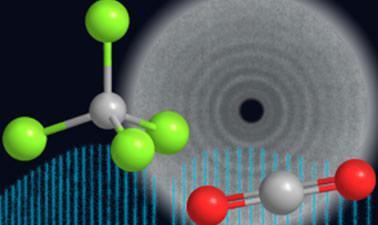
Learn the fundamental notions of quantum mechanics at a level that is accessible to everyone. Quantum Mechanics for Everyone is a six-week long MOOC that teaches the basic ideas of quantum mechanics with a method that requires no complicated math beyond taking square roots (and you can use a calculator for that).

Jun 8th 2023
5-12 Weeks
The Radio Sky I: Science and Observations (edX) EdX
École Polytechnique Fédérale de Lausanne,EPFLx

The Radio Sky I: Science and Observations (edX)

Be captivated by the exotic objects that populate the Radio Sky and gain a solid understanding of their physics and the fundamental techniques we use to observe them. The serendipitous and unexpected discovery of radio emission from celestial objects opened up the possibility of studying a new and exciting view of the universe beyond the visible spectrum. Astronomers have been studying the cosmos in visible light since ancient Greece, but it is only in comparatively modern times that the universe beyond the visible spectrum has become accessible to us. In this course you will learn about the most important objects that emit in the radio regime, both within and beyond our own galaxy.

Self Paced
Self-Paced
Energy Economics and Policy (edX) EdX
MIT,MITx

Energy Economics and Policy (edX)

Learn the economics of real-world energy markets, and how various policies can address the impact of rising global energy demand on the environment and climate. With renewable sources playing an increasing role in meeting global energy demand and mitigating climate change, electric power systems and the related markets are changing. To prepare for a career in the future energy landscape, industry professionals, policymakers, and academics must understand these changes and develop specific, relevant skills to drive this energy transition within the necessary timeframe. In this course, you will learn to apply economic and socio-political analysis to real-world regulatory policy questions in a set of extremely important, interrelated energy markets.

Sep 17th 2024
5-12 Weeks
Quantum Detectors (edX) EdX
Purdue University,PurdueX

Quantum Detectors (edX)

Learn about quantum sensors and devices that extract maximal information from the world around us. Classical detectors and sensors are ubiquitous around us from heat sensors in cars to light detectors in a camera cell phone. Leveraging advances in the theory of noise and measurement, an important paradigm of quantum metrology has emerged. Here, ultra-precision measurement devices collect maximal information from the world around us at the quantum limit.

Feb 12th 2024
5-12 Weeks
Quantum Mechanics for Scientists and Engineers 1 (edX) EdX
StanfordOnline

Quantum Mechanics for Scientists and Engineers 1 (edX)

This 9 week course aims to teach quantum mechanics to anyone with a reasonable college-level understanding of physical science or engineering. Quantum mechanics was once mostly of interest to physicists, chemists and other basic scientists. Now the concepts and techniques of quantum mechanics are essential in many areas of engineering and science such as materials science, nanotechnology, electronic devices, and photonics.

Self Paced
Self-Paced
Cosmic Rays, Dark Matter, and the Mysteries of the Universe (edX) EdX
Waseda University,WasedaX

Cosmic Rays, Dark Matter, and the Mysteries of the Universe (edX)

Join us on a unique exploration of one of the universe’s deepest mysteries: cosmic rays. In the Universe, high-energy cosmic rays are violently propagating in space. While we know these cosmic rays come from outside of the solar system, exactly how and where they originate is a mystery. Professor Shoji Torii from Waseda University and many researchers from around the world, believe that understanding about their origin will help resolve the mysteries of the Universe, such as, supernova remnants, dark matter, and even the Universe’s evolution.

Self Paced
Self-Paced