EdX

Advanced Bioconductor (edX)

Advanced Bioconductor (edX)

Learn advanced approaches to genomic visualization, reproducible analysis, data architecture, and exploration of cloud-scale consortium-generated genomic data. In this course, we begin with approaches to visualization of genome-scale data, and provide tools to build interactive graphical interfaces to speed discovery and interpretation. Using knitr and rmarkdown as basic authoring tools, the concept of reproducible research is developed, and the concept of an executable document is presented.

Class Deals by MOOC List - Click here and see EdX's Active Discounts, Deals, and Promo Codes.

In this framework reports are linked tightly to the underlying data and code, enhancing reproducibility and extensibility of completed analyses. We study out-of-memory approaches to the analysis of very large data resources, using relational databases or HDF5 as "back ends" with familiar R interfaces. Multiomic data integration is illustrated using a curated version of The Cancer Genome Atlas. Finally, we explore cloud-resident resources developed for the Encyclopedia of DNA Elements (the ENCODE project). These address transcription factor binding, ATAC-seq, and RNA-seq with CRISPR interference.

Given the diversity in educational background of our students we have divided the series into seven parts. You can take the entire series or individual courses that interest you. If you are a statistician you should consider skipping the first two or three courses, similarly, if you are biologists you should consider skipping some of the introductory biology lectures. Note that the statistics and programming aspects of the class ramp up in difficulty relatively quickly across the first three courses. By the third course will be teaching advanced statistical concepts such as hierarchical models and by the fourth advanced software engineering skills, such as parallel computing and reproducible research concepts.
This course is part of the Data Analysis for Genomics Professional Certificate.

These courses make up two Professional Certificates and are self-paced:
Data Analysis for Life Sciences:
PH525.1x: Statistics and R for the Life Sciences
PH525.2x: Introduction to Linear Models and Matrix Algebra
PH525.3x: Statistical Inference and Modeling for High-throughput Experiments
PH525.4x: High-Dimensional Data Analysis
Genomics Data Analysis:
PH525.5x: Introduction to Bioconductor
PH525.6x: Case Studies in Functional Genomics
PH525.7x: Advanced Bioconductor

What you'll learn

  • Static and interactive visualization of genomic data
  • Reproducible analysis methods
  • Memory-sparing representations of genomic assays
  • Working with multiomic experiments in cancer
  • Targeted interrogation of cloud-scale genomic archives

Prerequisites:
Statistical Inference and Modeling for High-throughput Experiments
High-Dimensional Data Analysis

Go to Class
MOOC List is learner-supported. When you buy through links on our site, we may earn an affiliate commission.

Related Courses

Fundamentals of Neuroscience, Part 1: The Electrical Properties of the Neuron (edX) EdX
HarvardX,Harvard University

Fundamentals of Neuroscience, Part 1: The Electrical Properties of the Neuron (edX)

Learn how electricity makes the neurons in your brain tick. Fundamentals of Neuroscience is a three-courseseries that explores the structure and function of the nervous system—from the inner workings of a single nerve cell to the staggering complexity of the brain and the social interactions they enable.

Self Paced
Self-Paced
Computer Architecture (saylor.org) Saylor Academy
Saylor.org

Computer Architecture (saylor.org)

Modern computer technology requires an understanding of both hardware and software, as the interaction between the two offers a framework for mastering the fundamentals of computing. The purpose of this course is to cultivate an understanding of modern computing technology through an in-depth study of the interface between hardware and software.

Self Paced
Self-Paced
Введение в биоинформатику (Introduction to Bioinformatics) (Coursera) Coursera
Saint Petersburg State University

Введение в биоинформатику (Introduction to Bioinformatics) (Coursera)

Курс «Введение в биоинформатику» адресован тем, кто хочет получить расширенное представление о том, что такое биоинформатика и как она помогает биологам и медикам в их работе. The course is aimed at those who would like to have a better idea of what bioinformatics is and how it helps biologists and medical scientists in research and clinical work.

Sep 21st 2026
5-12 Weeks
Supercomputing (FutureLearn) FutureLearn
University of Edinburgh,Partnership for Advanced Computing in Europe - PRACE

Supercomputing (FutureLearn)

Discover how supercomputers work and the real-life scientific breakthroughs made possible by today’s computer simulations. Today’s supercomputers are the most powerful calculating machines ever invented, capable of performing more than a thousand million million calculations every second. This gives scientists and engineers a powerful new tool to study the natural world – computer simulation.

Available now
5-12 Weeks
Introduction to Environmental Science (edX) EdX
DartmouthX,Dartmouth College

Introduction to Environmental Science (edX)

A scientific study of the natural world and how it is influenced by people. Major topics include: food, energy, human population, biodiversity and global change. Environmental science is the study of patterns and processes in the natural world and their modification by human activity. To understand current environmental problems, we need to consider physical, biological and chemical processes that are often the basis of those problems.

Self Paced
4 Weeks
ImageInLife - Imaging the Vertebrate embryo: from biological material to modelling (FUN) FUN
Université de Montpellier

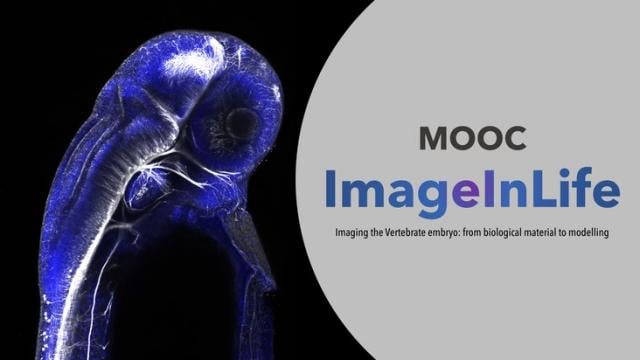
ImageInLife - Imaging the Vertebrate embryo: from biological material to modelling (FUN)

Microscopy technologies have progressed to such a point that it is now possible to image a developing vertebrate at the single cell resolution. Two main model species are being used for such studies, the zebrafish and the mouse. The present MOOC introduces the trainees to these two animal models, to the most modern microscopy technologies, to the use of high volume of data (images) and to the modelling of the studied processes. Trainees will also be introduced to the intravital study of viral infections.

Aug 24th 2021
5-12 Weeks
Parallel Programming in Java (Coursera) Coursera
Rice University

Parallel Programming in Java (Coursera)

This course teaches learners (industry professionals and students) the fundamental concepts of parallel programming in the context of Java 8. Parallel programming enables developers to use multicore computers to make their applications run faster by using multiple processors at the same time. By the end of this course, you will learn how to use popular parallel Java frameworks (such as ForkJoin, Stream, and Phaser) to write parallel programs for a wide range of multicore platforms including servers, desktops, or mobile devices, while also learning about their theoretical foundations including computation graphs, ideal parallelism, parallel speedup, Amdahl's Law, data races, and determinism.

Sep 14th 2026
4 Weeks
Essentials of Genomics and Biomedical Informatics (edX) EdX
IsraelX

Essentials of Genomics and Biomedical Informatics (edX)

This course presents clinicians and digital health enthusiasts with an overview of the data revolution in medicine and how to exploit it for research and in the clinic. The course will not make you a bioinformatician but will introduce the main concepts, tools, algorithms, and databases in this field.

Self Paced
5-12 Weeks
Tropical Coastal Ecosystems (edX) EdX
University of Queensland,UQx

Tropical Coastal Ecosystems (edX)

Take the challenge and understand problems and solutions to managing tropical coastal ecosystems. Do you want to develop the skills and knowledge needed to help preserve tropical coastal ecosystems? These habitats provide goods and services for hundreds of millions of people but human activities have led to their global decline.

Self Paced
Self-Paced