Introduction to OpenCL on FPGAs (Coursera)

Offered by Intel Corporation,
Introduction to OpenCL on FPGAs (Coursera)

OpenCL™ is a standard for writing parallel programs for heterogeneous systems, much like the NVidia CUDA programming language. In the FPGA environment, OpenCL constructs are synthesized into custom logic. An overview of the OpenCL standards will be discussed. You will learn about the platform, execution, memory, and programming models that define the OpenCL specification. Syntax of the OpenCL language will be discussed, and you will see examples of OpenCL usage.

Class Deals by MOOC List - Click here and see Coursera's Active Discounts, Deals, and Promo Codes.

The similarities and differences between OpenCL and CUDA will be highlighted throughout. The advantages of using the Intel® FPGA OpenCL solution will be presented.OpenCL and the OpenCL logo are trademarks of Apple Inc. used by permission of KhronosOther names and brands may be claimed as the property of others.

Syllabus

WEEK 1
Heterogeneous Parallel Computing
The student will be provided with a brief motivation for the necessity of parallel computing along with its inherent challenges.

WEEK 2
OpenCL for Platform and Host-side Software
In this module, we will begin to craft an understanding of OpenCL as a viable framework for the development of heterogeneous Parallel Computing Solutions on Intel FPGAs

WEEK 3
Executing OpenCL Kernels
For this module, we will explore the basics of the OpenCL standard.

WEEK 4
NDRange Kernels
Building upon what we've covered up to this point, you will learn how to write your very own OpenCL program

WEEK 5
OpenCL on Intel FPGAs
The Finale: you will get to compile and run your OpenCL programs using the Intel FPGA SDK for OpenCL

Go to Class
MOOC List is learner-supported. When you buy through links on our site, we may earn an affiliate commission.

Related Courses

Mastering the Software Engineering Interview (Coursera) Coursera
University of California, San Diego

Mastering the Software Engineering Interview (Coursera)

You’ve hit a major milestone as a computer scientist and are becoming a capable programmer. You now know how to solve problems, write algorithms, and analyze solutions; and you have a wealth of tools (like data structures) at your disposal. You may now be ready for an internship or (possibly) an entry-level software engineering job. But can you land the internship/job? It depends in part on how well you can solve new technical problems and communicate during interviews. How can you get better at this? Practice!

Jun 8th 2026
4 Weeks
Code Yourself! An Introduction to Programming (Coursera) Coursera
University of Edinburgh,Universidad ORT Uruguay

Code Yourself! An Introduction to Programming (Coursera)

Have you ever wished you knew how to program, but had no idea where to start from? This course will teach you how to program in Scratch, an easy to use visual programming language. More importantly, it will introduce you to the fundamental principles of computing and it will help you think like a software engineer.

Jun 8th 2026
5-12 Weeks
Introduction to High-Performance and Parallel Computing (Coursera) Coursera
University of Colorado Boulder

Introduction to High-Performance and Parallel Computing (Coursera)

This course introduces the fundamentals of high-performance and parallel computing. It is targeted to scientists, engineers, scholars, really everyone seeking to develop the software skills necessary for work in parallel software environments. These skills include big-data analysis, machine learning, parallel programming, and optimization. We will cover the basics of Linux environments and bash scripting all the way to high throughput computing and parallelizing code.

Jun 8th 2026
4 Weeks
Data Structures and Design Patterns for Game Developers (Coursera) Coursera
University of Colorado System

Data Structures and Design Patterns for Game Developers (Coursera)

This course is the fourth course in the specialization about learning how to develop video games using the C# programming language and the Unity game engine on Windows or Mac. Why use C# and Unity instead of some other language and game engine? Well, C# is a really good language for learning how to program and then programming professionally. Also, the Unity game engine is very popular with indie game developers; Unity games were downloaded 16,000,000,000 times in 2016! Finally, C# is one of the programming languages you can use in the Unity environment.

Jun 8th 2026
4 Weeks
Lean Software Development (Coursera) Coursera
University of Minnesota

Lean Software Development (Coursera)

While scrum and XP were transforming the software development industry, there were another set of ideas (derived from lean manufacturing and Six Sigma) that started to influence software development methods. These ideas around Lean Software Development forms the foundation of number of agile methods. In this course, we will explore lean concepts and cover some of the common Lean methods and techniques like Kanban, Value Stream Mapping, etc.

Jun 8th 2026
4 Weeks
Getting Started with Go (Coursera) Coursera
University of California, Irvine

Getting Started with Go (Coursera)

Learn the basics of Go, an open source programming language originally developed by a team at Google and enhanced by many contributors from the open source community. This course is designed for individuals with previous programming experience using such languages as C, Python, or Java, and covers the fundamental elements of Go.

Jun 8th 2026
4 Weeks
Avatar Psychology for Designers (Coursera) Coursera
Michigan State University

Avatar Psychology for Designers (Coursera)

This course covers the latest and greatest psychological research on avatars and is relevant to current and future designers of any medium that includes user self-representations (e.g., video games, virtual worlds, robots, automobiles, social media, etc.). By taking this course, you will be able to define digital and non-digital avatars and identify how they are applicable in everyday life.

Jun 8th 2026
4 Weeks
Game Design and Development 1: 2D Shooter (Coursera) Coursera
Michigan State University

Game Design and Development 1: 2D Shooter (Coursera)

If you love games and want to learn how to make them, then this course will start you down that path. Making games is a creative and technical art form. In this course you will familiarize yourself with the tools and practices of game development and well as the process. You will get started developing video games using industry standard game development tools, including the Unity 2020 game engine. At the end of the course you will have completed two hands-on projects, including an Intro to Unity project and a 2D Shooter game, and will be able to leverage an array of game development techniques to create your own basic games.

Jun 8th 2026
4 Weeks
Software Design Methods and Tools (Coursera) Coursera
University of Colorado System

Software Design Methods and Tools (Coursera)

Since many software developers are compulsive coders, they have created software over the years to help them do their job. There are tools which make design and its associated tasks easier. The course introduces some basic tools and techniques to help you with design. Tools aren’t always tangible, however. The last two lessons of this course discuss questions of Ethics in software development. The purpose here is, as with tools, to equip you to better carry our your responsibilities as a designer. Students will be required to have a prior knowledge of writing and delivering software and some programming knowledge in java.

Jun 8th 2026
5-12 Weeks
Software Design Threats and Mitigations (Coursera) Coursera
University of Colorado System

Software Design Threats and Mitigations (Coursera)

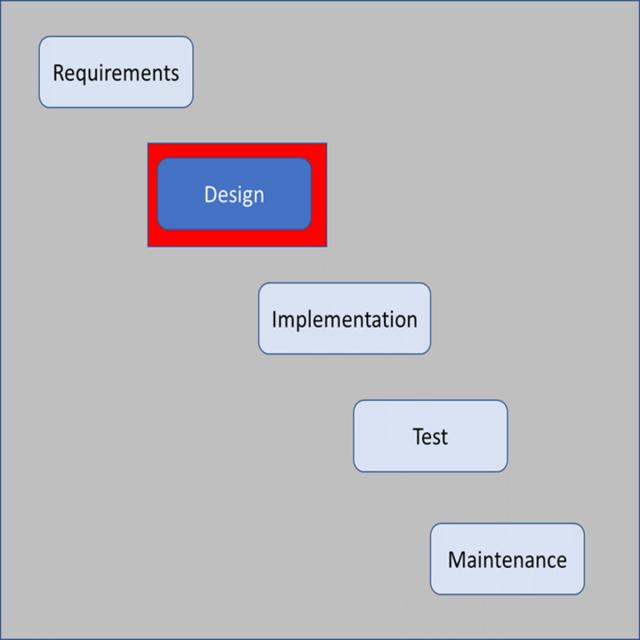
The design step in developing software has some unique characteristics. First of all, it’s the only step where drawing pictures of things is the norm. Why is that? What do pictures do that other representations cannot do? Pictures have varying levels of detail; pictures have context. Pictures…paint a picture. Why are these things important? In this course, too, we begin looking at other disciplines (building architecture is a favorite one) for lessons on design.

Jun 8th 2026
5-12 Weeks
Object-Oriented Python: Inheritance and Encapsulation (Coursera) Coursera
Codio

Object-Oriented Python: Inheritance and Encapsulation (Coursera)

Code and run your first python program in minutes without installing anything! This course is designed for learners with limited coding experience, providing a solid foundation of not just python, but core Computer Science topics that can be transferred to other languages. The modules in this course cover inheritance, encapsulation, polymorphism, and other object-related topics. Completion of the prior 3 courses in this specialization is recommended.

Jun 8th 2026
4 Weeks
Software Development Processes and Methodologies (Coursera) Coursera
University of Minnesota

Software Development Processes and Methodologies (Coursera)

Software is quickly becoming integral part of human life as we see more and more automation and technical advancements. Just like we expect car to work all the time and can't afford to break or reboot unexpectedly, software industry needs to continue to learn better way to build software if it were to become integral part of human life.

Jun 8th 2026
4 Weeks