EdX

Neuronal Dynamics (edX)

Neuronal Dynamics (edX)

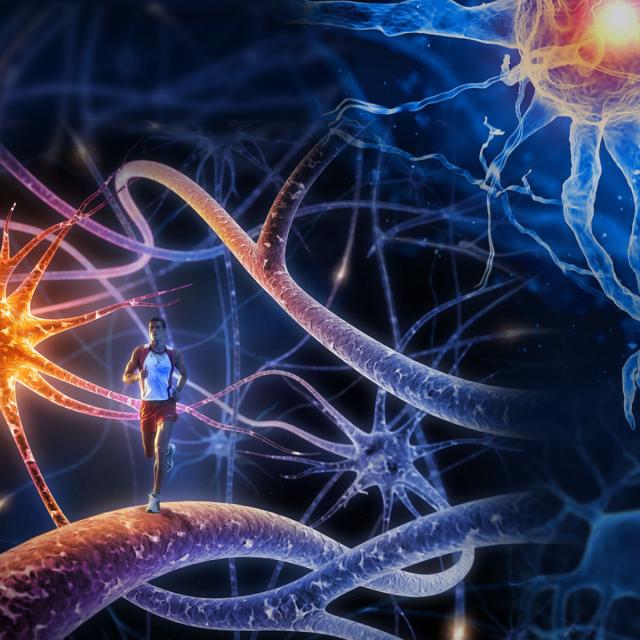
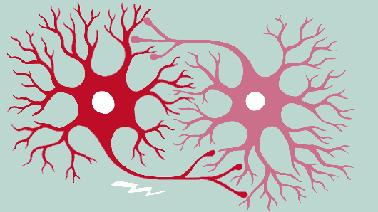
The activity of neurons in the brain and the code used by these neurons is described by mathematical neuron models at different levels of detail.

Class Deals by MOOC List - Click here and see EdX's Active Discounts, Deals, and Promo Codes.

This course gives an introduction to the field of theoretical and computational neuroscience with a focus on models of single neurons. Neurons encode information about stimuli in a sequence of short electrical pulses (spikes). Students will learn how mathematical tools such as differential equations, phase plane analysis, separation of time scales, and stochastic processes can be used to understand the dynamics of neurons and the neural code.

What you'll learn
How mathematical tools such as differential equations, phase plane analysis, separation of time scales, and stochastic processes can be used to understand the dynamics of neurons and the neural code

Syllabus

Week 1: A first simple neuron model
Week 2: Hodgkin-Huxley models and biophysical modeling
Week 3: Two-dimensional models and phase plane analysis
Week 4: Two-dimensional models (cont.)/ Dendrites
Week 5: Variability of spike trains and the neural code
Week 6: Noise models, noisy neurons and coding
Week 7: Estimating neuron models for coding and decoding

Suggested Readings:
Neuronal Dynamics: From Single Neurons to Networks and Models of Cognition
Go to Class
MOOC List is learner-supported. When you buy through links on our site, we may earn an affiliate commission.

Related Courses

Leaders of Learning (edX) EdX
HarvardX,Harvard University

Leaders of Learning (edX)

Explore and understand your own theories of learning and leadership. Gain the tools to imagine and build the future of learning. All of us carry explicit or implicit theories of learning. They manifest themselves in the ways we learn, the ways we teach, and the ways we think about leadership and learning. In Leaders of Learning, you will identify and develop your personal theory of learning, and explore how it fits into the shifting landscape of learning. This isn’t just about schools, it’s about the broader and bigger world of learning.

Self Paced
Self-Paced
Managing Happiness (edX) EdX
HarvardX,Harvard University

Managing Happiness (edX)

Managing Happiness encourages you to explore the science of happiness, allowing you to find your truest self. Through cutting-edge survey tools, the best research, and trends in social science, neuroscience, and philosophy to help learners unlock the strategies to create a more purposeful life, full of long-lasting enjoyment and satisfaction.

Self Paced
Self-Paced
An Introduction to Consumer Neuroscience & Neuromarketing (Coursera) Coursera
Copenhagen Business School

An Introduction to Consumer Neuroscience & Neuromarketing (Coursera)

How do we make decisions as consumers? What do we pay attention to, and how do our initial responses predict our final choices? To what extent are these processes unconscious and cannot be reflected in overt reports? This course will provide you with an introduction to some of the most basic methods in the emerging fields of consumer neuroscience and neuromarketing. You will learn about the methods employed and what they mean. You will learn about the basic brain mechanisms in consumer choice, and how to stay updated on these topics. The course will give an overview of the current and future uses of neuroscience in business.

Jul 27th 2026
5-12 Weeks
The Psychology of Thrill Seekers (Coursera) Coursera
Emory University

The Psychology of Thrill Seekers (Coursera)

Sensation seeking is a trait we all have and includes the search for complex and new experiences. Thrill Seekers, people with high-sensation seeking personalities, crave exotic and intense experiences even when physical or social risks are involved. This course helps learners examine the remarkable world of the high-sensation seeking personality and explores the lifestyle, psychology, and neuroscience behind thrill seekers.

Aug 17th 2026
5-12 Weeks
The Many Faces of Dementia (FutureLearn) FutureLearn
University College London

The Many Faces of Dementia (FutureLearn)

Gain a unique insight into dementia through the stories, symptoms and science behind four less common diagnoses. Explore key issues in dementia care and research, through four less common forms. Dementia is one of the foremost priorities in global health and is estimated to affect over 44 million people worldwide.

Self Paced
4 Weeks
The Biology of Bugs, Brains, and Beasts (FutureLearn) FutureLearn
University of York

The Biology of Bugs, Brains, and Beasts (FutureLearn)

Improve your understanding of some of the key concepts in A level biology and discover what's involved in higher level study. Prepare for university study with this online biology course. Are you a student in sixth form and thinking of studying at university? On this course, you will use innovative research to enhance your understanding of basic biological concepts taught in A level biology.

Self Paced
3 Weeks
Synapses, Neurons and Brains (Coursera) Coursera
Hebrew University of Jerusalem

Synapses, Neurons and Brains (Coursera)

These are very unique times for brain research. The aperitif for the course will thus highlight the present “brain-excitements” worldwide. You will then become intimately acquainted with the operational principles of neuronal “life-ware” (synapses, neurons and the networks that they form) and consequently, on how neurons behave as computational microchips and how they plastically and constantly change - a process that underlies learning and memory.

Jul 27th 2026
5-12 Weeks
Behavioral Neuroscience: Contrasting Tests for Anxiety and Depression (edX) EdX
University of Alaska Fairbanks,AlaskaX

Behavioral Neuroscience: Contrasting Tests for Anxiety and Depression (edX)

In this online course, learn how to critically evaluate the use of different behavioral tests for anxiety and depression in laboratory mice, and gain a better understanding of how these tests can affect the interpretation of results in the context of mental illness and human psychiatric conditions and mouse models.

Self Paced
Self-Paced
Medical Neuroscience (Coursera) Coursera
Duke University

Medical Neuroscience (Coursera)

Medical Neuroscience explores the functional organization and neurophysiology of the human central nervous system, while providing a neurobiological framework for understanding human behavior. In this course, you will discover the organization of the neural systems in the brain and spinal cord that mediate sensation, motivate bodily action, and integrate sensorimotor signals with memory, emotion and related faculties of cognition. The overall goal of this course is to provide the foundation for understanding the impairments of sensation, action and cognition that accompany injury, disease or dysfunction in the central nervous system. The course will build upon knowledge acquired through prior studies of cell and molecular biology, general physiology and human anatomy, as we focus primarily on the central nervous system.

Aug 17th 2026
13-24 Weeks
A life with ADHD (Coursera) Coursera
University of Geneva

A life with ADHD (Coursera)

What is ADHD and what are the challenges that come with it? Whether you are a person affected by ADHD, a family member or a professional, this MOOC will provide you with an understanding of what ADHD is. It will allow you to respond to the specific challenges of ADHD by developing a complex strategy that integrates psychological dimensions, neurobiological treatments, as well as environmental interventions. Since in two thirds of cases this disorder is relatively persistent, even though it may fluctuate over the course of an individual's life, this course will provide keys to understanding how to live with ADHD over time.

Aug 10th 2026
5-12 Weeks
Introduction to Logic (Coursera) Coursera
Stanford University

Introduction to Logic (Coursera)

This course is an introduction to Logic from a computational perspective. It shows how to encode information in the form of logical sentences; it shows how to reason with information in this form; and it provides an overview of logic technology and its applications - in mathematics, science, engineering, business, law, and so forth.

Jul 30th 2026
5-12 Weeks
AP® Psychology - Course 3: How the Mind Works (edX) EdX
The University of British Columbia,UBCx

AP® Psychology - Course 3: How the Mind Works (edX)

Learn about the neuroscience and psychology of the mind including memory, thinking, reasoning, and language. In this psychology course, you will learn about the mind and the psychology of learning, including coverage of classical conditioning, operant conditioning, and social learning. We will look at the psychology and neuroscience of cognition — including memory, thinking and reasoning. The course will conclude with the coverage of language.

Self Paced
Self-Paced