Supercomputing (FutureLearn)

Supercomputing (FutureLearn)

Discover how supercomputers work and the real-life scientific breakthroughs made possible by today’s computer simulations. Today’s supercomputers are the most powerful calculating machines ever invented, capable of performing more than a thousand million million calculations every second. This gives scientists and engineers a powerful new tool to study the natural world – computer simulation.

Class Deals by MOOC List - Click here and see FutureLearn's Active Discounts, Deals, and Promo Codes.

Using supercomputers, we can now conduct virtual experiments that are impossible in the real world – from looking deep inside individual atoms, to studying the future climate of the earth and following the evolution of the entire universe from the big bang.
Discover how supercomputers are powering scientific breakthroughs
This free online course will introduce you to what supercomputers are, how they are used and how we can exploit their full computational potential to make scientific breakthroughs.
Over five weeks, we’ll look at:

  • supercomputers: introducing supercomputing terminology and some of the largest machines in the world.
  • parallel computers: how they are built from hundreds of thousands of CPUs, each similar to those in a desktop PC.
  • parallel computing: using parallel processing to harness the power of all of those CPUs for a single calculation.
  • computer simulation: how we can perform virtual experiments to make real-life predictions.

case studies: how supercomputing is making scientific breakthroughs that were never possible before.

Learn with Europe’s leading supercomputing experts
This supercomputing course has been developed by the Partnership for Advanced Computing in Europe (PRACE) and the Edinburgh Parallel Computing Centre (EPCC) at The University of Edinburgh in collaboration with SURFsara from The Netherlands.
PRACE coordinates many of the largest supercomputers in Europe, so has world-leading experience of the benefits that supercomputing can bring.
EPCC is a PRACE partner, operates the UK national supercomputer ARCHER and has a long history of developing and delivering training.

What topics will you cover?

  • Supercomputers: introducing supercomputing terminology and some of the largest machines in the world
  • Parallel computers: how they are built from hundreds of thousands of CPUs, each similar to those in a desktop PC
  • Parallel computing: using parallel processing to harness the power of all of those CPUs for a single calculation
  • Computer simulation: how we can perform virtual experiments to make real-life predictions
  • Case studies: how supercomputing is making scientific breakthroughs that were never possible before

What will you achieve?

  • Describe how the performance of modern supercomputers is measured and achieved
  • Explain why they are built from thousands of simple processors
  • Compare the architectures of shared-memory and distributed-memory computers
  • Describe the shared-variables and message-passing programming models
  • Summarise why computer simulation is a fundamental component of modern scientific discovery
  • Investigate simple problems and look for opportunities for parallel processing
  • Discuss the limitations of parallel computing
  • Identify examples of scientific areas where computer simulation is used

Go to Class
MOOC List is learner-supported. When you buy through links on our site, we may earn an affiliate commission.

Related Courses

Learn to Code for Data Analysis (FutureLearn) FutureLearn
The Open University

Learn to Code for Data Analysis (FutureLearn)

Software and data make the world go round. Learn programming, to analyse and visualise open data, with this free online course. This hands-on course will teach you how to write your own computer programs, one line of code at a time. You’ll learn how to access open data, clean it and analyse it and to produce visualisations. You will also learn how to write up and share your analyses, privately or publicly.

No sessions available
4 Weeks
Creative Coding (FutureLearn) FutureLearn
Monash University

Creative Coding (FutureLearn)

Use computer programming as a creative discipline to generate sounds, images, animations and more, with this free online course. Learning to program is no longer just for computer specialists and software developers. People from many different backgrounds now want to understand the basics of programming, because it’s both fun and an increasingly valuable skill.

No sessions available
5-12 Weeks
Introduction to High-Performance and Parallel Computing (Coursera) Coursera
University of Colorado Boulder

Introduction to High-Performance and Parallel Computing (Coursera)

This course introduces the fundamentals of high-performance and parallel computing. It is targeted to scientists, engineers, scholars, really everyone seeking to develop the software skills necessary for work in parallel software environments. These skills include big-data analysis, machine learning, parallel programming, and optimization. We will cover the basics of Linux environments and bash scripting all the way to high throughput computing and parallelizing code.

Sep 14th 2026
4 Weeks
Computer Simulations (Coursera) Coursera
University of California, Davis

Computer Simulations (Coursera)

Big data and artificial intelligence get most of the press about computational social science, but maybe the most complex aspect of it refers to using computational tools to explore and develop social science theory. This course shows how computer simulations are being used to explore the realm of what is theoretically possible. Computer simulations allow us to study why societies are the way they are, and to dream about the world we would like to live in.

Sep 14th 2026
4 Weeks
Stochastic Processes: Data Analysis and Computer Simulation (edX) EdX
Kyoto University,KyotoUx

Stochastic Processes: Data Analysis and Computer Simulation (edX)

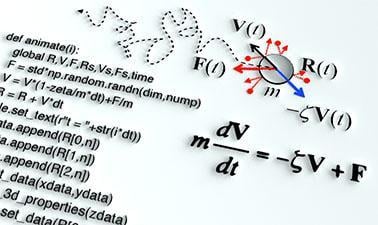
The course deals with how to simulate and analyze stochastic processes, in particular the dynamics of small particles diffusing in a fluid. The motion of falling leaves or small particles diffusing in a fluid is highly stochastic in nature. Therefore, such motions must be modeled as stochastic processes, for which exact predictions are no longer possible. This is in stark contrast to the deterministic motion of planets and stars, which can be perfectly predicted using celestial mechanics.

This course is archived
5-12 Weeks
Computer Architecture (saylor.org) Saylor Academy
Saylor.org

Computer Architecture (saylor.org)

Modern computer technology requires an understanding of both hardware and software, as the interaction between the two offers a framework for mastering the fundamentals of computing. The purpose of this course is to cultivate an understanding of modern computing technology through an in-depth study of the interface between hardware and software.

Self Paced
Self-Paced
Web Science: How the Web is Changing the World (FutureLearn) FutureLearn
University of Southampton

Web Science: How the Web is Changing the World (FutureLearn)

Explore how the web has changed our world and what the future might hold, with this free online course introducing Web Science. You may already be an avid user of the Web, but this introduction to Web Science will help you better understand it as both a social and technical system - a global information infrastructure, built from the interactions of people and technologies. This free online course is based on our experience of trying to understand how the Web has grown and changed through technical innovation, economics, politics and everyday use.

No sessions available
2 Weeks
3D Graphics for Web Developers (FutureLearn) FutureLearn
Universitat Pompeu Fabra

3D Graphics for Web Developers (FutureLearn)

Use WebGL to develop high-quality, interactive 3D graphics applications that run natively in browsers. With the advent of WebGL, it is now possible to develop high-quality, interactive 3D graphics applications, which run natively in web browsers. However, to do this, you need to be proficient in both web development and 3D programming.

No sessions available
5-12 Weeks
Parallel programming (Coursera) Coursera
École Polytechnique Fédérale de Lausanne

Parallel programming (Coursera)

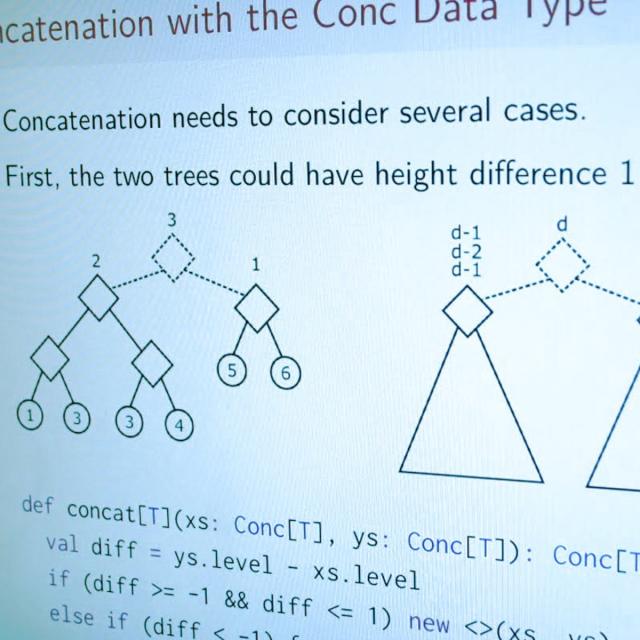
With every smartphone and computer now boasting multiple processors, the use of functional ideas to facilitate parallel programming is becoming increasingly widespread. In this course, you'll learn the fundamentals of parallel programming, from task parallelism to data parallelism. In particular, you'll see how many familiar ideas from functional programming map perfectly to to the data parallel paradigm.

Sep 14th 2026
4 Weeks
Object-oriented Programming in Python: Create Your Own Adventure Game (FutureLearn) FutureLearn
Raspberry Pi Foundation,National Centre for Computing Education

Object-oriented Programming in Python: Create Your Own Adventure Game (FutureLearn)

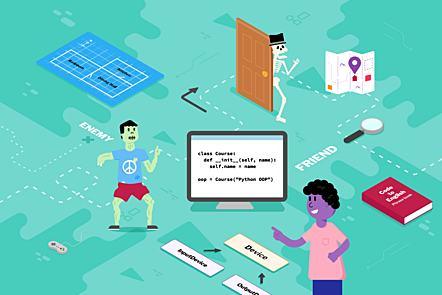
Learn object-oriented programming principles by creating your own text-based adventure game in Python. Object-oriented programming is a programming paradigm based on objects and data rather than actions and logic. This online course will introduce you to the principles of object-oriented programming in Python, showing you how to create objects, functions, methods, and classes.

Jan 2nd 2023
4 Weeks