Computer Architecture (saylor.org)

Offered by Saylor.org,
Computer Architecture (saylor.org)

Modern computer technology requires an understanding of both hardware and software, as the interaction between the two offers a framework for mastering the fundamentals of computing. The purpose of this course is to cultivate an understanding of modern computing technology through an in-depth study of the interface between hardware and software.

Modern computer technology requires an understanding of both hardware and software, as the interaction between the two offers a framework for mastering the fundamentals of computing. The purpose of this course is to cultivate an understanding of modern computing technology through an in-depth study of the interface between hardware and software. In this course, you will study the history of modern computing technology before learning about modern computer architecture and a number of its important features, including instruction sets, processor arithmetic and control, the Von Neumann architecture, pipelining, memory management, storage, and other input/output topics. The course will conclude with a look at the recent switch from sequential processing to parallel processing by looking at the parallel computing models and their programming implications.

Upon successful completion of this course, you will be able to:

  • identify important advances that have taken place in the history of modern computing, and discuss some of the latest trends in computing industry;
  • explain how programs written in high-level programming language, such as C or Java, can be translated into the language of the hardware;
  • describe the interface between hardware and software, and explain how software instructs hardware to accomplish desired functions;
  • explain the process of carrying out sequential logic design;
  • explain computer arithmetic hardware blocks and floating point representation;
  • explain how a hardware programming language is executed on hardware and how hardware and software design affect performance;
  • explain the factors that determine the performance of a program;
  • explain the techniques that designers use to improve the performance of programs running on hardware;
  • explain the importance of memory hierarchy in computer design, and explain how memory design impacts overall hardware performance;
  • describe storage and I/O devices, their performance measurement, and redundant array of inexpensive disks (more commonly referred to by the acronym RAID) technology; and
  • identify the reasons for and the consequences of the recent switch from sequential processing to parallel processing in hardware manufacture, and explain the basics of parallel programming.
Go to Class
MOOC List is learner-supported. When you buy through links on our site, we may earn an affiliate commission.

Related Courses

Functional Programming in Scala Capstone (Coursera) Coursera
École Polytechnique Fédérale de Lausanne

Functional Programming in Scala Capstone (Coursera)

In the final capstone project you will apply the skills you learned by building a large data-intensive application using real-world data. You will implement a complete application processing several gigabytes of data. This application will show interactive visualizations of the evolution of temperatures over time all over the world.

Oct 5th 2026
5-12 Weeks
Wie 'denkt' ein Computer? Vom Sandkorn bis zur Software (openHPI) OpenHPI
Hasso-Plattner-Institut

Wie 'denkt' ein Computer? Vom Sandkorn bis zur Software (openHPI)

Wie funktioniert ein Computer eigentlich? Diese Frage hast Du Dir wahrscheinlich schon einmal gestellt. Ausgehend von Transistoren und elektrischen Schaltungen finden wir heraus, woraus ein Prozessor besteht und wie er funktioniert. Dabei probieren wir selbst mit verschiedenen Simulationstools das Gelernte aus und entdecken die Welt der Rechnertechnik.

Apr 26th 2023
4 Weeks
Introduction to Computers (Coursera) Coursera
Microsoft

Introduction to Computers (Coursera)

This course has been designed for individuals seeking entry-level positions in IT support. Whether you're a recent graduate, a career changer, or someone looking to kickstart your career in the tech industry, it will provide you with the foundational knowledge and practical skills needed to excel in the field of IT support.

Sep 14th 2026
4 Weeks
Supercomputing (FutureLearn) FutureLearn
University of Edinburgh,Partnership for Advanced Computing in Europe - PRACE

Supercomputing (FutureLearn)

Discover how supercomputers work and the real-life scientific breakthroughs made possible by today’s computer simulations. Today’s supercomputers are the most powerful calculating machines ever invented, capable of performing more than a thousand million million calculations every second. This gives scientists and engineers a powerful new tool to study the natural world – computer simulation.

Available now
5-12 Weeks
Advanced Bioconductor (edX) EdX
HarvardX,Harvard University

Advanced Bioconductor (edX)

Learn advanced approaches to genomic visualization, reproducible analysis, data architecture, and exploration of cloud-scale consortium-generated genomic data. In this course, we begin with approaches to visualization of genome-scale data, and provide tools to build interactive graphical interfaces to speed discovery and interpretation. Using knitr and rmarkdown as basic authoring tools, the concept of reproducible research is developed, and the concept of an executable document is presented.

Self Paced
Self-Paced
How to Choose a Computer That is Just Right for you (Skillshare) Skillshare
Skillshare

How to Choose a Computer That is Just Right for you (Skillshare)

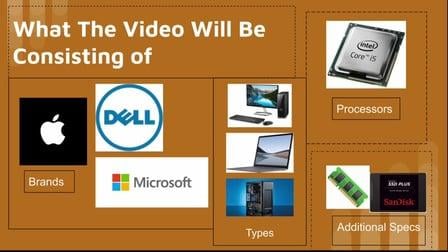
A video of where I teach you a quick a short way of choosing the right model and specs of a computer without spending a fortune on thing you won’t use. if aren’t already, make sure to upgrade to skill share premium as it helps me out and opens various topics of instrumental videos for you that otherwise wouldn’t be accessible to you.

Self Paced
Self-Paced