Computer Hardware and Software (Coursera)

Computer Hardware and Software (Coursera)

This course provides foundational understanding of how computers process information through hardware and software. You will investigate the world of Information Technology (IT) and survey hardware components, mobile devices, operating systems, programs and apps, network fundamentals, the Internet, and touch on security and ethics.

Class Deals by MOOC List - Click here and see Coursera's Active Discounts, Deals, and Promo Codes.

What You Will Learn

  • Identify the basic hardware components of a computer. Explain how software creates a functional and productive computer. Build a basic computer.

Course 1 of 3 in the Introduction to Computer Information Systems Specialization

Syllabus

WEEK 1
Hardware
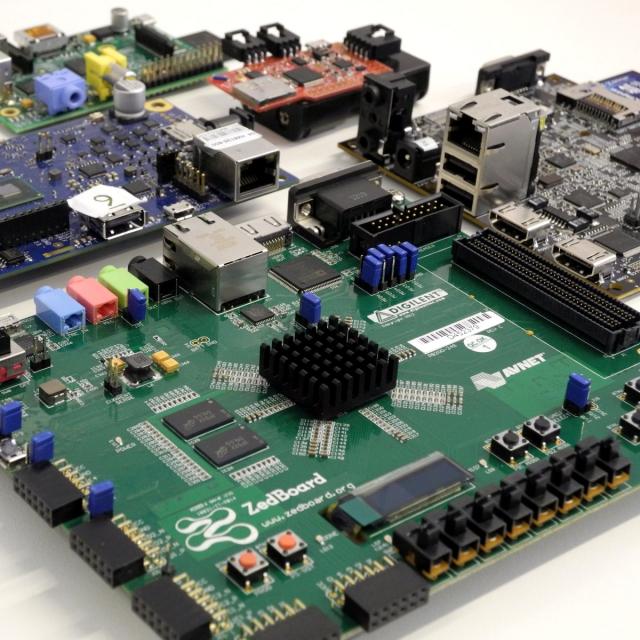
Computing and information systems are some of the fastest growing fields in the world. The skills needed to build computers, configure security networks, and engineer software are highly valued throughout the global workforce. The possibilities are endless, exciting, and this module will provide you with the basic foundation needed to take the first steps into the world of computer information systems. You will start with readings and exercises that will teach you how computers are made and how to use hardware to create the most energy efficient and productive computers. The module concludes with a learning activity in which students will practice assembling a computer.

WEEK 2
In your last module, you learned all about hardware. You studied how motherboards, hard disks, power supplies and other components work together to create a basic computer. However, a computer is a lot more than a series of wires and circuits. In order for a computer to function, it needs to communicate with its user and be told what to do. In this module, you will learn all about operating systems and other types of software that make it possible for a user to communicate with a computer and give it commands that make it a fully functional machine. This module will prepare you for your final module, in which students are asked to use software to design a network security system.

WEEK 3
Networking and the Internet
In your last module, you learned about software, how to communicate with a computer, and give it demands that transform it into a fully functional productivity tool. In this course's final module, you will learn how computers can communicate with each other on the internet. You will learn about basic network addressing, the domain system, and fundamental internet protocols. You will also learn some basic history about the creation of the internet. Upon completion of this module, you will have the foundational knowledge of computing and information systems needed to proceed to the next course in this specialization.

Go to Class
MOOC List is learner-supported. When you buy through links on our site, we may earn an affiliate commission.

Related Courses

Internet of Things: How did we get here? (Coursera) Coursera
University of California, San Diego

Internet of Things: How did we get here? (Coursera)

It is hard to imagine life without your Smartphone – you have come to rely on it so much – for your work; to stay in touch with family and friends; to capture and share those special moments; to find your way around in a new neighborhood. Did you ever wonder how and when all this happened? Or how and when GPS sensors came to be in your cell phone?

Jun 29th 2026
2 Weeks
Cybersecurity Roles, Processes & Operating System Security (Coursera) Coursera
IBM

Cybersecurity Roles, Processes & Operating System Security (Coursera)

This course gives you the background needed to understand basic Cybersecurity around people. process and technology. You will learn: Understand the key cybersecurity roles within an Organization; List key cybersecurity processes and an example of each process; Describe the architecture, file systems, and basic commands for multiple operating systems including Windows, Mac/OS, Linux and Mobile; Understand the concept of Virtualization as it relates to cybersecurity

Jun 29th 2026
4 Weeks
IoT Devices (Coursera) Coursera
University of Illinois at Urbana-Champaign

IoT Devices (Coursera)

The Internet of Things (IoT) stands to be the next revolution in computing. Billions of data-spouting devices connected to the Internet are already fundamentally changing the way we live and work. This course teaches a deep understanding of IoT technologies from the ground up. Students will learn IoT device programming (Arduino and Raspberry Pi), sensing and actuating technologies, IoT protocol stacks (Zigbee, 5G, NFC, MQTT, etc), networking backhaul design and security enforcement, data science for IoT, and cloud-based IoT platforms such as AWS IoT.

Jun 29th 2026
4 Weeks
Operating Systems and You: Becoming a Power User (Coursera) Coursera
Google

Operating Systems and You: Becoming a Power User (Coursera)

In this course, you’ll learn how to use the major operating systems, Windows and Linux, which are a core component of IT. Through a combination of video lectures, demonstrations, and hands-on practice, you’ll learn about the main components of an operating system and how to perform critical tasks like managing software and users, and configuring hardware.

Jun 29th 2026
5-12 Weeks
IT Security: Defense against the digital dark arts (Coursera) Coursera
Google

IT Security: Defense against the digital dark arts (Coursera)

This course covers a wide variety of IT security concepts, tools, and best practices. It introduces threats and attacks and the many ways they can show up. We’ll give you some background of encryption algorithms and how they’re used to safeguard data. Then, we’ll dive into the three As of information security: authentication, authorization, and accounting. We’ll also cover network security solutions, ranging from firewalls to Wifi encryption options. The course is rounded out by putting all these elements together into a multi-layered, in-depth security architecture, followed by recommendations on how to integrate a culture of security into your organization or team.

Jun 29th 2026
5-12 Weeks
Advanced Deployment Scenarios with TensorFlow (Coursera) Coursera
DeepLearning.AI

Advanced Deployment Scenarios with TensorFlow (Coursera)

Bringing a machine learning model into the real world involves a lot more than just modeling. This Specialization will teach you how to navigate various deployment scenarios and use data more effectively to train your model. In this final course, you’ll explore four different scenarios you’ll encounter when deploying models.

Jun 29th 2026
4 Weeks
Personnel & Third-Party Security (Coursera) Coursera
University of California, Irvine

Personnel & Third-Party Security (Coursera)

In this course, you will learn all about the process of implementing effective education, training, and awareness programs. You will also study the role personnel security plays in protecting an organization’s assets, intellectual property, and physical assets. You will also be introduced to the steps required for effective Vendor Risk Management (VRM), including: due diligence, contracting, monitoring & accessing, and termination. Throughout the course, you will engage with current case studies that illustrate the key concepts in your lessons. You will also have the chance to submit assignments in which you will apply the material in a practical application.

Jun 29th 2026
4 Weeks
Real-Time Mission-Critical Systems Design (Coursera) Coursera
University of Colorado Boulder

Real-Time Mission-Critical Systems Design (Coursera)

Upon completion of this course the learner will know the difference between systems you can bet your life on (mission critical) and those which provide predictable response and quality of service (reliable). This will be achieved not only by study of design methods and patterns for mission critical systems, but also through implementation of soft real-time systems and comparison to hard real-time. Methods of verification to determine ability to meet mission critical as well as soft real-time requirements will be learned so that the learner can properly assess risk, reliability and impact of failure in real-time systems.

Jun 29th 2026
4 Weeks
IoT Communications (Coursera) Coursera
University of Illinois at Urbana-Champaign

IoT Communications (Coursera)

This course builds on the previous course: IoT Devices. After we have built and programmed a small self-driving vehicle, now it's time get into more advanced territory and enhance the device's connectivity further. To do so you will study radio frequency (RF) communication, the MAC layer, Mesh Networking as well as distributed algorithms for use with geographic locations. These techniques will be applied to your device in the lab, which is composed of four steps, one in each week of the course.

Jun 29th 2026
4 Weeks
IoT Cloud (Coursera) Coursera
University of Illinois at Urbana-Champaign

IoT Cloud (Coursera)

This course is the last course in our series of four courses and builds on the previous three courses: IoT Devices, IoT Communications, and IoT Networking. After we have built and programmed a small self-driving vehicle, we then set out to enhance its connectivity and add important security infrastructure. In this course we will now look closer into various remaining types of decentralized network topography. In the lab, we will additionally cover important cloud technologies based on machine-learning. In the first two weeks' lectures, we will cover important components of networks.

Jun 29th 2026
4 Weeks