Heritage under Threat (Coursera)

Heritage under Threat (Coursera)

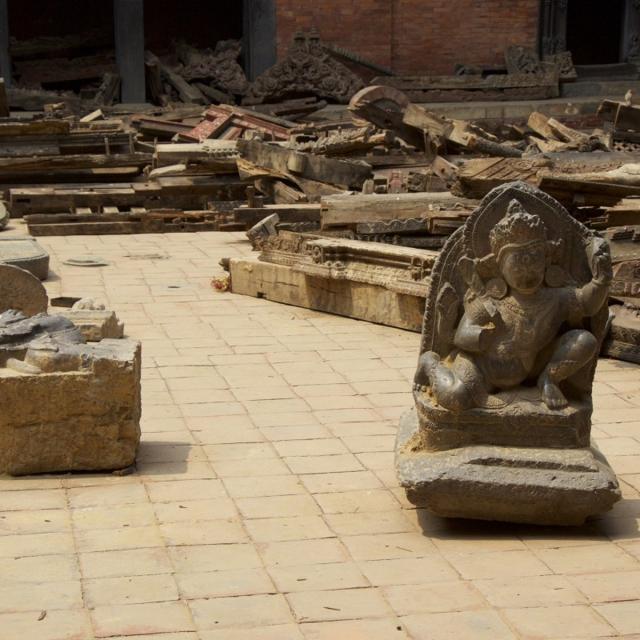
In this course you will learn to articulate your own concepts about (threatened) heritage and that of others. What is your heritage? Who defines heritage? Why is heritage under threat? How can we protect heritage? This course, sponsored by the LDE Centre for Global Heritage and Development and the Honours Academy of Leiden University, and the Netherlands Commission for UNESCO gave its support to one of the sections of the MOOC, will explore these issues. We wish to engage global communities and widen the perspective on threatened heritage. You can help us with this.

Class Deals by MOOC List - Click here and see Coursera's Active Discounts, Deals, and Promo Codes.

WW1, WW2, Cold war politics and contemporary conflicts as well as continuing political and socio-economic inequalities and colonial pasts are all factors playing a role in the global heritage discussions and approaches to (or lack of ) valorization and protection of heritage. Hence, issues behind destruction or threats to heritage are related to complex issues, often connected to complex landscapes of wars, the war-on-terror, fundamentalism, migration, global warming, financial crises, inequality and diverse interests of local communities.

Course Syllabus

Week 1
Welcome to this course
Great that you are joining us! In this course you will learn about your heritage and how you can preserve it. Before you start with studying we invite you to first go through our introduction module and introduce yourself in the forum to meet your fellow learners. If you encounter any difficulties while studying, please let us know on the forum. For technical difficulties or questions regarding the course certificate, you can always contact the Coursera Learner Helpdesk. Good luck & we hope you will enjoy studying in this course!
What is your heritage?
Hi everybody and welcome to the first module of this MOOC! We have an exciting course prepared for you, with a large variety of topics to be discussed. Some of which can become quite technical, but are necessary in order for you to understand the frameworks we are dealing with. For this week however, we are starting somewhat slowly and view cultural heritage from a very personal point of view. This is important because, as you will also learn later, a personal view and inclusive heritage is one of the main ways to go forward and battle for heritage which is under threat. We'd like you to introduce yourself to your fellow students before diving into the content, so make sure to select the next discussion prompt first!

Week 2
Heritage and inequality
Hi everybody welcome to the second module! Last week we talked about the concept of heritage and how heritage can be very personal. This week we will dive into how heritage is actually defined, both within the field of (archaeological) heritage management, as well as for local communities. We will also discuss various forms of inequality which unfortunately can come with defining and framing something as heritage. Please watch the video's we have prepared for you first and then proceed with the quizz and case study!

Week 3
Heritage, communities and ownership
Hi everybody welcome to the third module!Last week we talked about the definition of heritage and how this can sometimes invoke inequality. This week we will discuss the role of communities and the impact of heritage ownership. Please watch the video's we have prepared for you first and then proceed with the quizz and case study!Have fun!

Week 4
Heritage threats
Hi all! Welcome to the fourth module!Last week we talked about local communities and the impact of heritage ownership. This week we will dive into the various threats to heritage, both anthropogenic as well as natural. We also have a very interesting, relevant and timely case study prepared for you! Please watch the video's we have prepared for you first and then proceed with the quizz and case study!

Week 5
Heritage protection
Hi all! Welcome to the fifth module!Last week we discussed the various threats to heritage, both man-made as well as natural. This week we will discuss how we can actually protect cultural heritage and which measures we have at our disposal to do so. Please watch the video's we have prepared for you first and then proceed with the quizz and case study!

Week 6
Inclusive heritage
Hi all! Welcome to the sixth and last module! Did you enjoy the course thus far?Last week we talked about the opportunities we have to protect heritage. This final week we will discuss how heritage can be utilized to create an inclusive, sensitive and thoughtful society. We will also discuss some of the more technological developments going on in the world of video games and virtual reality, all helping to create an open and inclusive heritage discourse. Let us know what you think! Please watch the video's we have prepared for you first and then proceed with the quizz and case study! Good luck with your final tasks!
Go to Class
MOOC List is learner-supported. When you buy through links on our site, we may earn an affiliate commission.

Related Courses

Companies and climate change (Coursera) Coursera
ESSEC Business School

Companies and climate change (Coursera)

How can companies act in the fight against global warming? This is a question that is being asked more and more urgently to all economic actors. To shed some light on your thoughts, we have met with four companies of various sizes and sectors of activity that are very committed to the subject. They will share with you their progress in aligning themselves with the objectives of the Paris Accord.

Sep 28th 2026
4 Weeks
Migration and health (Coursera) Coursera
Imperial College London

Migration and health (Coursera)

Migration and health is the second instalment of the wider Global Health Challenges and Governance specialisation from Imperial College London's Global Master of Public Health (GMPH). The scope and content of this course has been developed from the ground up by a combined team of academics and practitioners drawing on a wealth of real-world public health experience as well as deep academic knowledge. Through short video lectures, readings and a wide range of interactive activities, learners will be immersed in the intersection of migration and health.

Sep 28th 2026
5-12 Weeks
Arts and Heritage Management (Coursera) Coursera
Università Bocconi

Arts and Heritage Management (Coursera)

Today cultural institutions are facing important dilemmas in many aspects of their management. Over the past decades, a new figure has emerged that of the art manager. Imagine you went to work every day to connect artists with audiences, vision with reality, and money with a mission. That is what managers in the arts do, they play an essential role in transforming the minds, lives, and communities through creative expression. This course has been conceptualized to address the need of skills and techniques to help professionals and managers in running art and cultural institutions.

Oct 5th 2026
5-12 Weeks
Economic Growth and Distributive Justice Part II - Maximize Social Wellbeing (Coursera) Coursera
Tel Aviv University

Economic Growth and Distributive Justice Part II - Maximize Social Wellbeing (Coursera)

If you really care about the big questions in the economies and societies of the 21st century, such as distributive justice - namely, inequality of income or wealth, and its correlation with economic growth - this course is meant for you. The knowledge you will gain can truly change your outlook on our world.

Sep 28th 2026
5-12 Weeks
Riesgos y oportunidades empresariales en una economía globalizada (Coursera) Coursera
IE Business School

Riesgos y oportunidades empresariales en una economía globalizada (Coursera)

Oportunidades y riesgos empresariales en un mundo globalizado» es el tercer y último curso de la especialización «Globalización, crecimiento económico y estabilidad» impartido por la profesora de IE Business School Gayle Allard. En este curso, los alumnos aprovecharán los conocimientos y la teoría de sus dos cursos anteriores y los aplicarán a los eventos que actualmente suceden en el mundo. Además, puede funcionar como curso independiente para quienes quieran saber cómo afectan los factores macroeconómicos a las economías, los gobiernos y los ciudadanos en diversos países.

Sep 21st 2026
5-12 Weeks
Energy, Environment, and Everyday Life (Coursera) Coursera
University of Illinois at Urbana-Champaign

Energy, Environment, and Everyday Life (Coursera)

This course teaches you everything you need to know about energy, the environment, and at least a number of things in everyday life. It starts by talking about energy itself and where it comes from. This includes how much we have, who has it, who uses it, and what that all means. The video clips are produced in a fast-paced multimedia format during which Professor Ruzic throws in fun and demonstrations. There are multiple-choice questions to check your understanding and some more in-depth exercises to guide you deeper into the subject.

Sep 28th 2026
5-12 Weeks
Global Warming I: The Science and Modeling of Climate Change (Coursera) Coursera
University of Chicago

Global Warming I: The Science and Modeling of Climate Change (Coursera)

This class describes the science of global warming and the forecast for humans’ impact on Earth’s climate. Intended for an audience without much scientific background but a healthy sense of curiosity, the class brings together insights and perspectives from physics, chemistry, biology, earth and atmospheric sciences, and even some economics—all based on a foundation of simple mathematics (algebra).

Sep 21st 2026
5-12 Weeks
Inequality and Democracy (Coursera) Coursera
Universiteit Utrecht

Inequality and Democracy (Coursera)

Most countries are getting more and more unequal. But the core of democracy is political equality: that everyone should have an equal say in how their country is run. Can we really expect these things to go together? Can people have equal political power while economic inequality grows and grows? Take this course and decide for yourself.

Sep 14th 2026
5-12 Weeks
Political Economy of Institutions and Development (Coursera) Coursera
Leiden University

Political Economy of Institutions and Development (Coursera)

This course is part of the SDG initiative addressing the UN Sustainable Development Goals, specifically for the following SDGs [1, 8, 10 and 16]. We hope you will join in our efforts to reach the SDG’s in small but measurable and actionable ways, cooperating with Development Done Differently. Expand your impact. You can create a better world. In today’s world, politics and economics are interconnected, but what is the nature of this connectivity?

Sep 21st 2026
5-12 Weeks
Plagues, Witches, and War: The Worlds of Historical Fiction (Coursera) Coursera
University of Virginia

Plagues, Witches, and War: The Worlds of Historical Fiction (Coursera)

A unique and exciting introduction to the genre and craft of historical fiction, for curious students, aspiring authors--anyone with a passion for the past. Read classics of the genre, encounter bestselling writers of historical fiction, and discover your own historical archive while interacting with a global community of interested readers.

Sep 28th 2026
5-12 Weeks
Business Opportunities and Risks in a Globalized Economy (Coursera) Coursera
IE Business School

Business Opportunities and Risks in a Globalized Economy (Coursera)

This is the last of the three courses part of the Globalization, Economic Growth and Stability Specialization.¨Business Opportunities and Risks in a Globalized World¨ is the the 3rd and final course of the ¨Globalization, Economic Growth and Stability¨ Specialization taught by IE Business School's Professor Gayle Allard. This course is designed to help an investor, businessperson or economist approach macroeconomic, institutional and international data and derive information from the indicators that point to the types of opportunities and risks that they present.

Sep 28th 2026
5-12 Weeks