Healthcare Data Models (Coursera)

Healthcare Data Models (Coursera)

Career prospects are bright for those qualified to work in healthcare data analytics. Perhaps you work in data analytics, but are considering a move into healthcare where your work can improve people’s quality of life. If so, this course gives you a glimpse into why this work matters, what you’d be doing in this role, and what takes place on the Path to Value where data is gathered from patients at the point of care, moves into data warehouses to be prepared for analysis, then moves along the data pipeline to be transformed into valuable insights that can save lives, reduce costs, to improve healthcare and make it more accessible and affordable.

Class Deals by MOOC List - Click here and see Coursera's Active Discounts, Deals, and Promo Codes.

Perhaps you work in healthcare but are considering a transition into a new role. If so, this course will help you see if this career path is one you want to pursue. You’ll get an overview of common data models and their uses. You’ll learn how various systems integrate data, how to ensure clear communication, measure and improve data quality. Data analytics in healthcare serves doctors, clinicians, patients, care providers, and those who carry out the business of improving health outcomes. This course of study will give you a clear picture of data analysis in today’s fast-changing healthcare field and the opportunities it holds for you.
Course 2 of 4 in the Health Information Literacy for Data Analytics Specialization.

Syllabus

WEEK 1
Introduction to Healthcare Data Models
In this module, you will be able to define the foundational terms used in discussing and building healthcare data models. You'll be able to describe the conceptual model showing how data flows from operations to analysis. You will compare and contrast common data models used in healthcare data systems. You will also be able to identify common measures used in healthcare data analysis.

WEEK 2
Data Models and Use Cases They Support
In this module, you'll be able to describe the Star Schema Data Model, distinguish it from the hierarchical and relational model, list some pros and cons and explain situations in which it could be appropriately used. You should also recognize when another type of data model might be better suited to a particular use case.

WEEK 3
Working with Data across Systems
In this module, you'll be able to explain how information is stored in data models and how we assemble relevant information to analyze an interesting problem that can improve our healthcare systems. We'll review how we normalize data and how that facilitates analysis. We'll go on to discuss how to bring together information from different sources and across various functional systems. We will also consider how to measure it accurately.

WEEK 4
Improving the Quality of Healthcare Data
In this module, you will be able to examine the data that goes into these models and explain how we work with the information that comes from the practice and business of medicine. We will transition from raising the data quality to focusing on finding and correcting data errors by validation and verification. You will also be able to describe several ways data is checked to eliminate errors and improve data quality.

Go to Class
MOOC List is learner-supported. When you buy through links on our site, we may earn an affiliate commission.

Related Courses

Spatial Data Science and Applications (Coursera) Coursera
Yonsei University

Spatial Data Science and Applications (Coursera)

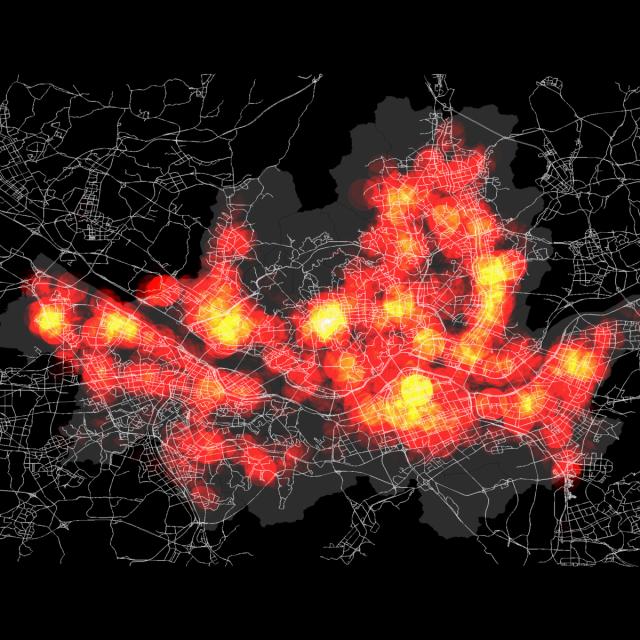
Spatial (map) is considered as a core infrastructure of modern IT world, which is substantiated by business transactions of major IT companies such as Apple, Google, Microsoft, Amazon, Intel, and Uber, and even motor companies such as Audi, BMW, and Mercedes. Consequently, they are bound to hire more and more spatial data scientists. Based on such business trend, this course is designed to present a firm understanding of spatial data science to the learners, who would have a basic knowledge of data science and data analysis, and eventually to make their expertise differentiated from other nominal data scientists and data analysts.

Oct 5th 2026
5-12 Weeks
Health Care and Promotion for Infants and Toddlers (Coursera) Coursera
Peking University

Health Care and Promotion for Infants and Toddlers (Coursera)

The course Health Care and Promotion for Infants and Toddlers provides a comprehensive and detailed overview of cutting-edge knowledge, new concepts and practical skills in early childhood health care, including the growth and development of newborns, infants, and toddlers, daily parenting, and early childhood development and education.

Oct 5th 2026
5-12 Weeks
Confronting Gender Based Violence: Global Lessons for Healthcare Workers (Coursera) Coursera
Johns Hopkins University

Confronting Gender Based Violence: Global Lessons for Healthcare Workers (Coursera)

This course introduces participants from the healthcare sector to gender based violence (GBV), including global epidemiology of GBV; health outcomes; seminal research; and clinical best practices for GBV prevention, support, and management. A core curriculum is supplemented by lectures that contextualize the content with specific examples and programs from around the world.

Oct 12th 2026
4 Weeks
Hacking Exercise For Health. The surprising new science of fitness. (Coursera) Coursera
McMaster University

Hacking Exercise For Health. The surprising new science of fitness. (Coursera)

Renowned exercise physiologists Martin Gibala and Stuart Phillips of McMaster University teach the surprising new science of cardio fitness and strength-building—and then provide you with hacks to get fit and strong (and healthy!) in less time than you ever thought possible. What’s the right mix of exercise between cardio and strength? How do you know if you’re working out hard enough? What’s better, heavy or light weights? These questions and more are addressed through a course designed to provide even the most inexperienced of exercisers the tools you need to design time-efficient workouts that can be done virtually anywhere, from your own home to a city park or even at your workplace.

Oct 5th 2026
4 Weeks
Service Transformed: Lessons in U.S. Veteran Centered Care (Coursera) Coursera
University of Michigan

Service Transformed: Lessons in U.S. Veteran Centered Care (Coursera)

Improving health care for veterans has become a matter of national attention and has gained increasing attention from the medical community. With the current surge of veterans reintegrating into civilian society it is critical to improve the training of the next cadre of providers who will provide care for our veterans. It is widely known that veterans receive care in all aspects of the health system, thus providers in veteran focused care facilities, military health serves and civilian locals must be aware of the unique needs of veterans. It is perhaps even more important to educate civilian providers who may be unfamiliar with the unique physical, mental and emotional needs related to military service.

Sep 28th 2026
5-12 Weeks
Living with Dementia: Impact on Individuals, Caregivers, Communities and Societies (Coursera) Coursera
Johns Hopkins University

Living with Dementia: Impact on Individuals, Caregivers, Communities and Societies (Coursera)

Health professionals and students, family caregivers, friends of and affected individuals, and others interested in learning about dementia and quality care will benefit from completing the course. Led by Drs. Nancy Hodgson and Laura Gitlin, participants will acquire foundational knowledge in the care of persons with Alzheimer’s Disease and other neurocognitive disorders.

Sep 28th 2026
5-12 Weeks
Ethical Social Media (Coursera) Coursera
The University of Sydney

Ethical Social Media (Coursera)

Social media connects us across space and time, allowing us to find like-minded communities and participate creatively in public life as never before. We may often use social media without thinking much about the possible consequences. But there is a shadow side associated with social media use, which takes the form of hate speech, increased surveillance, lack of anonymity and questionable use of our data. What do we need to know to use social media spaces effectively, in a way that is safe and productive for all?

Oct 5th 2026
5-12 Weeks
Take the Lead on Healthcare Quality Improvement (Coursera) Coursera
Case Western Reserve University

Take the Lead on Healthcare Quality Improvement (Coursera)

In this course you will learn about the importance of quality in healthcare and how you can contribute by implementing a quality improvement (QI) project to improve processes of care and patient outcomes. You will learn about powerful tools to add to your QI ‘toolbox’ during short lectures and reflective exercises. You will apply these tools to the implementation of a QI project in your own practice setting or an area of personal improvement. At the completion of the course, you will have a storyboard that captures your QI project success to share with others.

Sep 28th 2026
5-12 Weeks
XR in Healthcare Education and Clinical Practice (Coursera) Coursera
Imperial College London

XR in Healthcare Education and Clinical Practice (Coursera)

This course is designed to teach you about Extended Reality (XR) and its use in healthcare education and clinical practice. Using lessons from experts in the field and different use cases, this course shows you how to use this innovative technology in a way that creates sustainable and accessible real-world use.

Oct 5th 2026
4 Weeks
Engaging in Improving Patient Experience Through Analytics (Coursera) Coursera
Northeastern University

Engaging in Improving Patient Experience Through Analytics (Coursera)

This course is best suited for individuals currently in the healthcare sector, as a provider, payer, or administrator. Individuals pursuing a career change to the healthcare sector may also be interested in this course. This is the second part in a two-part course exploring concepts and topics related to improving the patient experience and reducing pain points in healthcare processes through analytic and decision support frameworks.

Oct 5th 2026
4 Weeks