SQL Fundamentals for Data Analysts (Coursera)

SQL Fundamentals for Data Analysts (Coursera)

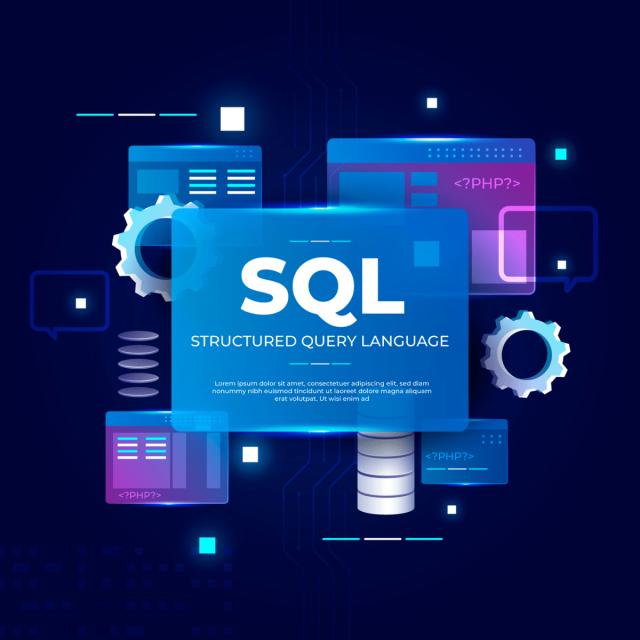
Focus on the skills you need to get started with SQL as a data analyst, allowing you to read & transform data and gather insights from a company database.

Class Deals by MOOC List - Click here and see Coursera's Active Discounts, Deals, and Promo Codes.

• Learn the basic SQL syntax that will help you access a whole new world of data.
• Focus on the read-only functionality that matters for a data analyst, and get to insights quickly.
• Perform the basics of data sorting, filtering, and aggregation in SQL to start uncovering valuable insights
• Solidify your understanding through real-world scenarios, applying your newfound SQL skills in a variety of practical exercises
This course is part of the BI Essentials for Finance Analysts (Power BI Edition) Specialization.

Syllabus

Getting Started
Welcome to the SQL Fundamentals course.

Basic SQL Queries
In this module, we will learn to retrieve and filter data using basic SQL queries.

Manipulating Values with Functions
In this module, we will learn manipulate data with the help of numerical date and text functions.

SQL Theory
In this module, we will learn the difference between OLTP and data warehouse and also understand the essential terminology related to SQL.

Working with Multiple Tables
In this module, we will learn to combine data from multiple tables using a single query. Additionally, we will understand how SQL databases deal with many-to-many relationships.

Advanced Functions and Queries
In this module, we will learn how to use SQL in popular BI tools and create summary reports using advanced functions.

Qualified Assessment

Go to Class
MOOC List is learner-supported. When you buy through links on our site, we may earn an affiliate commission.

Related Courses

Serverless Data Processing with Dataflow: Develop Pipelines (Coursera) Coursera
Google Cloud

Serverless Data Processing with Dataflow: Develop Pipelines (Coursera)

In this second installment of the Dataflow course series, we are going to be diving deeper on developing pipelines using the Beam SDK. We start with a review of Apache Beam concepts. Next, we discuss processing streaming data using windows, watermarks and triggers. We then cover options for sources and sinks in your pipelines, schemas to express your structured data, and how to do stateful transformations using State and Timer APIs.

Jul 27th 2026
3 Weeks
Construção de Relacionamentos em Vendas Orientada a Dados (Coursera) Coursera
FIA Business School

Construção de Relacionamentos em Vendas Orientada a Dados (Coursera)

Nossas boas-vindas ao Curso Construção de Relacionamento em Vendas Orientada a Dados. Neste curso, você aprenderá métodos sobre data analytics para o ambiente dos profissionais de vendas. Ao final deste curso, você será capaz de avaliar relacionamentos entre o desempenho de vendas e os gastos relacionados; agrupar por semelhança itens, produtos ou serviços e, por fim, realizar recomendações de produtos para clientes sob características preestabelecidas.

Aug 3rd 2026
4 Weeks
Cloud Data Security (Coursera) Coursera
University of Minnesota

Cloud Data Security (Coursera)

This course gives learners an opportunity to explore data security in the cloud. In this course, learners will: dive into the data services offered by cloud providers and compare their security features; analyze a data breach and trace it back to the vulnerability that made it possible; learn about database injection and aggregation attacks; follow the life cycle of a data item and its relationship to privacy and integrity; associate modern privacy requirements with US and European laws.

Jul 27th 2026
4 Weeks
Building Web Applications in Django (Coursera) Coursera
University of Michigan

Building Web Applications in Django (Coursera)

In this course, you will learn how Django communicates with a database through model objects. You will explore Object-Relational Mapping (ORM) for database access and how Django models implement this pattern. We will review the Object-Oriented (OO) pattern in Python. You will learn basic Structured Query Language (SQL) and database modeling, including one-to-many and many-to-many relationships and how they work in both the SQL and Django models. You will learn how to use the Django console and scripts to work with your application objects interactively.

Jul 27th 2026
4 Weeks
Ethical Social Media (Coursera) Coursera
The University of Sydney

Ethical Social Media (Coursera)

Social media connects us across space and time, allowing us to find like-minded communities and participate creatively in public life as never before. We may often use social media without thinking much about the possible consequences. But there is a shadow side associated with social media use, which takes the form of hate speech, increased surveillance, lack of anonymity and questionable use of our data. What do we need to know to use social media spaces effectively, in a way that is safe and productive for all?

Aug 10th 2026
5-12 Weeks
Prepare Data for Exploration (Coursera) Coursera
Google

Prepare Data for Exploration (Coursera)

This is the third course in the Google Data Analytics Certificate. These courses will equip you with the skills needed to apply to introductory-level data analyst jobs. As you continue to build on your understanding of the topics from the first two courses, you’ll also be introduced to new topics that will help you gain practical data analytics skills. You’ll learn how to use tools like spreadsheets and SQL to extract and make use of the right data for your objectives and how to organize and protect your data. Current Google data analysts will continue to instruct and provide you with hands-on ways to accomplish common data analyst tasks with the best tools and resources.

Jul 27th 2026
5-12 Weeks
Understanding China, 1700-2000: A Data Analytic Approach, Part 2 (Coursera) Coursera
The Hong Kong University of Science and Technology - HKUST

Understanding China, 1700-2000: A Data Analytic Approach, Part 2 (Coursera)

The purpose of this course is to summarize new directions in Chinese history and social science produced by the creation and analysis of big historical datasets based on newly opened Chinese archival holdings, and to organize this knowledge in a framework that encourages learning about China in comparative perspective. Our course demonstrates how a new scholarship of discovery is redefining what is singular about modern China and modern Chinese history.

Aug 3rd 2026
4 Weeks