EdX

Evaluating Animal Breeding Programmes (edX)

Evaluating Animal Breeding Programmes (edX)

Gain insight in how to evaluate a running breeding program, both in terms of genetic progress and genetic diversity, and in how dissemination of genetic progress takes place. Animal breeding, and especially farm animal breeding, has developed into a professional industry with modern technologies, large-scale data collection, and analyses.

Class Deals by MOOC List - Click here and see EdX's Active Discounts, Deals, and Promo Codes.

This has resulted in very efficient and effective breeding programmes; however in many developing countries, and for many lesser known livestock and fish species there is a need for tailor-made breeding programs In this course, you will learn about the implementation and evaluation of both large industrial scale and the tailor-made breeding programs, in terms of genetic progress and genetic diversity.
Together with other learners, you will dive into the reasons behind crossbreeding in relation to dissemination of genetic improvement. It is essential to know how key biological factors affect the structure of a breeding programme and to understand the different structures a breeding programme can have.
Join this course and learn everything about how to properly evaluate breeding programmes. In several knowledge clips and assignments you will learn how to assess the effects of legislation, competition, GxE, new technology on breeding programmes.
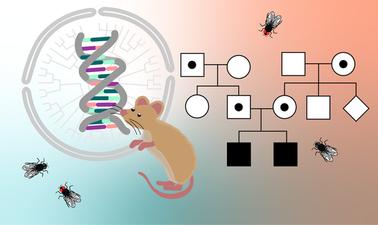
A special section of this course is devoted to monogenic recessive diseases. These diseases play an important role in breeding programs for companion animals such as dogs and horses. Modern DNA sequencing technology now makes it possible not only to detect these mutations but also to design breeding strategies aimed at eliminating these diseases.
After finishing this course you can make informed decisions when setting up a breeding programme for a specific animal in a specific production system and recognize and identify key elements of the course in real-life examples of breeding programmes
Knowledge of statistics at a 2nd or 3rd year university level is needed to follow this course successfully.
This course is part of the Professional Certificate Programme “Animal Breeding and Genetics”.

What you'll learn

  • Introduction to evaluating breeding programmes
  • Crossbreeding and dissemination of genetic improvement
  • Evaluation of breeding programmes
  • Genetic diversity in monogenic recessive diseases
  • Genetic diversity at a population level
  • Breeding programmes in practice

Syllabus

Module 1: Introduction
Introduction to evaluating animal breeding programmes, along the seven steps that are needed to set up a breeding programme.

Module 2: Crossbreeding and Dissemination
Learning about heterosis and crossbreeding, including crossbreeding schemes in practice. Learning about the most important breeding programme structures and schemes, and about which key factors influence this structure.

Module 3: Evaluation of Breeding Programmes
How do we assess genetic improvement in breeding programmes? Let’s look into limits to selection, genotype by environment interaction and its consequences for breeding programmes. Learn how multi-trait selection can reduce unwanted correlated responses.

Module 4: Genetic Diversity I - Monogenic Recessive Disorders
This module is all about the nature of monogenic recessive disorders, their mode of inheritance and about strategies to eliminate these defects. Learn about the Hardy-Weinberg equilibrium and about genetic drift in relation to genetic diversity.

Module 5: Genetic Diversity II - Population Level
Let’s study the forces that affect genetic diversity on a population level, and factors that influence the rate of inbreeding. We will predict the rate of inbreeding in simple situations, and learn how to monitor genetic diversity. Finally, we will discuss in vivo and in vitro strategies to conserve genetic diversity.

Module 6: Breeding Programmes in Practice
Introduction to evaluating animal breeding programmes in practice, through a number of real life situations. How do the different topics covered in the course affect choices made when designing and evaluating a breeding programme?
Go to Class
MOOC List is learner-supported. When you buy through links on our site, we may earn an affiliate commission.

Related Courses

Introduction to Animal Behaviour (edX) EdX
Wageningen University,WageningenX

Introduction to Animal Behaviour (edX)

Explore the amazing range and complexity of wild animal behaviour. Discover how animals learn, communicate, find food, avoid predators, and interact socially. Do you want to understand how and why animals behave the way they do, and how we test hypotheses about behaviour scientifically? This biology and life sciences course provides an introduction to the complexities of wild animal behaviour, and how it is studied.

Self Paced
Self-Paced
Global Health at the Human-Animal-Ecosystem Interface (Coursera) Coursera
University of Geneva

Global Health at the Human-Animal-Ecosystem Interface (Coursera)

The University of Geneva, Institute Pasteur, University of Montreal and Centre Virchow-Villermé/University Paris Descartes welcome you to this new MOOC on "Global Health at the Human-Animal-Ecosystem Interface"! Over the next 5 weeks, you will explore and learn about some of the major and current Global Health Challenges at the Human-Animal-Ecosystem Interface: zoonotic emerging infections (e.g. Ebola, Nipah, MERS, Avian Influenza), antimicrobial resistance, neglected tropical diseases (e.g. rabies, leishmaniasis, zoonotic TB), snakebite and other human-animal conflicts etc.

Jun 1st 2026
5-12 Weeks
AP® Biology - Part 2: Genetics (edX) EdX
Rice University,RiceX

AP® Biology - Part 2: Genetics (edX)

The second course in a comprehensive series designed to prepare you for the AP Biology exam, focusing on genetics and DNA. Preparing for the AP Biology exam requires a deep understanding of many different topics in biology as well as an understanding of the format of the AP exam and the types of questions it asks. This course is Part 2 of the AP Biology series designed to prepare you for the AP Biology exam.

No sessions available
5-12 Weeks
Animals, Self, and Society (Coursera) Coursera
University of Colorado Boulder

Animals, Self, and Society (Coursera)

This course explores how animals and people are situated within the web of structures and connections known as “society.” Module 1 considers some of the key symbolic roles that animals play in society by investigating the practice of “thinking with animals.” We investigate how people construct different meanings of animals and the implications these meanings have for both animals and humans. You will gain first-hand experience of this by analyzing how animals are represented in the media.

Jun 1st 2026
4 Weeks
Cell Biology: Signaling (edX) EdX
MIT,MITx

Cell Biology: Signaling (edX)

How do we know what we know about cells? Enhance your scientific thinking and data analysis skills with this in-depth adventure through cell biology. Professors Iain Cheeseman and Frank Solomon guide you through a learning experience where you will discover experiments that answered big questions and find out what is still on the horizon. You will embark on a lively journey through cellular signaling mechanisms, regulation, and specific examples and learn how to apply key concepts and themes of this dynamic experimental science to understand the fundamental workings of cells.

No sessions available
5-12 Weeks
Religious Symbols of the World (edX) EdX
Seoul National University,SNUx

Religious Symbols of the World (edX)

This course is the third and final course in the series following “Understanding Religious Symbolism” and “Myths, Rituals, and Cosmos.” Through the theories and patterns that you learned in these three courses, I hope that you will be able to interpret the various religious phenomena in different cultures, and through this gain a better understanding of culture and human beings.

Self Paced
Self-Paced
Introduction to Biology - The Secret of Life (edX) EdX
MIT,MITx

Introduction to Biology - The Secret of Life (edX)

Explore the secret of life through the basics of biochemistry, genetics, molecular biology, recombinant DNA, genomics and rational medicine. 7.00x is an introductory level biology course hosted by professor Eric Lander, who was one of the leaders of the Human Genome Project. The course content reflects the topics taught in the MIT introductory biology courses and many biology courses across the world.

Mar 12th 2024
13-24 Weeks
The Truth About Cats and Dogs (Coursera) Coursera
University of Edinburgh

The Truth About Cats and Dogs (Coursera)

What is your cat revealing to you when she purrs? What is your dog expressing when he yawns or wags his tail? Understanding your cat and dog’s behaviour and the way they communicate with you, will enable you to better understand their needs and strengthen your relationship with them. This MOOC is divided into five topics, the appliance of science; behaviour and body language, senses and perception; challenges for the human-animal relationship, including pet problem behaviour; and how to improve the quality of life for cats and dogs in our care.

Jun 1st 2026
5-12 Weeks
Introduction to Animal Ethics (edX) EdX
Kyoto University,KyotoUx

Introduction to Animal Ethics (edX)

Learn about what ethical issues arise in human-animal relationships, and how to think about such issues systematically. The course utilizes Manga as a study aid. Why do many of us who eat pigs condemn those who eat dogs? Is there any difference between lab mice and companion hamsters that justify the use of the former for drug tests? Our attitude toward animals is full of seeming inconsistencies and unexplained conventions.

Self Paced
Self-Paced
Sharks! (edX) EdX
University of Queensland,CornellX,Cornell University,UQx

Sharks! (edX)

Learn about the most fascinating animals on Earth, their sophisticated senses and how sharks and their relatives have impacted human history and culture. Did you know that you can track some sharks’ movements on Twitter? Or that the scales on their skin have influenced the way humans design boats, planes, and even swimsuits? Or that sharks have more senses than humans?

Jul 3rd 2023
4 Weeks
Genetic Models for Animal Breeding (edX) EdX
Wageningen University,WageningenX

Genetic Models for Animal Breeding (edX)

Understand the genetic and statistic principles that enable responsible animal breeding. Animal breeding involves the selective breeding of domestic animals with the intention to improve desirable (and heritable) qualities in the next generation. This course introduces the steps required to design a program for breeding animals and teaches the genetic and statistical concepts that are needed to build a solid breeding program.

Self Paced
Self-Paced