Essentials of Palliative Care (Coursera)

Offered by Stanford University,
Essentials of Palliative Care (Coursera)

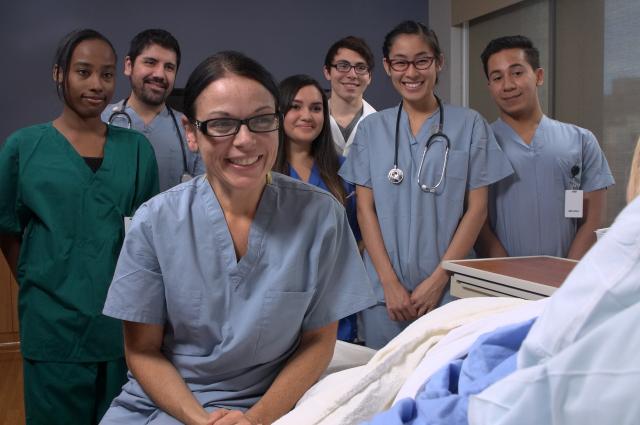
This course starts you on your journey of integrating primary palliative care into your daily lives. You will learn what palliative care is, how to communicate with patients, show empathy, and practice difficult conversations. You will learn how to screen for distress and provide psychosocial support. You will learn about goals of care and advance care planning and how to improve your success with having these conversations with patients. Finally, you will explore important cultural considerations and improve your cultural competency on the topics covered.

Class Deals by MOOC List - Click here and see Coursera's Active Discounts, Deals, and Promo Codes.

For clinicians, the goal of this course is to help you incorporate primary palliative care into your daily practice or help you know when to seek a specialist. We will help you improve your patient’s quality of life and provide self-care tips to help you maintain your own. For patients and caregivers, this course will empower you to talk to your provider and get palliative care, if necessary.
The Stanford University School of Medicine is accredited by the Accreditation Council for Continuing Medical Education (ACCME) to provide continuing medical education for physicians. Visit the FAQs below for important information regarding 1) Date of original release and Termination or expiration date; 2) Accreditation and Credit Designation statements; 3) Disclosure of financial relationships for every person in control of activity content.
Course 1 of 4 in the Palliative Care Always Specialization

Syllabus

WEEK 1
Course Introduction and Overview
Welcome! Palliative Care Always is about optimizing quality of life at any stage of disease. This course, Essentials of Palliative Care, is rooted in the belief that incorporating the principles of palliative care into clinical practice can improve the quality of life for our patients and their support systems (including clinicians!). A team of Stanford faculty and staff designed this course to educate you about palliative care. Together, you will learn how it intersects with treating serious illness, and how palliative care skills can help improve quality of life for patients, families and providers. Our hope is that you will feel increasingly equipped to support the diverse needs of patients with serious illness.
Introduction to Palliative Care
This module focuses on what palliative care is, the roles of the care team and the difference between primary and speciality palliative care.

WEEK 2
Communicating with Patients
Discussing difficult news is always a challenge for a variety of reasons.  In this module, we will cover methods you can use to make these conversations more successful.  
Communication is the foundation of patient and clinician relationships and a key component of palliative care. Effective communication can build trust and promote clarity in the face of difficult decisions. Still, communication--especially about prognosis and transitions in care--is a challenging aspect of patient care in which clinicians cite a lack of confidence and skill. This module covers basic skills in communicating with patients, families, and peers. You will hear about practical ways to incorporate communication skills into your daily practice and your daily life. These skills will help you tune in to the needs and desires of patients and families and form a partnership that promotes well-being.
Psychosocial Distress
Most families living with cancer will experience some form of emotional, psychological or social distress. This may exist as episodes of grief or anxiety at specific points such as diagnosis or progression, or it may be a more chronic experience that has an ongoing impact on relationships and day-to-day life.
Psychosocial distress itself affects quality of life while also exacerbating physical symptoms and influencing decisions regarding treatment. This module explores psychosocial distress and introduces you to skills for assessing and managing psychosocial distress. These skills will help you identify and begin to address the emotional and social needs of patients and families.

WEEK 3
Goals of Care & Advanced Directives
Goals of cancer care are often associated with prolonging life or preparing for the end of life. However, goals of care conversations identify wishes and values that guide every medical decision and help patients and families live the best life possible at every phase of care.
Goals of care discussions help patients and providers balance the evidence about disease and treatment with subjective needs and values. To this end, conversations about goals should be introduced early and revisited regularly to make sure healthcare decisions are in line with a patient's wishes. Throughout this module, we introduce goals of care conversations and communication skills as they relate to identifying goals and values.
Self-Care
Healthcare providers, in general, make a life of being attentive to and providing resources for people during times of illness and suffering. This type of work, while essential and rewarding, undoubtedly bears its cost in work-related stress, burnout and fatigue. The response to internal and external stress is a key influencer on wellbeing.
During this module, we discuss how to identify burnout in yourself and provide tips to ease the challenges that healthcare providers face.

WEEK 4
Final Steps
Congratulations on completing the course content. You have a few more step to complete the course. First review your reflection, next complete a peer-reviewed course project and then take the final exam. We hope you have enjoyed the course and look forward to seeing you in other classes!

Go to Class
MOOC List is learner-supported. When you buy through links on our site, we may earn an affiliate commission.

Related Courses

Strategies for Senior Housing Communities during COVID-19 (Coursera) Coursera
Johns Hopkins University

Strategies for Senior Housing Communities during COVID-19 (Coursera)

SARS-CoV-2, the virus that causes COVID-19, poses a high risk for senior housing communities and the people who live and work there. The COVID-19 response has largely focused on nursing homes, leaving independent living communities serving older adults in the United States with fragmented guidance on how to respond to COVID-19 challenges. This course provides comprehensive instruction and resources for property owners and managers, senior housing staff, service coordinators and providers, community housing leaders, and other senior housing stakeholders to build upon their emergency preparedness and response strategies related to COVID-19. The course lectures, interviews, and assignments are largely geared toward federally-subsidized, multifamily senior housing providers, but the material is relevant for all senior housing providers. **Free enrollment available until December 31, 2021. Valid for one enrollment per person.**

Oct 12th 2026
1 Week
Foundations of Healthcare Systems Engineering (Coursera) Coursera
Johns Hopkins University

Foundations of Healthcare Systems Engineering (Coursera)

Through dynamic video lectures and practical application questions, you will learn about the Foundations of Healthcare Systems Engineering. In this course you will learn about the current lack of synchronized, efficient, and integrated healthcare systems, which are some of the drivers for improvements to healthcare delivery.

Oct 5th 2026
4 Weeks
Lymphoedema: Monitoring & Intervention After Breast Cancer (Coursera) Coursera
Macquarie University

Lymphoedema: Monitoring & Intervention After Breast Cancer (Coursera)

Lymphoedema following breast cancer treatment is a poorly understood and under-researched condition which can significantly impact physical and psychological function, reduce quality of life and result in substantial cost burdens to both patients and the healthcare system. In these interactive modules we will cover an introduction to lymphoedema, lymphatic physiology and anatomy, assessment and treatment, as well as utilise case studies to understand the prospective surveillance and early intervention model of care in breast cancer rehabilitation.

Oct 5th 2026
4 Weeks
Career 911: Your Future Job in Medicine and Healthcare (Coursera) Coursera
Northwestern University

Career 911: Your Future Job in Medicine and Healthcare (Coursera)

This course aims to help high school students, recent graduates, and those considering career transitions explore health care career options and learn strategies for entry into the health care workforce and health related fields. There are lots of amazing job opportunities in medicine and healthcare! Join us, as we share the strategies and secrets for getting those jobs.

Oct 12th 2026
5-12 Weeks
Data Augmented Technology Assisted Medical Decision Making (Coursera) Coursera
University of Michigan

Data Augmented Technology Assisted Medical Decision Making (Coursera)

Artificial intelligence (AI) and machine learning (ML) have the potential to increase diagnostic accuracy, decrease diagnostic errors, and improve patient outcomes. The Data Augmented, Technology Assisted Medical Decision Making (DATA-MD) course will teach you how to use AI to augment your diagnostic decision-making.

Oct 12th 2026
4 Weeks
Analytics in Healthcare Management and Administration (Coursera) Coursera
Northeastern University

Analytics in Healthcare Management and Administration (Coursera)

This course is the continuation of Healthcare Analytics Essentials . If you have not yet taken the Healthcare Analytics Essentials course, it is recommended that you complete that course prior to this course. The foundational knowledge to support the project are carried through in this deeper dive into using healthcare analytics in management and administration.

Oct 12th 2026
4 Weeks
Cybersecurity in Healthcare (Hospitals & Care Centres) (Coursera) Coursera
Erasmus University Rotterdam

Cybersecurity in Healthcare (Hospitals & Care Centres) (Coursera)

The Cybersecurity in Healthcare MOOC was developed as part the SecureHospitals.eu project. This project has received funding from the European Union’s Horizon 2020 Coordination Research and Innovation Action under Grant Agreement No. 826497. The course "Cybersecurity in Healthcare" has been developed to raise awareness and understanding the role of cybersecurity in healthcare (e.g., hospitals, care centres, clinics, other medical or social care institutions and service organisations) and the challenges that surround it.

Oct 5th 2026
5-12 Weeks
PrEParing: PrEP for Providers and Patients (Coursera) Coursera
Johns Hopkins University

PrEParing: PrEP for Providers and Patients (Coursera)

Pre-Exposure Prophylaxis (PrEP) using the antiretroviral medication emtricitibine/tenofovir approved in countries around the world is a highly effective means of reducing transmission of HIV through sexual encounters and needle sharing. This Johns Hopkins University course PrEPares you with essential information, concepts and practical advice regarding PrEP from leaders in the field. A first of its kind learning opportunity, both providers and patients learn from the same experts through content that meets the needs of both audiences, while facilitating the opportunity for a shared community space.

Oct 12th 2026
5-12 Weeks
Data Science in Stratified Healthcare and Precision Medicine (Coursera) Coursera
University of Edinburgh

Data Science in Stratified Healthcare and Precision Medicine (Coursera)

An increasing volume of data is becoming available in biomedicine and healthcare, from genomic data, to electronic patient records and data collected by wearable devices. Recent advances in data science are transforming the life sciences, leading to precision medicine and stratified healthcare. In this course, you will learn about some of the different types of data and computational methods involved in stratified healthcare and precision medicine.

Oct 5th 2026
5-12 Weeks
Hearing Loss in Children (Coursera) Coursera
University of Michigan

Hearing Loss in Children (Coursera)

Approximately 2 to 3 out of 1000 children in the United States are born with a significant hearing loss. Early identification and intervention of hearing loss is crucial to children’s lifelong learning outcomes. It is well documented that later identification of hearing loss can lead to significant delays in children’s speech, language, literacy, social and emotional development.

Oct 12th 2026
5-12 Weeks