Essential radiochemistry for society (POK)

Offered by Politecnico di Milano,
Essential radiochemistry for society (POK)

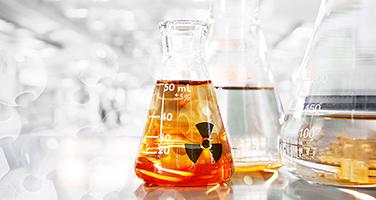
How much radiochemistry is involved in everyday life and human activities. The MOOC “Essential Radiochemistry for Society” was born within the European project MEET-CINCH: A Modular European Education and Training Concept In Nuclear and radioCHemistry (2017-2020) to engage people discovering an unknown discipline and convey them its fascination and relevance.

The course is addressed to Bachelor students in chemistry, physics, engineering and in general scientific areas, who are interested in realising the involvement of Nuclear- and Radiochemistry in everyday life and understanding the advantages it could introduce. Indeed, Nuclear- and Radiochemistry is certainly needed in addressing many of the current societal challenges related to health, clean energy and food. Within nuclear medicine, diagnostic tools such as PET and SPECT imaging as well as radiotherapy heavily rely on radiochemistry for preparing radionuclide loaded biomarkers or cancer-seeking molecules. Food safety relies on the capability of Nuclear- and Radiochemistry to assess the presence of artificial or natural radionuclides entering the food chain due to anthropogenic activities. To contrast the global climate change, nuclear energy could play a role in the future energy production mix as a low carbon emission technology. Nuclear techniques are fruitfully employed in nuclear forensics for guaranteeing the safety of civil society and also in archaeology for the study, conservation and restoration of cultural heritage.
Thanks to the course, students will be aware of the beneficial impact of Nuclear Chemistry and Radiochemistry on our society, and how the scientific community has been developing sustainable technological solutions to safely manage nuclear materials.
The course is also addressed to everyone interested in understanding why Nuclear Chemistry and Radiochemistry is so important and so present in everyday life: lessons 1, 2, 3 of each module explore the topics thanks to a specific format and using a plane language.
You can access the course absolutely free of charge and completely online.
The course materials will still be available to all registered users, even after the closing of the edition.
Further editions of this course will be activated each academic year.

Go to Class
MOOC List is learner-supported. When you buy through links on our site, we may earn an affiliate commission.

Related Courses

Chemical Engineering Thermodynamics 1 (Coursera) Coursera
Korea Advanced Institute of Science and Technology - KAIST

Chemical Engineering Thermodynamics 1 (Coursera)

An appreciation of thermodynamics is required to become a chemical and biomolecular engineer. Thermodynamics can assess the viability of a process and is one of the curriculum's most essential topics. The principles are utilized in following engineering courses (kinetics, mass transfer, design, materials) and are applicable to numerous engineering disciplines. The increased emphasis on energy usage and transformation as a result of rising demand, diminishing supply, and global warming necessitates that the engineers who will tackle these issues have a firm grasp of thermodynamics.

Aug 3rd 2026
5-12 Weeks
Formulación y nomenclatura de compuestos químicos (edX) EdX
Universitat Politècnica de València,UPValenciaX

Formulación y nomenclatura de compuestos químicos (edX)

Aprenderemos cómo establecer las fórmulas de los compuestos químicos inorgánicos y orgánicos más usuales y las reglas para nombrarlos. Toda la materia está formada por elementos o compuestos químicos que son resultado de la combinación de átomos. Cada compuesto presenta una determinada composición que se corresponde con una fórmula y se identifica con un nombre.

Self Paced
Self-Paced
Chemical Biology (Coursera) Coursera
University of Geneva

Chemical Biology (Coursera)

Chemical biology is a burgeoning field that has rapidly risen to prominence. This surge of interest has been fuelled by chemical biology’s applicability to understanding critical processes in live cells or model organisms in real time. This success has arisen because chemical biology straddles a nexus between chemistry, biology, and physics. Thus, chemical biology can harness rapid chemistry to observe or perturb biological processes, that are in turn reported using physical assays, all in an otherwise unperturbed living entity. Although its boundaries are endless, the multidisciplinary nature of chemical biology can make the field seem daunting; we beg to differ! Here, we deconstruct chemical biology into its core components, and repackage the material.

Aug 3rd 2026
5-12 Weeks
Reacciones químicas y cálculos estequiométricos (edX) EdX
Universitat Politècnica de València,UPValenciaX

Reacciones químicas y cálculos estequiométricos (edX)

Aprenderás los conceptos básicos de las reacciones químicas y profundizarás en su estudio cuantitativo (estequiometría). Con este curso aprenderás los conceptos básicos relacionados con las reacciones químicas y profundizarás en su estudio desde el punto de vista cuantitativo, es decir su estequiometría. Entenderás el comportamiento de los gases y las disoluciones y aplicarás las leyes que regulan su comportamiento en los procesos químicos en los que participan.

Self Paced
Self-Paced
Biochemistry: the Molecules of Life (FutureLearn) FutureLearn
University of East Anglia

Biochemistry: the Molecules of Life (FutureLearn)

Explore the impact of biochemistry on bioenergy and health, discovering why graduates are in demand; with the Biochemical Society. Biochemistry brings together all of the sciences to study the chemical and physical processes that occur in living organisms. It truly is the science of life. As a scientific discipline in its own right, biochemistry has a major impact on all areas of the life sciences and biochemists are in high demand among employers.

Self Paced
3 Weeks
Introduction to nuclear (POK) Polimi OPEN KNOWLEDGE
Politecnico di Milano

Introduction to nuclear (POK)

Nuclear processes and measurement for radiation detection. The study of static and dynamic properties of nuclei constitutes a first essential step in the comprehension and exploitation of Nuclear Science. Starting from the experimental evidence of radioactivity, the course will explore: the physical and the random nature of radioactive decay and nuclear reactions; the experimental methods and detector technologies to measure radiations produced by nuclear processes.

Available
4 Weeks
Discovering Nuclear Science: energy and beyond (POK) Polimi OPEN KNOWLEDGE
Politecnico di Milano

Discovering Nuclear Science: energy and beyond (POK)

Where do natural radioactivity come from? What is a radioactive atom? Which are the phases of nuclear fission? How is radioactive pollution monitored? Are nuclear waste managed managed? Talking about “nuclear issues”, many questions arise: this MOOC aims at providing scientific answers. Enroll in the course and unlock the potential of Nuclear Science to shape our future for the better. Let's get started!

Available
3 Weeks
Discovering Science: Medicinal Chemistry (FutureLearn) FutureLearn
University of Leeds

Discovering Science: Medicinal Chemistry (FutureLearn)

What role does chemistry play in healthcare and our ability to diagnose and treat patients? Discover how chemotherapy has evolved, and some of the breakthroughs and developments chemists have made in the fight against cancer over the last 10 years. Diagnostic imaging examines how scientists learn about, and treat, the inside of the body without invasive surgery. You’ll explore how modern imaging techniques diagnose problems quickly and safely, and how diseases which may not previously have been picked up are identified.

Self Paced
2 Weeks
Nanotechnology and Nanosensors, Part 1 (Coursera) Coursera
Technion - Israel Institute of Technology

Nanotechnology and Nanosensors, Part 1 (Coursera)

Nanotechnology and nanosensors are broad, interdisciplinary areas that encompass (bio)chemistry, physics, biology, materials science, electrical engineering and more. The present course will provide a survey on some of the fundamental principles behind nanotechnology and nanomaterials and their vital role in novel sensing properties and applications. The course will discuss interesting interdisciplinary scientific and engineering knowledge at the nanoscale to understand fundamental physical differences at the nanosensors.

Aug 10th 2026
5-12 Weeks
Nanotechnology and Nanosensors, Part 2 (Coursera) Coursera
Technion - Israel Institute of Technology

Nanotechnology and Nanosensors, Part 2 (Coursera)

Learn about novel sensing tools that make use of nanotechnology to screen, detect and monitor various events in personal or professional life. Together, we will lay the groundwork for infinite innovative applications, starting from diagnosis and treatments of diseases, continuing with quality control of goods and environmental aspects, and ending with monitoring security issues.

Aug 10th 2026
5-12 Weeks
Reasoning Across the Disciplines (Coursera) Coursera
University of North Carolina

Reasoning Across the Disciplines (Coursera)

Critical reasoning skills are a key success factor for students entering their first year of college. They must be able to think logically and form arguments. This course, designed with incoming college freshmen in mind but open to anyone, provides an essential grounding in critical reasoning skills. Faculty from multiple disciplines at the University of North Carolina at Chapel Hill offer guidance on applying critical thinking skills in the context of specific disciplines. By developing these skills, students will learn more, enjoy their courses more, and experience greater academic success.

Aug 10th 2026
5-12 Weeks
Materials Data Sciences and Informatics (Coursera) Coursera
Georgia Institute of Technology

Materials Data Sciences and Informatics (Coursera)

This course aims to provide a succinct overview of the emerging discipline of Materials Informatics at the intersection of materials science, computational science, and information science. Attention is drawn to specific opportunities afforded by this new field in accelerating materials development and deployment efforts.

Aug 10th 2026
5-12 Weeks