Effectively delivering the news to your audience (Coursera)

Effectively delivering the news to your audience (Coursera)

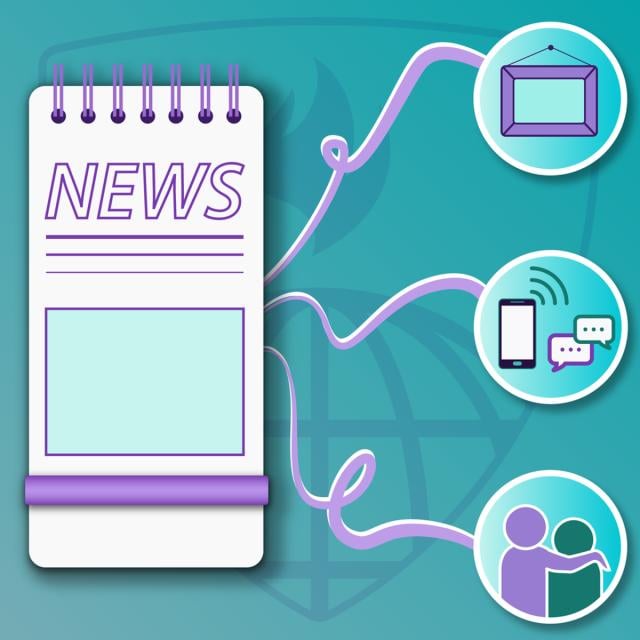
Being a successful journalist is more than hunting down information. How journalists process the information, then put it together, are key steps for news reports. You will learn the process, planning, requirements of how journalists develop their news reports. There are many ways to report news reports, and you will learn different forms of how to perform reporting and writing to serve different audiences.

Class Deals by MOOC List - Click here and see Coursera's Active Discounts, Deals, and Promo Codes.

This course also explains the different formats within journalism, beyond the written word and how they are best utilised.

Course 3 of 5 in the Become a Journalist: Report the News! Specialization.

Syllabus

WEEK 1
Welcome to Course 3!
We are thrilled to have you as part of Course 3 in our Introduction to Journalism Specialization. We will be discussing how to "Effectively Delivering the News to Your Audience." You will learn about the School of Journalism, our award-winning faculty and the world-class atmosphere of Michigan State University. We are a special place, where amazing things happen every day.

WEEK 2
Earning and keeping trust
You've developed your story concept. You've done your research, reporting and interviewing. Now you will learn how to take the next steps: sorting your information, and picking the right format for your news report. You will develop skills in dealing with statistics, numbers and how to figure out if you have enough information to compile an effective news report.

WEEK 3
Preparing your news report
Sometimes one of the biggest challenges in being a journalist is figuring out how to best handle quotes, format, and audience recognition. Knowing what you're reporting, and your audience, makes all the difference. You will learn how to best use and structure quotes in your news reports, choose the right format for reporting, and understand the needs of your audience.

WEEK 4
More than words
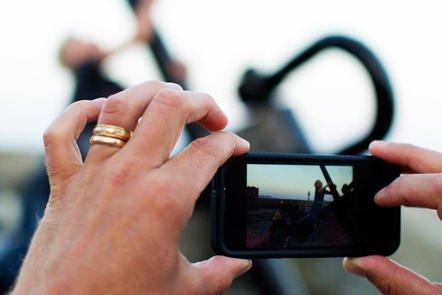
Having an effective news report is often dictated by the many thoughtful choices made by editors and journalists. How things look, sound, feel and read impacts how the audiences choose to take in information - and if they want to interact with your media. What are the things you need to consider? You will learn how your news report can be strengthened through multimedia: audio, video, graphics, photos and maps. You will develop skills in shooting video and photos, as well as gathering audio.

WEEK 5
Keeping the news conversation going
Being a journalist does not mean you complete a news report...and move on to another story. Many times, one report leads to another, then another, then another on a particular topic. You will learn how to harness and understand the power of your audience, and use their feedback to develop more news reports. You will also deepen your understanding of audience reaction and how to handle the feedback.


Go to Class
MOOC List is learner-supported. When you buy through links on our site, we may earn an affiliate commission.

Related Courses

International Standards on Freedom of Expression and Safety of Journalists (edX) EdX
University of Oxford

International Standards on Freedom of Expression and Safety of Journalists (edX)

Law

This Massive Open Online Course (MOOC) is co-organised by the Bonavero Institute of Human Rights (Faculty of Law, University of Oxford) and the United Nations Educational, Scientific, and Cultural Organisation (UNESCO). It explores the regional and international standards relating to freedom of expression, including press freedom, access to public information, safety of journalists and challenges created by the digital world.

May 29th 2023
5-12 Weeks
Speaking and Presenting: Conversation Starters (Coursera) Coursera
University of Michigan

Speaking and Presenting: Conversation Starters (Coursera)

This course will teach you how to build persuasive surprises into your presentations, the kind of surprises that will change how your audience sees a particular situation or proposal and then gets them talking—in a good way. It will also identify several techniques you can use to start (and maintain) your own conversations, whether with a big group, a small group, or even just one-one-one.

Nov 9th 2026
4 Weeks
Journalism, the future, and you! (Coursera) Coursera
Michigan State University

Journalism, the future, and you! (Coursera)

You will learn about the career paths that are available in journalism, and what opportunities the skill sets of a journalist can offer in other fields. You will explore areas such as being an international correspondent, self-publishing in journalism, as well as how to freelance in the field. You will be empowered to develop your own path in journalism, from being an active and informed consumer, to being a journalist.

Nov 23rd 2026
5-12 Weeks
How the internet works (Totem) Totem
Totem project

How the internet works (Totem)

No clouds, just cables: explore the internet with us. Can you still picture life without the internet? In the last decade or so, the internet has cemented its place at the centre of many aspects of our lives: social communication, work, research, banking, shopping, storing photos and videos; we are heavily dependent on it. But most of us never really question how the internet works - until, perhaps, something breaks down and information is lost, or we are prevented from accessing a website or account.

Self Paced
Self-Paced
Effective Questioning for Call Handlers (FutureLearn) FutureLearn
University of East Anglia

Effective Questioning for Call Handlers (FutureLearn)

Improve how you or your company speaks to people on the phone to ensure good levels of service and in some situations safety. How an organisation handles phone calls can have a direct impact on its success - a badly handled call can mean limited information that might affect service delivery, customer satisfaction and even safety. On this course you will learn to evaluate how call handlers ask questions over the phone.

Self Paced
3 Weeks
Responsible Reporting on Suicide for Journalists (Coursera) Coursera
Johns Hopkins University

Responsible Reporting on Suicide for Journalists (Coursera)

Responsible Reporting on Suicide for Journalists is designed to give working journalists and students who are interested in the field an understanding of how news media can impact suicide trends and how that power can be used to improve public health. An extensive body of research shows that certain methods of reporting on suicide deaths can increase the number of subsequent suicides among the public. Conversely, responsible methods of reporting on suicide can increase the likelihood of people seeking help.

Nov 23rd 2026
1 Week