EdX

Early Christianity: The Letters of Paul (edX)

Early Christianity: The Letters of Paul (edX)

The course “Early Christianity: The Letters of Paul” explores the context of these letters in the Roman Empire and the impact of these powerful texts today. The letters of Paul are the earliest texts in the Christian scriptures, written by a Jew at a time when the word “Christian” hadn’t yet been coined. What is the religious and political context into which they emerged? How were they first interpreted? How and why do they make such an enormous impact in Christian communities and in politics today?

Class Deals by MOOC List - Click here and see EdX's Active Discounts, Deals, and Promo Codes.

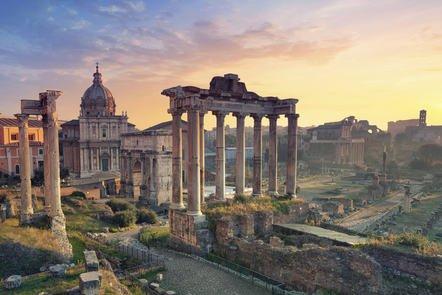
Archaeological materials and ancient writings will help you to enter the ancient Mediterranean world and to think about religious groups, power, poverty, health, and the lives of elites and slaves in the Roman Empire.

We’ll explore how immediately controversial these letters were, and how these letters are used today to debate relations between Christians and Jews; issues such as love, law, and grace; and topics such as charismatic Christianity, homosexuality, and women’s religious leadership.
Whether you’ve been studying Paul’s letters for years or are merely curious about what Christian scriptures are, this course will provide you with information to deepen your understanding of the ancient contexts and present-day controversies about these texts.

Go to Class
MOOC List is learner-supported. When you buy through links on our site, we may earn an affiliate commission.

Related Courses

Was Alexander Great? The Life, Leadership, and Legacies of History’s Greatest Warrior (edX) EdX
Wellesley College,WellesleyX

Was Alexander Great? The Life, Leadership, and Legacies of History’s Greatest Warrior (edX)

Was Alexander Great? If so, how? If not, why not? This course explores the life, leadership, and legacies of history’s greatest warrior. Alexander the Great conquered most of the world known to the ancient Greeks, fused the eastern and western peoples of his empire, and became a god – before his 33rd birthday.

No sessions available
4 Weeks
Arch of Titus: Rome and the Menorah (Coursera) Coursera
Yeshiva University

Arch of Titus: Rome and the Menorah (Coursera)

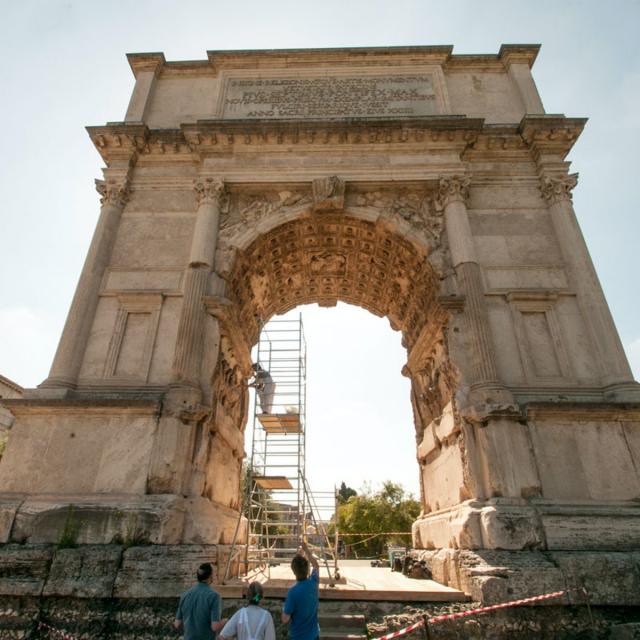
The Arch of Titus: Rome and the Menorah explores one of the most significant Roman monuments to survive from antiquity, from the perspectives of Roman, Jewish and later Christian history and art. The Arch of Titus commemorates the destruction of Jerusalem by the emperor Titus in 70 CE, an event of pivotal importance for the history of the Roman Empire, of Judaism, of Christianity and of modern nationalism. Together with your guide, Professor Steven Fine, you will examine ancient texts and artifacts, gaining skills as a historian as you explore the continuing significance of the Arch of Titus from antiquity to the very present.

Jun 8th 2026
5-12 Weeks
A Journey through Western Christianity: from Persecuted Faith to Global Religion (200 - 1650) (Coursera) Coursera
Yale University

A Journey through Western Christianity: from Persecuted Faith to Global Religion (200 - 1650) (Coursera)

This course follows the extraordinary development of Western Christianity from its early persecution under the Roman Empire in the third century to its global expansion with the Jesuits of the early modern world. We explore the dynamic and diverse character of a religion with an enormous cast characters. We will meet men and women who tell stories of faith as well as of violence, suppression, and division.

May 18th 2026
5-12 Weeks
Hadrian's Wall: Life on the Roman Frontier (FutureLearn) FutureLearn
Newcastle University

Hadrian's Wall: Life on the Roman Frontier (FutureLearn)

Explore the archaeology of the most heavily fortified frontier in the Roman Empire, its people and their lives. Hadrian’s Wall stretches over 73 miles (117 km), from coast to coast in what is now Northern England. The Wall, complemented by a sophisticated system of outposts and coastal watch stations, offers a remarkable glimpse of ancient society. In addition to housing one of the largest concentrations of Roman soldiers anywhere in the Empire’s provinces, Hadrian’s frontier system was home to an incredibly cosmopolitan array of civilians. This six week course offers a comprehensive introduction to Hadrian’s Wall and its people and raises fascinating issues concerning colonisation, cultural transformation, immigration, integration and imperialism.

No sessions available
5-12 Weeks
The Fall of the Roman Republic (FutureLearn) FutureLearn
Colorado State University

The Fall of the Roman Republic (FutureLearn)

Explore the last century of the Roman Republic, its collapse and the creation of the Roman Empire. Covering the last century of the Roman Republic, this course will help you to understand the Republic’s collapse and how the emergence of the Roman Empire came about. You will gain an overview of the development of the Republic, as well as exploring significant aspects of Roman society, religion, and governance.

No sessions available
4 Weeks
Ressources naturelles et developpement durable (edX) EdX
LouvainX,Université Catholique de Louvain - UCL

Ressources naturelles et developpement durable (edX)

Analyse des defis de developpement durable lies a la ruee sur les ressources naturelles (terre, eau, ressources minieres, forets...). Quel lien existe-t-il entre l’exploitation des ressources naturelles (terre, eau, ressources minières, forêts, ...) et le développement durable ? Ce cours vous permettra de comprendre les opportunités mais aussi les défis que la présence de ressources naturelles offre, tant au niveau local que global.

No sessions available
5-12 Weeks
A Global History of Architecture (edX) EdX
MIT,MITx

A Global History of Architecture (edX)

Learn about humanity’s rich architectural history on this journey around the globe – from 100,000 BCE to ca. 1,600 CE. How do we understand architecture? One way of answering this question is by looking through the lens of history, beginning with First Societies and extending to the 16th century. This course in architectural history is not intended as a linear narrative, but rather aims to provide a more global view, by focusing on different architectural "moments."

Oct 18th 2023
5-12 Weeks
Introduction to Bioethics (edX) EdX
Georgetown University,GeorgetownX

Introduction to Bioethics (edX)

Introduction to Bioethics explores some of the most difficult - and fascinating - moral challenges we face in health, medicine, and emerging technologies. Should we clone humans? Who owns our DNA? How much control should we have over how and when we die? When does medical treatment turn into medical enhancement — and should we care? Is rationing health care good, bad, necessary — or all of the above? This course will explore fundamental moral issues that arise in medicine, health, and biotechnology.

No sessions available
13-24 Weeks