Greece, the Roman Republic, and the Roman Empire (saylor.org)

Offered by Saylor.org,
Greece, the Roman Republic, and the Roman Empire (saylor.org)

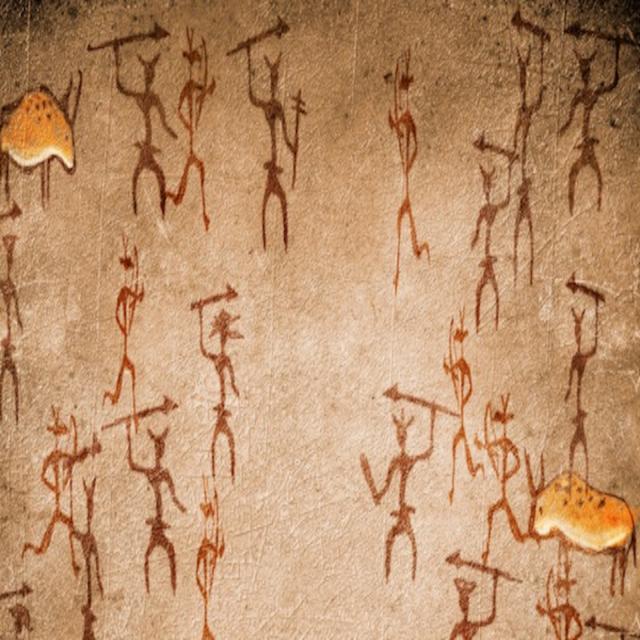
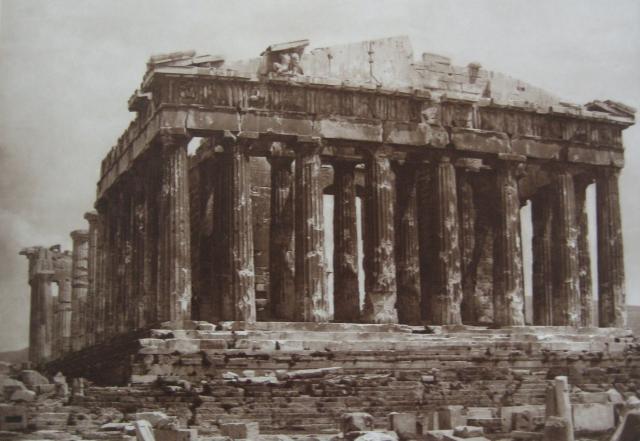
This course will focus on the history of Greek and Roman civilizations beginning with the origins of ancient Greek culture in the Aegean Bronze Age (c. 3000–1100 BCE) through the period of the Roman Empire at the height of its greatest extent and prosperity (c. 31 BCE–235 CE).

We will focus on the political, economic, and social factors that shaped the development and maturation of these two influential Mediterranean civilizations. The course will be structured chronologically. Each unit will include representative primary source documents that illustrate important overarching themes, such as the emergence and development of Greek civilization from the Aegean Bronze Age through the Greek Archaic period (c.700–500 BCE), the contrast between democratic and oligarchic forms of government in Greek city-states of the classical era (c. 500–350 BCE), the decline of the Greek city-states, the rise of Macedon and the spread of Greek culture to the eastern Mediterranean and western Asia in the Hellenistic period (c. 350–31 BCE), the evolution of the Roman Republic (c. 508–287 BCE), and the transformation of this Roman Republic into a vast Roman Empire encompassing all the lands bordering the Mediterranean Sea (c. 133 BCE–235 CE). By the end of the course, you will understand how these ancient Mediterranean civilizations developed and recognize their lasting influences on European culture.

Go to Class
MOOC List is learner-supported. When you buy through links on our site, we may earn an affiliate commission.

Related Courses

The History of Modern Israel – Part I: From an Idea to a State (Coursera) Coursera
Tel Aviv University

The History of Modern Israel – Part I: From an Idea to a State (Coursera)

How did the State of Israel come to be? How is it that an idea, introduced in 19th century Europe, became a reality? And how does that reality prevail in the harsh complexities of the Middle East? Presented by Professor Eyal Naveh, with additional units from Professor Asher Sussers' "The Emergence of the Modern Middle East" course, This course will take you on a journey through the history of Modern Israel. In this 1st part of the course we will explore: How did the 19th century idea of a Jewish state become a reality? So the next time you hear about Israel in the news, you will be informed enough about the history of this area to comprehend the many sides and narratives that interact to shape the complex reality of Israel today.

Jun 1st 2026
3 Weeks
Introduction to Typography (Coursera) Coursera
California Institute of the Arts

Introduction to Typography (Coursera)

Typography is the art of manipulating the visual form of language to enrich and control its meaning. It’s an essential area of skill and knowledge for graphic designers. Typography predates modern graphic design by around 500 years; it is rich in rules, conventions, and esoteric terminology—but it remains an exciting space for invention and expression.

Jun 1st 2026
4 Weeks
Modern Africa (saylor.org) Saylor Academy
Saylor.org

Modern Africa (saylor.org)

This course will introduce you to the major events and dynamics of three distinct periods in African history, namely (1) the colonial period, (2) the era of decolonization, and (3) the post-colonial period.

Legacy Course
Self-Paced
Early Globalizations: East Meets West (1200s-1600s) (saylor.org) Saylor Academy
Saylor.org

Early Globalizations: East Meets West (1200s-1600s) (saylor.org)

This course will introduce you to the history of the world’s major civilizations from medieval times to the early modern era. You will learn about the pivotal political, economic, and social changes that took place in Asia, Africa, the Americas, and Europe during this period. The course will be structured chronologically, with each unit focusing on the expansion or decline of a particular civilization or the interactions and exchanges between civilizations.

Legacy Course
Self-Paced