Designing for Sustainment: Keeping Improvement Work on Track (Patient Safety IV) (Coursera)

Designing for Sustainment: Keeping Improvement Work on Track (Patient Safety IV) (Coursera)

Keeping patient safety and quality improvement projects on track, on time, and on budget is critical to ensuring their success. In this course, students will be introduced and given the opportunity to apply a series of tools to guide and manage patient safety and quality initiatives. These include tools for defining what success looks like, developing a change management plan, and conducting a pre-mortem to identify risks for project failure. This course will also provide tools for engaging stakeholders to ensure key players are invested in your project’s success.

Class Deals by MOOC List - Click here and see Coursera's Active Discounts, Deals, and Promo Codes.

What You Will Learn

  • Recognize the importance of planning for project sustainment.
  • Use the pre-mortem exercise to identify risks of project failure.
  • Design a change management plan that addresses technical and adaptive challenges.
  • Describe the 4E’s + 2 Model and its use to engage stakeholders.

Course 4 of 7 in the Patient Safety Specialization

Syllabus

WEEK 1
What Does Success Look Like?
In this module, learners will develop an understanding of what project sustainment is and why it is important, the potential risks to project sustainment, the importance of planning for sustainment from project inception, types of measures used in quality improvement projects and the attributes of each, how strategies for improvement were developed in two successful large-scale quality improvement initiatives. Learners will become familiar with the issues impacting sustainment and how they may be successfully addressed across the life span of a quality improvement project.

WEEK 2
Conducting a Premortem
In this module, learners will develop an understanding of what the Pre-Mortem exercise is and how it can be used to: improve project planning, surface threats to project success and sustainment, develop interventions to mitigate risk of project failure, create an action plan to maximize the application of Pre-Mortem results, and maintain awareness of threats to project success across the project lifespan. Learners will also develop familiarity with facilitation best-practices. The Pre-Mortem Exercise can be a powerful tool to identify and mitigate risks for project failure.

WEEK 3
Change Management 101
In this module, learners will develop an understanding of: what is meant by change management, reasons for change initiative failure, change as a process, frameworks and processes for change, the differences between technical and adaptive work and the role of each in a change effort, leadership skills necessary for addressing adaptive change, identifying and engaging change effort stakeholders, managing conflict, developing a communication strategy for a change effort, applying a systems approach to change efforts.

WEEK 4
Planning for Engagement Using the 4 E's + 2 Model
In this module, learners will develop an understanding of: the role of engagement in sustainability and spread, addressing barriers to engagement, potential areas of failure in sustaining change effort gains, the 2 E's of embedding and enduring and their role in sustainment, frameworks for sustaining change efforts, a real-world example of successful sustainment of a quality improvement initiative.

Go to Class
MOOC List is learner-supported. When you buy through links on our site, we may earn an affiliate commission.

Related Courses

Intro to Strategic Management for Healthcare Organizations (Coursera) Coursera
Northeastern University

Intro to Strategic Management for Healthcare Organizations (Coursera)

This course is best suited for individuals currently in the healthcare sector, as a provider, payer, or administrator. Individuals pursuing a career change to the healthcare sector may also be interested in this course. In this course, you will have an opportunity to explore general business strategy concepts as they relate to the healthcare industry. You will also examine how strategic decisions are made within organizations.

Jun 3rd 2026
4 Weeks
Ask Questions to Make Data-Driven Decisions (Coursera) Coursera
Google

Ask Questions to Make Data-Driven Decisions (Coursera)

This is the second course in the Google Data Analytics Certificate. These courses will equip you with the skills needed to apply to introductory-level data analyst jobs. You’ll build on your understanding of the topics that were introduced in the first Google Data Analytics Certificate course. The material will help you learn how to ask effective questions to make data-driven decisions, while connecting with stakeholders’ needs. Current Google data analysts will continue to instruct and provide you with hands-on ways to accomplish common data analyst tasks with the best tools and resources.

Jun 2nd 2026
4 Weeks
Understanding the Brain: The Neurobiology of Everyday Life (Coursera) Coursera
University of Chicago

Understanding the Brain: The Neurobiology of Everyday Life (Coursera)

Learn how the nervous system produces behavior, how we use our brain every day, and how neuroscience can explain the common problems afflicting people today. We will study functional human neuroanatomy and neuronal communication, and then use this information to understand how we perceive the outside world, move our bodies voluntarily, stay alive, and play well with others.

Jun 1st 2026
5-12 Weeks
Medical Technology and Evaluation (Coursera) Coursera
University of Minnesota

Medical Technology and Evaluation (Coursera)

Innovations in medical technologies are one of the leading areas of economic growth in the world. Whether new technologies take the form of pharmaceutical, medical device, biotechnology, information technology of some combination of these innovations, the opportunities for both private enterprise and social welfare are substantial. However, these innovations are not without cost, and require reimbursement from either a privately or publicly financed health care delivery system to enter the marketplace.

Jun 1st 2026
4 Weeks
In the footsteps of Zika… approaching the unknown (Coursera) Coursera
University of Geneva

In the footsteps of Zika… approaching the unknown (Coursera)

Welcome to this on-demand MOOC “In the footsteps of Zika… approaching the unknown”. This MOOC has been produced by Université de Genève Institut Pasteur, Université Paris Descartes and Centre Virchow-Villermé. With the help of the intervention of faculty members and international experts, we will explore together the recent Zika phenomenon, a previously rare benign virus that recently turned unexpectedly into the limelight when on the 1st of February 2016 it was declared by the WHO as a Public Health Emergency of International Concern.

Jun 1st 2026
5-12 Weeks
Systems Science and Obesity (Coursera) Coursera
Johns Hopkins University

Systems Science and Obesity (Coursera)

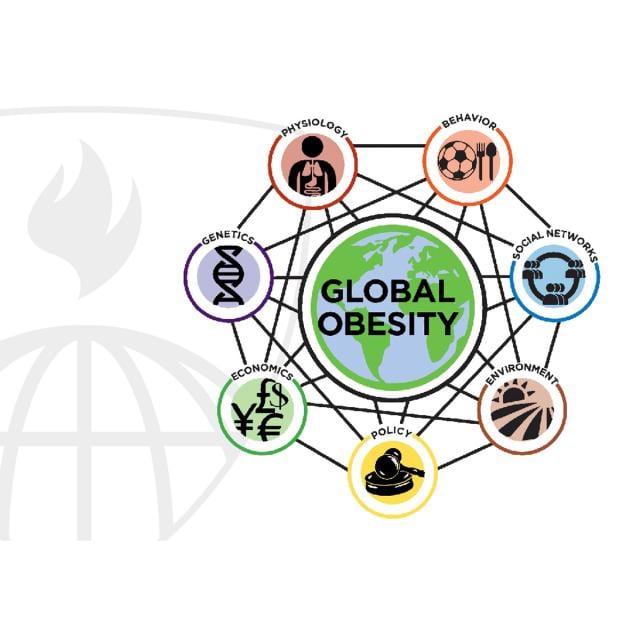
Systems science has been instrumental in breaking new scientific ground in diverse fields such as meteorology, engineering and decision analysis. However, it is just beginning to impact public health. This seminar is designed to introduce students to basic tools of theory building and data analysis in systems science and to apply those tools to better understand the obesity epidemic in human populations.

Jun 1st 2026
4 Weeks
Engaging in Enterprise Growth and Innovation (Coursera) Coursera
Northeastern University

Engaging in Enterprise Growth and Innovation (Coursera)

You will explore the challenges and processes for harnessing technological innovation for new-business development, with special focus on digital healthcare transformation. You will gain an understanding of enterprise growth and innovation topics through readings, cases, and exercises, including learning how firms from different industries gain competitive advantage through distinctive products and services. The vast expertise of faculty combined with topic perspectives from the Mayo Clinic make this an engaging and unique course.

Jun 3rd 2026
4 Weeks
On Strategy : What Managers Can Learn from Philosophy - PART 1 (Coursera) Coursera
CentraleSupélec

On Strategy : What Managers Can Learn from Philosophy - PART 1 (Coursera)

In the expression “creative thinking”, the keyword is not creativity; the keyword is thinking. With the help of great philosophers, you will rediscover the art of thinking. To help leaders to be rigorous even without figures, great philosophers have lots of ideas. Managers are invited to rediscover the art of thinking. They should understand the role of mental models, realize the importance of cognitive bias, agree on clear definitions and efficient criteria etc. Creativity demands the ability to unshackle ourselves from conventional ways of thinking, to "think outside the box".

Jun 1st 2026
5-12 Weeks
Antimicrobial resistance - theory and methods (Coursera) Coursera
Technical University of Denmark - DTU

Antimicrobial resistance - theory and methods (Coursera)

The course will cover the topics related to antimicrobial resistance with basic definitions and overview on antimicrobials their use and the emergence and spread of resistance. The course will guide you through the concepts and the importance of resistance spread and dissemination and how that happens. It will show you how bacteria become resistant and which mechanisms they might use for this. And as part of the course you will also receive some training in methods for antimicrobial susceptibility testing (AST) and detection of specific resistance in the microbiological laboratories with the basic methods available and with focus on the obtention of good quality results which can be interpreted and used for different purposes.

Jun 1st 2026
5-12 Weeks