Data Collection and Root Cause Analysis (Coursera)

Offered by SkillUp EdTech,
Data Collection and Root Cause Analysis (Coursera)

The course will equip you with the competencies and essential skills required to excel in the American Society for Quality (ASQ) Certified Six Sigma Yellow Belt (CSSYB) exam and contribute to process improvement programs. This course focuses on various data collection tools and techniques to analyze data, identify the root causes of a problem, and explore the concepts of measurement system analysis (MSA), and hypothesis testing.

Class Deals by MOOC List - Click here and see Coursera's Active Discounts, Deals, and Promo Codes.

By the end of this course, you will be able to:
• Define data requirements to gather relevant data from the process using appropriate data collection methods.
• Calculate baseline process performance metrics based on the collected data.
• Analyze data for variations and use data analysis tools and techniques to identify the root causes for the problem or variation.
The course is best suited for entry-level professionals who are new to the world of Six Sigma and wish to improve their professional experience and opportunities. For this course, no prior knowledge is required, however, it is recommended that you complete the first course, Introduction to Lean Six Sigma and Project Identification Methods in the ASQ-Certified Six Sigma Yellow Belt Exam Prep Specialization.
This course is part of the ASQ-Certified Six Sigma Yellow Belt Exam Prep Specialization Specialization.

What you'll learn

  • Define data requirements to gather relevant data from the process using appropriate data collection methods.
  • Calculate baseline process performance metrics based on the collected data.
  • Analyze data for variations and use data analysis tools and techniques to identify the root causes for the problem or variation.

Syllabus

Basic Statistics and Process Performance Measurement
This module introduces you to descriptive statistics, a branch of statistics that involves summarizing and describing the main features of a dataset. It provides tools and techniques to organize, present, and analyze data to gain insights into its central tendencies, variability, and distribution. Descriptive statistics is fundamental in data analysis and is a basis for more advanced statistical methods. You will also be introduced to inferential statistics. The module also explains the various data types and helps you differentiate between qualitative and quantitative data and data coming from internal and external sources. It describes the data collection process. Further, the module delves into the concept of measurement system analysis (MSA) and its components to understand the variations in the measurement process.

Root Cause Analysis Techniques
This module explains the differences between value-added and non-value-added activities. It makes a case for non-value-added activities that are necessary to enable the smooth running of the organization. The module also discusses how to identify the bottlenecks in a system and suggests ways to eliminate them. Lastly, the module explores the various techniques to conduct a root cause analysis (RCA) for the identified problem in your process or organization. The first one, Pareto analysis, is based on the Pareto principle, which states that approximately 80% of the effects come from 20% of the causes. This analysis helps prioritize potential root causes based on their relative impact. You will also learn how to use the fishbone diagram, also known as the Ishikawa or cause and effect diagram, which visually represents the potential causes contributing to a problem while categorizing the possible causes into specific groups to facilitate the identification of root causes. Additionally, you will learn about the five whys, a simple yet powerful technique involving repeatedly asking “why” to identify the root cause of a problem. It helps to peel the layers of symptoms and surface-level causes to get to the core issue.

Hypothesis Testing and Investigating the Relationship
This module provides a comprehensive overview of hypothesis testing, an essential statistical tool used to assess the validity of claims or hypotheses about populations. You will learn about the hypothesis testing process, its application in real-world scenarios, and how to interpret the hypothesis test results to make better decisions. The module will take you through the different types of hypotheses, types of errors, and the significance of the p-value in hypothesis testing. You will also learn about the principles and applications of correlation and regression techniques. The module discusses the types of correlation and the roles of dependent and independent variables in regression analysis. lt explains the implications of R-squared values in regression analysis. The module also explains simple linear regression and the difference between deterministic and probabilistic models.

Peer-Reviewed Assignment
This is a peer-review assignment based on the concepts taught in the Data Collection and Root Cause Analysis course. In this assignment, you will apply your knowledge of hypothesis testing to a real-life scenario.

Go to Class
MOOC List is learner-supported. When you buy through links on our site, we may earn an affiliate commission.

Related Courses

Introduction to Statistics (Coursera) Coursera
Stanford University

Introduction to Statistics (Coursera)

Stanford's "Introduction to Statistics" teaches you statistical thinking concepts that are essential for learning from data and communicating insights. By the end of the course, you will be able to perform exploratory data analysis, understand key principles of sampling, and select appropriate tests of significance for multiple contexts. You will gain the foundational skills that prepare you to pursue more advanced topics in statistical thinking and machine learning.

Oct 5th 2026
5-12 Weeks
Materials Data Sciences and Informatics (Coursera) Coursera
Georgia Institute of Technology

Materials Data Sciences and Informatics (Coursera)

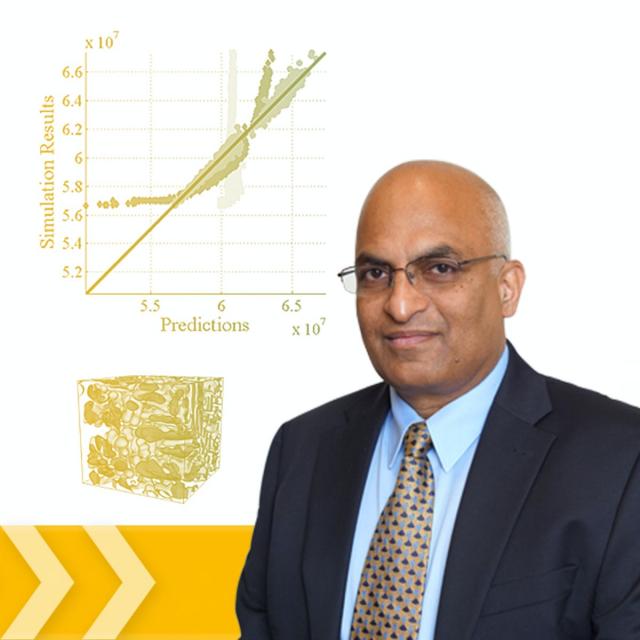
This course aims to provide a succinct overview of the emerging discipline of Materials Informatics at the intersection of materials science, computational science, and information science. Attention is drawn to specific opportunities afforded by this new field in accelerating materials development and deployment efforts.

Oct 5th 2026
5-12 Weeks
Linear Regression and Modeling (Coursera) Coursera
Duke University

Linear Regression and Modeling (Coursera)

This course introduces simple and multiple linear regression models. These models allow you to assess the relationship between variables in a data set and a continuous response variable. Is there a relationship between the physical attractiveness of a professor and their student evaluation scores? Can we predict the test score for a child based on certain characteristics of his or her mother? In this course, you will learn the fundamental theory behind linear regression and, through data examples, learn to fit, examine, and utilize regression models to examine relationships between multiple variables, using the free statistical software R and RStudio.

Sep 28th 2026
4 Weeks
Principles of fMRI 1 (Coursera) Coursera
Johns Hopkins University

Principles of fMRI 1 (Coursera)

Functional Magnetic Resonance Imaging (fMRI) is the most widely used technique for investigating the living, functioning human brain as people perform tasks and experience mental states. It is a convergence point for multidisciplinary work from many disciplines. Psychologists, statisticians, physicists, computer scientists, neuroscientists, medical researchers, behavioral scientists, engineers, public health researchers, biologists, and others are coming together to advance our understanding of the human mind and brain. This course covers the design, acquisition, and analysis of Functional Magnetic Resonance Imaging (fMRI) data, including psychological inference, MR Physics, K Space, experimental design, pre-processing of fMRI data, as well as Generalized Linear Models (GLM’s).

Oct 12th 2026
4 Weeks
Fundamentals of Engineering Exam Review (Coursera) Coursera
Georgia Institute of Technology

Fundamentals of Engineering Exam Review (Coursera)

The purpose of this course is to review the material covered in the Fundamentals of Engineering (FE) exam to enable the student to pass it. It will be presented in modules corresponding to the FE topics, particularly those in Civil and Mechanical Engineering. Each module will review main concepts, illustrate them with examples, and provide extensive practice problems.

Oct 5th 2026
5-12 Weeks
Mathematical Biostatistics Boot Camp 1 (Coursera) Coursera
Johns Hopkins University

Mathematical Biostatistics Boot Camp 1 (Coursera)

This class presents the fundamental probability and statistical concepts used in elementary data analysis. It will be taught at an introductory level for students with junior or senior college-level mathematical training including a working knowledge of calculus. A small amount of linear algebra and programming are useful for the class, but not required.

Oct 12th 2026
4 Weeks
Python and Statistics for Financial Analysis (Coursera) Coursera
The Hong Kong University of Science and Technology - HKUST

Python and Statistics for Financial Analysis (Coursera)

Python is now becoming the number 1 programming language for data science. Due to python’s simplicity and high readability, it is gaining its importance in the financial industry. The course combines both python coding and statistical concepts and applies into analyzing financial data, such as stock data.

Oct 5th 2026
4 Weeks
Pre-MBA Statistics (Coursera) Coursera
Indian Institute of Management Ahmedabad (IIMA)

Pre-MBA Statistics (Coursera)

Welcome to the Pre-MBA Statistics course! By the end of this course, you will be able to describe how statistics can be used to summarize, analyze, and interpret data. This course introduces you to some aspects of descriptive and inferential statistics. You will learn to distinguish between various data types and describe the operations that you can execute with each type of data and the right tools to use.

Oct 12th 2026
5-12 Weeks
Emerging Approaches for Measuring Population Health (Coursera) Coursera
Johns Hopkins University

Emerging Approaches for Measuring Population Health (Coursera)

In this course, you will learn about traditional and emerging techniques in population-level data collection that can be used to strengthen public health programs and policies. Experts from around the world will define and explain key concepts in the design and implementation of population-based surveys, focusing on the use of emerging survey techniques such as mobile phone and web-based surveys, health services data and health information systems, and population-based health registries.

Oct 12th 2026
4 Weeks