Cultural impact of housing displacement gentrification (Coursera)

Offered by University of Glasgow,
Cultural impact of housing displacement gentrification (Coursera)

This course provides an introduction to gentrification and to the cultural impacts of housing displacement for people in cities and neighbourhoods across the world. Gentrification is a term which has been used to describe the process by which wealthier people move into an area leading to the displacement of poorer groups who are priced out of the area by increases in rents and housing prices. It is usually associated with physical improvements to the housing stock and to changes in local shops and services. Sometimes it is closely associated with the displacement of black people by white people.

Class Deals by MOOC List - Click here and see Coursera's Active Discounts, Deals, and Promo Codes.

Gentrification is never neutral in its effects. Places change. They look and feel different and different people live there.
There are winners and losers, incomers and those displaced, all of whom are caught up in a process by which the social status of an area can often change beyond recognition. Gentrification is both a social and a spatial process. It is not surprising therefore to find that most people who have written about gentrification are either sociologists or geographers.
In this course we will learn how the term gentrification originated and the way in which the term has developed since its first sighting in the 1960s. We will consider different theoretical explanations for processes of change and ask questions about who wins and loses. After acquiring theoretical and conceptual skills we will apply these to a series of international case studies to understand what gentrification might look like and feel like in different places. What changes? How do you measure change? What happens to the people displaced- where do they go to? Who are the newcomers? This course will give you insights which will help you better understand neighbourhood level changes; inspire you to learn more about the interaction of social and spatial changes and to think critically about the future of neighbourhoods with which you are familiar.

Syllabus

WEEK 1
An introduction to gentrification
Welcome to the course. This week we will consider what the term gentrification means and how the meaning of the term has changed over time. We will identify key debates and key thinkers and ask you to critically reflect upon your own pre-conceptions about what gentrification means.

WEEK 2
Gentrification deconstructed
This week we will take the time to look at some of the key gentrification debates in a bit more detail. We will consider economic, social, and cultural dimensions to gentrification before concluding by looking at gentrification as an issue of race and social justice.

WEEK 3
How do you research gentrification?
This week is an opportunity to find out about cutting-edge gentrification research. In a series of interviews conducted in January 2021, we learn about (i) the kind of research being undertaken and how it contributes to gentrification studies, (ii) how researchers define what gentrification means to them in their work; (iii) how the absence/presence of gentrification is measured and how case studies are selected; and (iv) what motivates researchers to work in this area.

WEEK 4
Back home
In this final week of the course we will have a chance to take stock to reflect upon what you've learnt and the skills you've acquired. We will review some of the strategies that have emerged to resist gentrification and hear some expert advice on how to study gentrification. The week will conclude with some suggestions about the ways in which you might deploy you newly acquired knowledge and skills.


Go to Class
MOOC List is learner-supported. When you buy through links on our site, we may earn an affiliate commission.

Related Courses

Voces de cambio social (Coursera) Coursera
Laureate Education

Voces de cambio social (Coursera)

En momentos de turbulencia política, desconcierto medioambiental y permanente desigualdad social, los jóvenes creadores de cambio están liderando el camino para resolver los desafíos de la actualidad. ¿Qué está haciendo usted para crear un cambio positivo y sostenible? Voces de Cambio Social es un curso corto en línea gratuito, diseñado e impartido por ocho jóvenes emprendedores sociales.

Aug 3rd 2026
5-12 Weeks
Black Lives Matter (Coursera) Coursera
Johns Hopkins University

Black Lives Matter (Coursera)

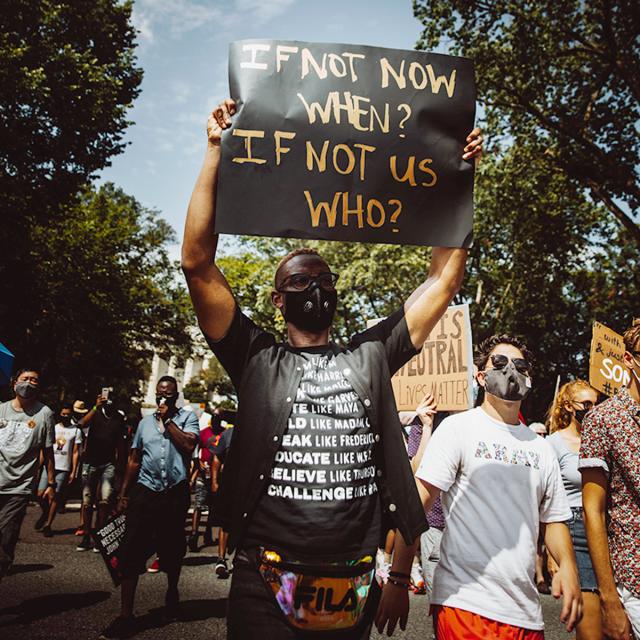
The #BlackLivesMatter movement is the most significant political movement in African American life in the United States in the last fifty years. BLM leaders denounced anti-black racism, white supremacy, and police brutality and reshaped how we think about gender, sexuality, social justice, economic injustice, and crime.

Aug 3rd 2026
4 Weeks
History of Racial Inequity in Healthcare (Coursera) Coursera
University of Michigan

History of Racial Inequity in Healthcare (Coursera)

The first course of the Addressing Racial Health Inequity in Healthcare specialization will first situate the role of public health in healthcare, and walk through important concepts and definitions that you will see throughout the course and subsequent courses. You will walk through the social and biological perspectives on the concepts of race and racism, and unpack the history of unequal treatment in the U.S.

Jul 13th 2026
5-12 Weeks
Anti-Racism II (Coursera) Coursera
University of Colorado Boulder

Anti-Racism II (Coursera)

Anti-Racism II is an intermediate course between Anti-Racism I and Anti-Racism III, focusing on the topic of race, racism, and strategies regarding how to be an anti-racist. Anti-Racism II is for anyone who has previously taken Anti-Racism I, or who has basic knowledge of the racial issues plaguing the United States, and globally. Anti-Racism I focused upon how to have open dialogue and conversations about race and racism. Anti-Racism II takes on the vital role assisting students in guiding their own conversations regarding race, and additionally gender and sexuality.

Jul 20th 2026
4 Weeks
Corporate Sustainability. Understanding and Seizing the Strategic Opportunity (Coursera) Coursera
Università Bocconi

Corporate Sustainability. Understanding and Seizing the Strategic Opportunity (Coursera)

In this course, thought leaders in a wide variety of management and economics fields illustrate how to assess and seize the opportunities offered by these global emergencies. They will offer new ways to understand the purpose and the logic of success of the business enterprise in this new context, providing ideas and examples on how to manage the transition process to realize the value creation potential from corporate sustainability for all involved stakeholders.

Jul 13th 2026
5-12 Weeks
Anti-Racism I (Coursera) Coursera
University of Colorado Boulder

Anti-Racism I (Coursera)

Anti-Racism I is an introduction to the topic of race and racism in the United States. The primary audience for this course is anyone who is interested in learning about race/racism in the US who has never taken a course in critical race or ethnic studies or affiliated fields (indeed, who may not know what the fields of critical race studies or ethnic studies are), who has never read a book about race/racism, or attended any race equity or diversity trainings on the topic of race/racism.

Jul 20th 2026
3 Weeks
Social Work Practice: Advocating Social Justice and Change (Coursera) Coursera
University of Michigan

Social Work Practice: Advocating Social Justice and Change (Coursera)

In this course, you will learn how social workers in the United States engage in creating change and supporting the resilience of individuals, families and communities in this new era. Learners will have an opportunity to explore the social work profession, the different roles of social workers in a range of settings, the cross cutting themes that guide social work practice, the history of social work, and current challenges.

Aug 3rd 2026
4 Weeks
Foundations of Diversity and Inclusion at Work TeachOut (Coursera) Coursera
University of Virginia

Foundations of Diversity and Inclusion at Work TeachOut (Coursera)

The summer of 2020 has brought issues of equity and race to the forefront of society. How do we create tolerant and just climates at work? Changing the culture of an organization is challenging in the best of circumstances; today, it can seem impossible. Yet, it is more necessary and urgent than ever to address these issues thoughtfully and with effective practices that can produce real change. Six Darden professors have designed this teach-out to bring you the latest scholarship and best practices on diversity, equity and inclusion and organizational change.

Aug 3rd 2026
2 Weeks
The Dynamic Earth: A Course for Educators (Coursera) Coursera
American Museum of Natural History

The Dynamic Earth: A Course for Educators (Coursera)

The AMNH course The Dynamic Earth: A Course for Educators provides students with an overview of the origin and evolution of the Earth. Informed by the recently released Next Generation Science Standards, this course examines geological time scales, radiometric dating, and how scientists “read the rocks.” We will explore dramatic changes in the Earth over the last 4 billion years, including how the evolution of life on Earth has affected its atmosphere. In addition to looking at geology on a global scale, participants will take to their own backyards to explore and share their local geologic history.

Jul 27th 2026
4 Weeks
The Arctic as a System (Coursera) Coursera
University of Colorado Boulder

The Arctic as a System (Coursera)

In this course you will first learn about the Arctic as a geographic region, the peoples the Arctic, and the long history of Arctic settlement and exploration. Attention then turns to key features of the Arctic environment – its climate and weather, features of the ocean, sea ice, lands and the Greenland Ice Sheet, and some of the rapid changes being observed.

Jul 6th 2026
5-12 Weeks
Sports and Society (Coursera) Coursera
Duke University

Sports and Society (Coursera)

Sports play a giant role in contemporary society worldwide. But few of us pause to think about the larger questions of money, politics, race, sex, culture, and commercialization that surround sports everywhere. This course draws on the tools of anthropology, sociology, history, and other disciplines to give you new perspectives on the games we watch and play.

Jul 13th 2026
5-12 Weeks