Social Norms, Social Change II (Coursera)

Social Norms, Social Change II (Coursera)

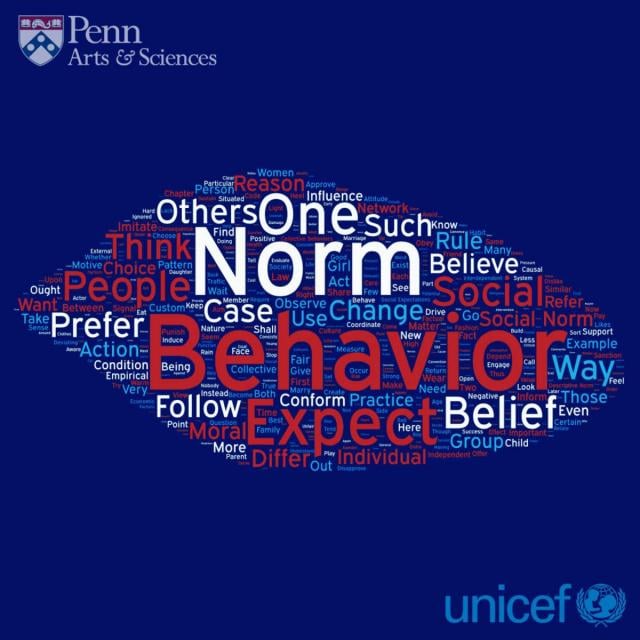
This course covers scripts and schemas, the cognitive structures in which social expectations are embedded, and their relationship with social norms. The course then examines the essentials of norm abandonment, including the relations between personal beliefs and social expectations. We will also evaluate existing intervention strategies, including legal reforms, information campaigns, economic incentives, and group deliberations.

Class Deals by MOOC List - Click here and see Coursera's Active Discounts, Deals, and Promo Codes.

Finally, we look at a variety of tools policy makers may use to effect change, highlight the role of trendsetters in social change, and explore the conditions under which they can be successful. The course is a joint Penn-UNICEF project.
This course is Part 2 of the Social Norms, Social Change series. In this course, we will examine social change, the tools we may use to enact change, and put into practice all we have learned in Part 1. See Social Norms, Social Change Part I at this link: Social Norms, Social Change I.

Syllabus

WEEK 1
Honors Lesson: Scripts and Schemas
This course is "part 2" of Social Norms, Social Change and the lessons here are a continuation of the first course. This module covers scripts and schemas, the cognitive structures in which social expectations are embedded, and their relationship with social norms.

WEEK 2
Norm Creation

WEEK 3
Norm Abandonment
This module covers the essentials of norm abandonment, including the relations between personal beliefs and social expectations. It also evaluates existing intervention strategies, including legal reforms, information campaigns, economic incentives, and group deliberations.

WEEK 4
Trendsetters and Social Change
This module covers trendsetters and their relations to social change. Who are trendsetters? What are their characteristics? How can we identify them? And how can we use them to bring about positive social change. This module also discusses the role of soap operas and edutainment in bringing about social change, how fictional characters and groups can act as trendsetters, and comparative advantages of edutainment interventions over traditional interventions.

Go to Class
MOOC List is learner-supported. When you buy through links on our site, we may earn an affiliate commission.

Related Courses

Free Will and Neuroscience (Coursera) Coursera
Dartmouth College

Free Will and Neuroscience (Coursera)

In this course, we will discuss free will from a neuroscientific perspective. Module one of the course will explore two neuroscientific arguments against free will from Libet and Wegner and evaluate neuroscientists’ arguments against free will. You will also examine where these experiments do not succeed in debunking free will.

Jun 8th 2026
3 Weeks
Gender and Sexuality: Diversity and Inclusion in the Workplace (Coursera) Coursera
University of Pittsburgh

Gender and Sexuality: Diversity and Inclusion in the Workplace (Coursera)

What is sex? What is gender? What is sexuality? What do we mean by LGBTQIA? How are these concepts related to the workplace? How have our understandings of these terms changed over time, and how have these changes impacted work and culture? To help you answer these important questions, this course will introduce you to the exciting field of gender, sexuality, and women's studies, and to LGBTQIA identities.

Jun 8th 2026
4 Weeks
Voces de cambio social (Coursera) Coursera
Laureate Education

Voces de cambio social (Coursera)

En momentos de turbulencia política, desconcierto medioambiental y permanente desigualdad social, los jóvenes creadores de cambio están liderando el camino para resolver los desafíos de la actualidad. ¿Qué está haciendo usted para crear un cambio positivo y sostenible? Voces de Cambio Social es un curso corto en línea gratuito, diseñado e impartido por ocho jóvenes emprendedores sociales.

Jun 8th 2026
5-12 Weeks
Influencing People (Coursera) Coursera
University of Michigan

Influencing People (Coursera)

This course will improve your ability to influence people in situations where you cannot use formal authority. You will learn about effective ways to build, develop, and sustain a power base in your organization. You will also learn influence tactics that enable you to be more persuasive and influential in working with your superiors, peers, and even subordinates. In addition, you will learn how to build and maintain high-quality relationships to further maximize your informal power and ability to influence others. Importantly, you will distinguish between influence and manipulation and learn how to protect yourself from the unwanted influence of others.

Jun 1st 2026
4 Weeks
Introduction to Psychology (Coursera) Coursera
University of Toronto

Introduction to Psychology (Coursera)

This course highlights the most interesting experiments within the field of psychology, discussing the implications of those studies for our understanding of the human mind and human behavior. We will explore the brain and some of the cognitive abilities it supports like memory, learning, attention, perception and consciousness. We will examine human development - both in terms of growing up and growing old - and will discuss the manner in which the behavior of others affect our own thoughts and behavior.

Jun 8th 2026
5-12 Weeks
Introduction to Psychology (Coursera) Coursera
Yale University

Introduction to Psychology (Coursera)

What are people most afraid of? What do our dreams mean? Are we natural-born racists? What makes us happy? What are the causes and cures of mental illness? This course tries to answer these questions and many others, providing a comprehensive overview of the scientific study of thought and behavior. It explores topics such as perception, communication, learning, memory, decision-making, persuasion, emotions, and social behavior. We will look at how these aspects of the mind develop in children, how they differ across people, how they are wired-up in the brain, and how they break down due to illness and injury.

Jun 8th 2026
5-12 Weeks
What is Social? (Coursera) Coursera
Northwestern University

What is Social? (Coursera)

The “What Is Social?" MOOC is for business owners, executives, and marketing professionals who want to significantly improve their abilities to grow their social strategy using effective, proven methodologies. This hands on, "how to" program won’t just tell you how to grow your professional persona using social – you will actually do it! This course is the first in the six-course specialization, Social Media Marketing: How to Profit in a Digital World.

Jun 8th 2026
4 Weeks
Social Norms, Social Change I (Coursera) Coursera
University of Pennsylvania

Social Norms, Social Change I (Coursera)

This is a course on social norms, the rules that glue societies together. It teaches how to diagnose social norms, and how to distinguish them from other social constructs, like customs or conventions. These distinctions are crucial for effective policy interventions aimed to create new, beneficial norms or eliminate harmful ones. The course teaches how to measure social norms and the expectations that support them, and how to decide whether they cause specific behaviors.

Jun 8th 2026
4 Weeks
Gamification (Coursera) Coursera
University of Pennsylvania

Gamification (Coursera)

Gamification is the application of game elements and digital game design techniques to non-game problems, such as business and social impact challenges. This course will teach you the mechanisms of gamification, why it has such tremendous potential, and how to use it effectively.

Jun 8th 2026
5-12 Weeks
Evolution: A Course for Educators (Coursera) Coursera
American Museum of Natural History

Evolution: A Course for Educators (Coursera)

How are all of the species living on Earth today related? How does understanding evolutionary science contribute to our well-being? In this course, participants will learn about evolutionary relationships, population genetics, and natural and artificial selection. Participants will explore evolutionary science and learn how to integrate it into their classrooms.

Jun 1st 2026
4 Weeks