Anti-Racism I (Coursera)

Anti-Racism I (Coursera)

Anti-Racism I is an introduction to the topic of race and racism in the United States. The primary audience for this course is anyone who is interested in learning about race/racism in the US who has never taken a course in critical race or ethnic studies or affiliated fields (indeed, who may not know what the fields of critical race studies or ethnic studies are), who has never read a book about race/racism, or attended any race equity or diversity trainings on the topic of race/racism.

Class Deals by MOOC List - Click here and see Coursera's Active Discounts, Deals, and Promo Codes.

In this course you will learn how to:

  • Use and comprehend contemporary intersectional terminology through a provided glossary
  • Critically discuss “whiteness”
  • Recognize the concept of White privilege that all White people have whether they want that privilege or not and to differentiate between White supremacy as a systemic concept vs. White supremacists (who are professional racists like the KKK).
  • Distinguish between being not racist and being anti-racist
  • Define systemic and institutional racism
  • Accept the unequal history of race and racism in the United States that has created racial hierarchies that has disenfranchised Black Americans
  • Share with others the true foundations of United States’s histories beginning with the acknowledgement of settler colonialism and the rewards that White people have received due to White supremacy and Black oppression.
  • Talk about race and racism
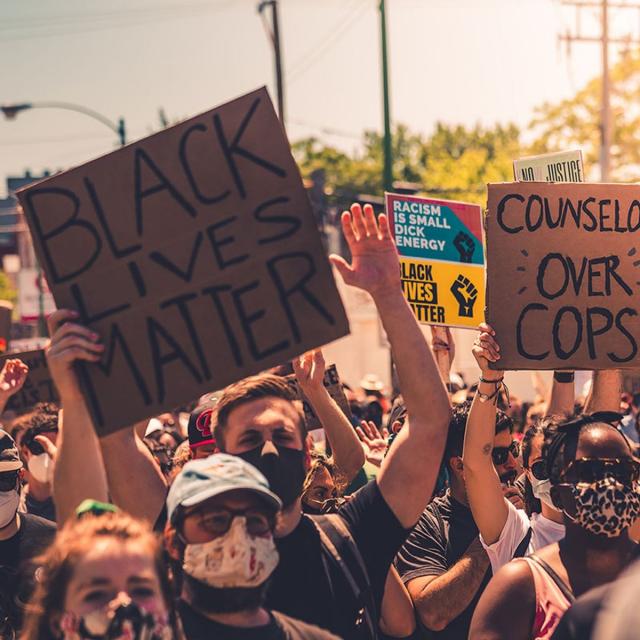
  • Explain why phrases like “All Lives Matter” and “Blue Lives Matter” are racist
  • Recognize that anyone can be anti-racist--it only takes the dedication and decision to be anti-racist, to educate yourself about the history of racism in the US and then to talk in an anti-racist way and to act as an anti-racist

What You Will Learn

  • how to talk about race and racism
  • how to distinguish the difference between talking about race/racism and participating in racist acts
  • how to use contemporary intersectional terminology through a provided glossary
  • how to define systemic and institutional racism

Syllabus

WEEK 1
Defining
This week you will learn various ways of defining race through definitions of whiteness. While race and racism have, in popular discourse, been understood to refer to non-white people, we start with whiteness since whiteness has been the primary ideology that dominated the formation of the United States, its laws, power structure, society, and culture. The anti-racism glossary also provides a variety of definitions related to race, racism, and anti-racism.

WEEK 2
Identifying
Now that you've learned to define whiteness and other terms related to race, racism, and anti-racism, this week focuses on identifying the impact of race, racism, and anti-racism. The first article contextualizes our current moment of racial crisis, along with identifying differences between being not-racist and anti-racist. The remaining readings and viewings provide historical context for systemic racism, especially anti-Black racism in the US.

WEEK 3
Applying
For this final week of the anti-racism course you will see how the application of these terms and concepts are tied to other overlapping oppressions and how they can be used for specific anti-racism work, such as defunding the police (and why this is not as radical as people may think it is, though in many ways to imagine an anti-racist world is a radical act) and specific actions that each of us can do to be anti-racism allies and educators.


Go to Class
MOOC List is learner-supported. When you buy through links on our site, we may earn an affiliate commission.

Related Courses

Social Science Approaches to the Study of Chinese Society Part 2 (Coursera) Coursera
The Hong Kong University of Science and Technology - HKUST

Social Science Approaches to the Study of Chinese Society Part 2 (Coursera)

This course is intended as a first step for learners who seek to become producers of social science research. It is organized as an introduction to the design and execution of a research study. It introduces the key elements of a proposal for a research study, and explains the role of each. It reviews the major types of qualitative and quantitative data used in social science research, and then introduces some of the most important sources of existing data available freely or by application, worldwide and for China.

Jun 1st 2026
5-12 Weeks
What future for education? (Coursera) Coursera
University of London,UCL Institute of Education

What future for education? (Coursera)

Through this course you will start to critically examine your own ideas about education, teaching and learning. The critique will be developed through engagement with theories and ideas developed through educational research. You will be encouraged to use these ideas to challenge or support your own ideas about education. Each week we will focus on one key question, using video lectures, key readings and challenges to explore some commonplace notions about education.

May 25th 2026
5-12 Weeks
The Making of US Foreign Policy (Coursera) Coursera
O.P. Jindal Global University

The Making of US Foreign Policy (Coursera)

Welcome to The Making of US Foreign Policy course! This course seeks to provide you with a comprehensive understanding of the United States’ Foreign Policy (USFP). Through this course, you will look at the evolution of USFP from its founding to the present. You will analyze the role of the institutions which play a role in defining USFP. You will also explore how the USFP relies on trade and economic interdependence to define global economic relations.

Jun 1st 2026
5-12 Weeks
Benjamin Franklin and His World (Coursera) Coursera
University of Pennsylvania

Benjamin Franklin and His World (Coursera)

Welcome to Benjamin Franklin and His World! In this course, we explore the life of one of the United States’ most important historical figures. We examine Franklin’s early life growing up in the American colonies, his professional career as a printer and scientist, and his role in the American Revolution and the founding the United States as a new nation on the world stage.

Jun 1st 2026
4 Weeks
Chemerinsky on Constitutional Law - The Structure of Government (Coursera) Coursera
University of California, Irvine

Chemerinsky on Constitutional Law - The Structure of Government (Coursera)

This course will highlight the construction and interpretation of the U.S. Constitution through the centuries. You'll learn the history behind the Constitution, cases that formed important precedent, and how changes in interpretation have been dependent on shifts in cultural and political climate as well as the composition of the Supreme Court.

May 25th 2026
5-12 Weeks
Foundations of Teaching for Learning: Developing Relationships (Coursera) Coursera
Commonwealth Education Trust

Foundations of Teaching for Learning: Developing Relationships (Coursera)

The Foundations of Teaching for Learning programme is for anyone who is teaching, or who would like to teach, in any subject and any context - be it at school, at home or in the workplace. With dynamic lessons taught by established and respected professionals from across the Commonwealth, this eight course programme will see you develop and strengthen your skills in teaching, professionalism, assessment, and more. As you carry on through the programme, you will find yourself strengthening not only your skills, but your connection with colleagues across the globe. A professional development opportunity not to be missed.

Jun 1st 2026
5-12 Weeks
American Politics, Society, and History (Coursera) Coursera
O.P. Jindal Global University

American Politics, Society, and History (Coursera)

Welcome to the American Politics, Society, and History course! This course seeks to provide learners with a comprehensive understanding of American history, politics, society, and culture. The United States has been a beacon in the international community as a constitutional liberal democracy. Through this course, you will gain insight into the historical evolution of the US from a constitutional perspective and provide an overview of the government in the US.

Jun 1st 2026
5-12 Weeks
Designing and Building Institutional Anti-Racist Spaces (Coursera) Coursera
Wesleyan University

Designing and Building Institutional Anti-Racist Spaces (Coursera)

Designing and Building Institutional Antiracist Spaces (D-BIAS) is a course whose mission is to teach and apply tenets of equity, anti-racism, and cultural justice to students from Institutions to achieve social change. The course is aimed at educators and administrators in educational spaces, lawyers and advocates in spaces that touch civil rights, equity, and whose Institutional mission it is to achieve greater cultural equity.

Jun 1st 2026
4 Weeks
Capstone Project: Teaching Impacts of Technology (Coursera) Coursera
University of California, San Diego

Capstone Project: Teaching Impacts of Technology (Coursera)

In this project-based course you’ll review the Advanced Placement Computer Science Principles course and exam description guide to prepare for the “Explore Task”, where students must research a recent computing innovation and and analyze its impacts on the world. You’ll also review the description of this task from the student perspective and complete the task yourself. Then you’ll assess sample secondary student work by following the APCSP scoring guidelines as well as provide feedback to a fellow learner on their submitted task and receive the same from fellow learners.

Jun 3rd 2026
5-12 Weeks
History of Racial Inequity in Healthcare (Coursera) Coursera
University of Michigan

History of Racial Inequity in Healthcare (Coursera)

The first course of the Addressing Racial Health Inequity in Healthcare specialization will first situate the role of public health in healthcare, and walk through important concepts and definitions that you will see throughout the course and subsequent courses. You will walk through the social and biological perspectives on the concepts of race and racism, and unpack the history of unequal treatment in the U.S.

Jun 1st 2026
5-12 Weeks
Privacy in the USA (Coursera) Coursera
EIT Digital

Privacy in the USA (Coursera)

After having followed Privacy in the Western world you have become acquainted with the overall global legal system and the origins of privacy as a concept as well as privacy as a (human) right. This course deals with the American legal system to protect privacy. In the USA privacy is protected through different legal concepts. Constitutional protection through the 4th Amendment plays a crucial role in protecting the US citizen against unjust governmental intrusion. As part of a myriad of consumer protection laws (e.g. health, financial) personal data is also protected.

May 25th 2026
5-12 Weeks