Computational Thinking for K-12 Educators: Nested If Statements and Compound Conditionals (Coursera)

Computational Thinking for K-12 Educators: Nested If Statements and Compound Conditionals (Coursera)

How could you program a complex "choose your own adventure" game? How can your soccer game determine goals, balls out of bounds, and corner kicks? You'll learn to do both of these in this course! This class teaches the concepts of nested if/else statements and compound Boolean conditional expressions.

Class Deals by MOOC List - Click here and see Coursera's Active Discounts, Deals, and Promo Codes.

For each concept, we'll start by helping you connect real-world experiences you are already familiar with to the programming concept you are about to learn. Next, through a cognitively scaffolded process we'll engage you in developing your fluency with problem solving with nested if/else statements and compound conditionals in a way that keeps frustration at a minimum.
Along the way you will learn about the common challenges or "bugs" students have with these concepts as well as ways to help them find and fix those concepts. You'll also be guided in running classroom discussions to help students develop deeper understanding of these concepts.
Finally, you'll prepare classroom resources to help your students to develop debugging skills. Additionally, you will create resources to help educate your students about the impacts of lack of equity in K-12 CS instruction.
Course 4 of 6 in the Computational Thinking & Block Programming in K-12 Education Specialization.

Syllabus

WEEK 1
Course Orientation
Nested If/Else Part 1
Explore conditional executing by learning about nested if-else statements. Use nested if-elses in examples where there are three or more options. Design your own conditional system, re-create Snap programs based on video solutions, and review some common debugging tips.

WEEK 2
Nested If/Else Part 2
Continue with nested if-else statements with our non-interactive programming puzzles to check your knowledge. Get prepared to run classroom discussions on some challenging if-else statements and explore a different, free, online programming system -- pencilcode.net

WEEK 3
Compound Conditionals Part 1
Learn how to create compound conditionals with and and or. Do an unplugged activity to see compound conditional apply in a soccer game. See how truth tables define the behavior of Boolean operators and and or and get the chance to fill one in. Create your own compound conditional programs using Snap, review others' work, and learn debugging tips.

WEEK 4
Compound Conditionals Part 2
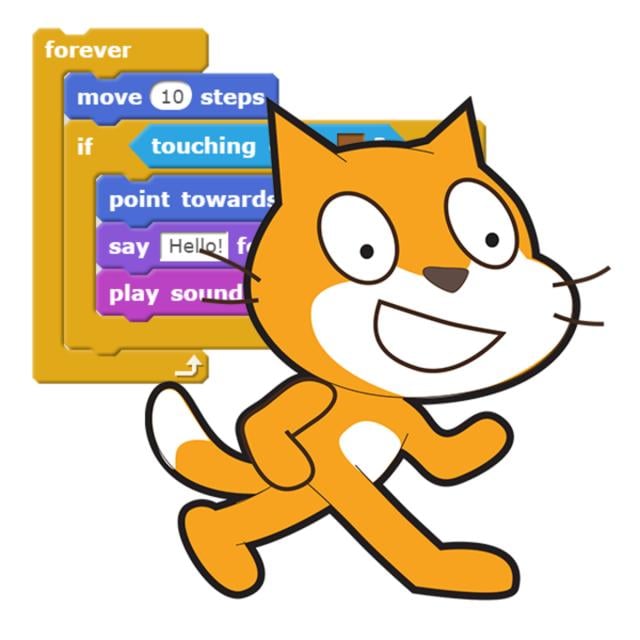
Deepen your understanding of compound conditionals with some pretty challenging classroom discussion questions. Learn about the design behind the Scratch programming language and read and use starter code in Scratch to create a soccer game that announces goals and various out of bounds situations.

WEEK 5
Equity & Pedagogy
Explore the equity and pedagogical aspects of computer science. Learn about Grace Hopper, an iconic woman and pioneer of computing and learn about debugging tips. After practicing your debugging skills, you will learn the benefits and methods to introduce computer science to everyone. Finally, we'll introduce various communities and share advice that will be useful for computing education leaders.

Go to Class
MOOC List is learner-supported. When you buy through links on our site, we may earn an affiliate commission.

Related Courses

Designing Learning Innovation (Coursera) Coursera
Politecnico di Milano

Designing Learning Innovation (Coursera)

Where to start to innovate your teaching? But before that, what does it mean to innovate in the classroom? Designing Learning Innovation aims to put the designing culture at the service of learning innovation, supporting those who do not have a specific pedagogical background and those who wish to learn the basic tools of a good teaching design then to continue exploring the frontiers of innovation. A set of logical and methodological tools to innovate teaching, finding the most suitable approaches with one’s own vision of the teaching-learning experience.

Jul 6th 2026
5-12 Weeks
Simulation, Algorithm Analysis, and Pointers (Coursera) Coursera
University of Colorado System

Simulation, Algorithm Analysis, and Pointers (Coursera)

This course is the fourth and final course in the specialization exploring both computational thinking and beginning C programming. Rather than trying to define computational thinking, we’ll just say it’s a problem-solving process that includes lots of different components. Most people have a better understanding of what beginning C programming means!

Jul 6th 2026
4 Weeks
Negotiating Learner Differences: Towards Productive Diversity in Learning (Coursera) Coursera
University of Illinois at Urbana-Champaign

Negotiating Learner Differences: Towards Productive Diversity in Learning (Coursera)

An investigation of the dimensions of learner diversity: material (class, locale), corporeal (age, race, sex and sexuality, and physical and mental characteristics) and symbolic (culture, language, gender, family, affinity and persona). Examines social-cultural theories of difference, as well as considering alternative responses to these differences in educational settings - ranging from broad, institutional responses to specific pedagogical responses within classes of students.

Jul 6th 2026
4 Weeks
Understanding China, 1700-2000: A Data Analytic Approach, Part 1 (Coursera) Coursera
The Hong Kong University of Science and Technology - HKUST

Understanding China, 1700-2000: A Data Analytic Approach, Part 1 (Coursera)

The purpose of this course is to summarize new directions in Chinese history and social science produced by the creation and analysis of big historical datasets based on newly opened Chinese archival holdings, and to organize this knowledge in a framework that encourages learning about China in comparative perspective. Our course demonstrates how a new scholarship of discovery is redefining what is singular about modern China and modern Chinese history.

Jul 6th 2026
5-12 Weeks
Nursing Informatics Training and Education (Coursera) Coursera
University of Minnesota

Nursing Informatics Training and Education (Coursera)

In this fourth of our five courses, I will go deeper into the training and education leadership skills that are helpful for nursing informatics leaders. I will also guide you through the process of preparing a course document or syllabus for the nursing informatics specialty both in academic settings and in practice or industry.

Jul 6th 2026
5-12 Weeks
TECH MeD: Transdisciplinary Education for Critical Hacks of Medical Devices (Coursera) Coursera
University of Florida

TECH MeD: Transdisciplinary Education for Critical Hacks of Medical Devices (Coursera)

This course seeks to create an informed public, aware of the technical, medical, legal, and ethical issues associated with implantable medical devices. The course features conversations with experts from a variety of relevant fields to discuss the present and future technological, ethical, legal, and social challenges associated with implantable medical devices.

Jul 6th 2026
5-12 Weeks
Overcoming Dyslexia (Coursera) Coursera
Yale University

Overcoming Dyslexia (Coursera)

Dyslexia is everywhere, touching so many children and adults, and while science has made extraordinary progress in understanding and clarifying the condition, this incredible powerful knowledge rarely reaches those who most need to know and would greatly benefit from it. Our goal is to change all this with the Coursera you are about to view, produced by Dr. Sally Shaywitz, the Audrey G. Ratner Professor in Learning Development, both the leading scientist studying dyslexia and the most devoted advocate for helping those who are dyslexic.

Jul 11th 2026
5-12 Weeks
New Learning: Principles and Patterns of Pedagogy (Coursera) Coursera
University of Illinois at Urbana-Champaign

New Learning: Principles and Patterns of Pedagogy (Coursera)

Education is in a state of flux – transitioning from traditional architectures and practices to new ecologies of teaching and learning influenced by the tremendous social and technological changes of our times. What changes are afoot today in workplaces, civic life and everyday community life? What are their implications for education? What are the possible impacts of contemporary social transformations on teaching and learning - including in the areas of technology, media, globalization, diversity, changing forms of work in the “knowledge society”, and, in these contexts, changing learner needs and sensibilities? This course explores three pedagogical paradigms: “didactic”, “authentic” and “transformative” learning.

Jul 6th 2026
4 Weeks
Advanced Instructional Strategies in the Virtual Classroom (Coursera) Coursera
University of California, Irvine

Advanced Instructional Strategies in the Virtual Classroom (Coursera)

Welcome to Advanced Instructional Strategies in the Virtual Classroom! This course will help you apply strategies to the critical areas of K-12 virtual instruction to significantly impact virtual education. We will examine the pitfalls beginning teachers run into and learn how to overcome them by focusing on the fundamentals that have the greatest impact on student learning in a blended or online environment. By the end of the course, you will be able to empower your students to be voracious learners who are ready to go out and make the world a better place to live.

Jul 6th 2026
5-12 Weeks
Design Thinking for the Greater Good: Innovation in the Social Sector (Coursera) Coursera
University of Virginia

Design Thinking for the Greater Good: Innovation in the Social Sector (Coursera)

Do you work for a nonprofit or in the social sector? Are you struggling to solve the problems and meet the needs of the people you serve? Come learn more about how design thinking, a human-centered approach to problem solving, can help you truly understand an issue, generate ideas worth testing and iterate to find solutions that make a real difference. Through global stories from areas as diverse as government, health care, and education, we’ll show you the tools, techniques and mindset needed to use design thinking to uncover new and creative solutions in the social sector.

Jul 6th 2026
4 Weeks
Computational Thinking for Problem Solving (Coursera) Coursera
University of Pennsylvania

Computational Thinking for Problem Solving (Coursera)

Computational thinking is the process of approaching a problem in a systematic manner and creating and expressing a solution such that it can be carried out by a computer. But you don't need to be a computer scientist to think like a computer scientist! In fact, we encourage students from any field of study to take this course. Many quantitative and data-centric problems can be solved using computational thinking and an understanding of computational thinking will give you a foundation for solving problems that have real-world, social impact.

Jul 6th 2026
4 Weeks
ADHD: Everyday Strategies for Elementary Students (Coursera) Coursera
University at Buffalo,The State University of New York

ADHD: Everyday Strategies for Elementary Students (Coursera)

This course will provide an overview of ADHD diagnosis and treatment. Course participants can expect to learn about ADHD as a developmental disorder that begins early in childhood, and participants will also learn about evidence-based approaches for diagnosing ADHD. Following that, two evidence-based treatment approaches (the Daily Report Card and Parenting Strategies) will be introduced. (Note these course activities are informational and are not intended to replace working with a licensed/trained professional).

Jul 6th 2026
4 Weeks