Business Sustainability in the Circular Economy (Coursera)

Offered by University of London,
Business Sustainability in the Circular Economy (Coursera)

We are surrounded by so much discussion of sustainability that it can sometimes become overwhelming. Important questions include: What role can business have in ensuring the sustainability of the planet? How should business work with society to preserve the environment? These questions will be answered in this course as we explore the meaning of sustainability and its impact on modern organisations as they move to circular ideas to reduce waste, increase recycling and become fit for our modern society.

Class Deals by MOOC List - Click here and see Coursera's Active Discounts, Deals, and Promo Codes.

In the course you will not only learn about the role of business in sustainability, but also your own personal contribution.
In addition to environmental issues we will also reflect on how employees are pressuring firms to see themselves as a positive part of the wider society. The specific topics we will cover include: Paris Climate Accord, Carbon Footprint, the circular economy, reverse logistics, recycling strategies, right to repair, Corporate Social Responsibility, Bottom of the Pyramid and developing economies, and fair trade business models. By the end of the course, your understanding of sustainability and business's relationship with society will have increased considerably. You will develop new skills in research and analysis and will have lots of new ideas to take away with you and apply in your own organisation and your own working life.

Syllabus

WEEK 1
Sustainability and the circular economy
This week includes: outlining the structure of the course, exploring the nature of sustainability, assessing your own green credentials, discussing the future of business in a circular economy.

WEEK 2
Recycling and reverse logistics
This week includes: discussing the circular economy, explaining reverse logistics, defining recycling, introducing Green Legislation.

WEEK 3
Corporate social responsibility (CSR)
This week includes: developing an understanding of corporate social responsibility (CSR), measuring CSR, introducing the concept of the bottom of the pyramid, discussing Fairtrade.
Go to Class
MOOC List is learner-supported. When you buy through links on our site, we may earn an affiliate commission.

Related Courses

Public Health Perspectives on Sustainable Diets (Coursera) Coursera
Johns Hopkins University

Public Health Perspectives on Sustainable Diets (Coursera)

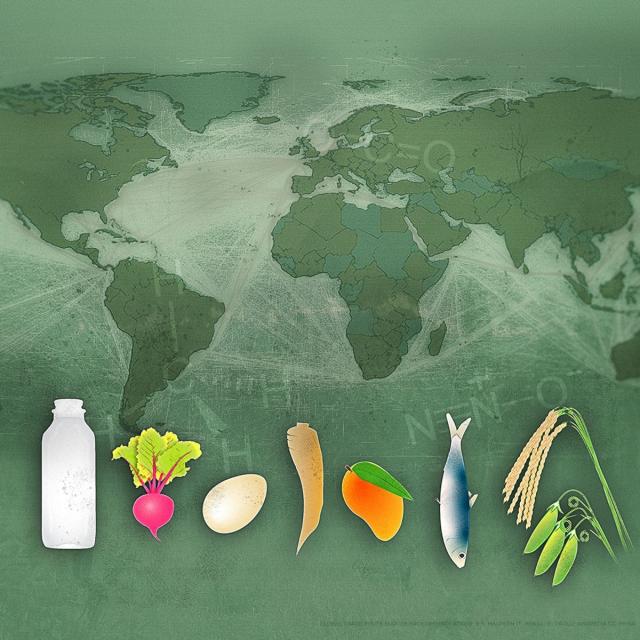
What we eat and how we produce that food have significant effects on human health and the sustainability of our planet. But what is a ‘sustainable’ diet? A sustainable diet, as defined by the FAO, promotes health and well-being and provides food security for the present population while sustaining human and natural resources for future generations. This short course looks at the urgent need to address the sustainability of our food systems, including better understanding the complex relationship between diet and climate change. We’ll explore current research on dietary shifts needed in high, middle, and low-income countries to achieve both sustainability and food security goals and discuss evidence-based strategies to promote sustainable diets.

Oct 5th 2026
3 Weeks
Becoming a changemaker: Introduction to Social Innovation (Coursera) Coursera
University of Cape Town

Becoming a changemaker: Introduction to Social Innovation (Coursera)

This free 6 week course is for anyone who wants to make a difference. Whether you are already familiar with the field of social innovation or social entrepreneurship, working for an organization that wants to increase its social impact, or just starting out, this course will take you on a journey of exploring the complex problems that surround us and how to start thinking about solutions.

Oct 5th 2026
5-12 Weeks
Management of Urban Infrastructures – part 1 (Coursera) Coursera
École Polytechnique Fédérale de Lausanne

Management of Urban Infrastructures – part 1 (Coursera)

Sustainability, Resilience and Efficiency are fundamental considerations for city managers in managing urban infrastructures. Today, more than 3.9 billion people, making up more than 54% of the global population, live in cities. Urbanization is expected to continue in the coming years, raising the urban population to 6.0 billion by 2045. This dramatic increase in urban populations will inevitably increase the demand for energy, mobility (transportation), water, and other urban services in every city around the world. Without functional governance and management structures that ensure efficient, resilient and sustainable performance in cities, the current urbanization growth might become a catastrophic risk threatening the quality of life of the humanity.

Oct 12th 2026
5-12 Weeks
Global Health Security, Solidarity and Sustainability through the International Health Regulations (Coursera) Coursera
University of Geneva

Global Health Security, Solidarity and Sustainability through the International Health Regulations (Coursera)

Welcome to the MOOC "Global Health Security, Solidarity and Sustainability through the International Health Regulations". We are very excited to have you on board and hope you will enjoy the course! In the coming 6 weeks, you will learn about the International Health Regulations (IHR), history of its creation and evolution, its major principles and implementation procedures, as well as challenges and future opportunities.

Oct 12th 2026
5-12 Weeks
Discover Best Practice Farming for a Sustainable 2050 (Coursera) Coursera
University of Western Australia

Discover Best Practice Farming for a Sustainable 2050 (Coursera)

The Discover Best Practice Farming for a Sustainable 2050 Course is based on a clear vision: imagine best practice farming for 2050, start to implement these strategies now, all the while making sure it will still be profitable. At UWA we're doing just that with the Future Farm 2050 Project, set on a mixed-enterprise farm in Western Australia and we want you to learn how it can be done in your part of the world.

Oct 5th 2026
5-12 Weeks
Climate Change Mitigation in Developing Countries (Coursera) Coursera
University of Cape Town

Climate Change Mitigation in Developing Countries (Coursera)

This course challenges you to consider how one might lift societies out of poverty while also mitigating greenhouse gas emissions. We explore the inherent complexity of developing country governments wanting to grow their economies in a climate friendly way. You will be introduced to an approach with which to address this challenge. The approach consists of a facilitated process whereby academic researchers and high-level influential actors within society co-produce knowledge. You will track this process in four Latin American countries - Brazil, Chile, Colombia, Peru, and South Africa. You will hear from various professionals about their contexts and the different challenges and opportunities the process includes.

Oct 19th 2026
5-12 Weeks
Sustainable Fashion (Coursera) Coursera
Copenhagen Business School

Sustainable Fashion (Coursera)

Sometimes when we say we work with sustainable fashion people look at us like... "Mmmm, is it really possible for something like fashion to be sustainable?" And let's face it, people are right being suspicious. If anything the fashion industry has become increasingly unsustainable over the last decades, using more and more natural resources and creating more and more waste.

Oct 12th 2026
5-12 Weeks
Perspectives in Digital Transformation: Agribusiness (Coursera) Coursera
Inter-American Development Bank - IDB

Perspectives in Digital Transformation: Agribusiness (Coursera)

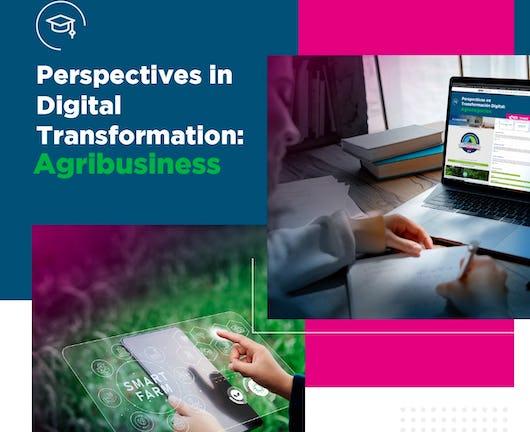
In this course, you will be learn how to apply the best practices that have been tested by global companies to make the most of the potentialities of digital transformation and its application to your business. Discover what the level of digital maturity is for your organization by identifying current trends in digital transformation, the use of technologies, and the impact on sustainability in the agribusiness sector in Latin America.

Oct 12th 2026
3 Weeks
Algae Biotechnology (Coursera) Coursera
University of California, San Diego

Algae Biotechnology (Coursera)

For decades, researchers have been studying microalgae to understand their biological functions and how we can use technology to harness algae’s power to create a wide range of commercial products. In this course, we will cover how synthetic biology, genetic engineering, and metabolic engineering is used in algae biotechnology, and also examine the current state of algae biotechnology research and tools. We’ll also explore some of the common bio-products we can make from algae, and take a look at some real-world algae companies that are using algae biotechnology to create products consumers can buy today.

Oct 12th 2026
5-12 Weeks
Renewable Energy: Fundamentals and Job Opportunities (Coursera) Coursera
University at Buffalo

Renewable Energy: Fundamentals and Job Opportunities (Coursera)

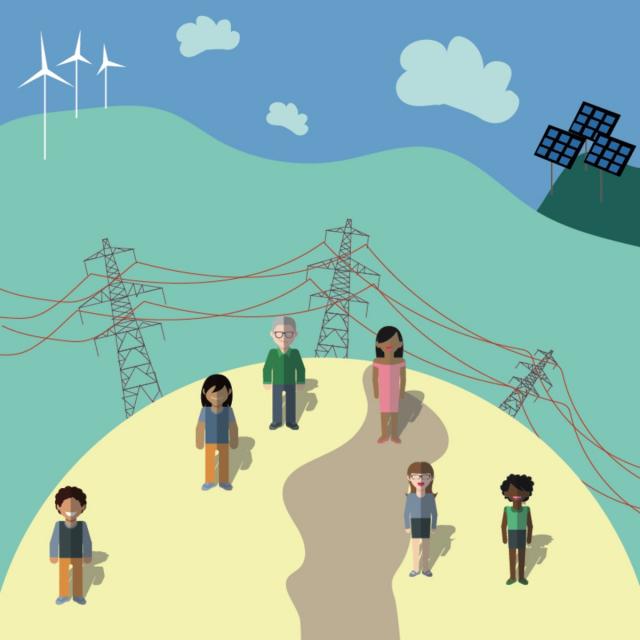
This course prepares you to recognize the complexities and nuances of different renewable energy solutions, as well as relevant career opportunities (both technical occupations and roles not typically associated with clean energy). Learners are immersed in discussions about green energy technologies, the impact of sustainability on society, energy consumption in the United States and conservation. Topics include: tenets of green building design and construction, solar energy conversion through photovoltaic cells, wind turbine site selection and design, and nanotechnology applications in clean energy.

Oct 5th 2026
5-12 Weeks