EdX

Biomedical Equipment: A Practical Approach to Healthcare Technology Management (edX)

Biomedical Equipment: A Practical Approach to Healthcare Technology Management (edX)

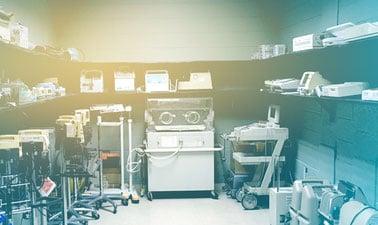
Enhance your knowledge and skills in effective methods of managing the lifespan of biomedical equipment in a limited-resource environment. With limited resources increasingly prevalent, healthcare technology management is often a challenge. Through this course we offer a practical approach to healthcare management that is tailored to this particular healthcare environment. The course will help you to manage uncertainties, defects and/or the unavailability of resources and personnel that may prevent proper and effective healthcare.

Class Deals by MOOC List - Click here and see EdX's Active Discounts, Deals, and Promo Codes.

This course is designed for health technology/facility managers and biomedical engineers operating in limited resource settings to help preserve quality health services by sharing ways to manage the life cycle of biomedical devices effectively and efficiently. The course focuses on the entire equipment life cycle from planning, budgeting and purchasing to daily operation, decommissioning and disposal.
After completing this course, learners will be able to make better decisions and chart out systematic plans for managing biomedical equipment at their healthcare center.
This course is part of the Biomedical Equipment: Repair, Maintenance and Healthcare Technology Management Professional Certificate.

What you'll learn

  • Understand the principles and tools of healthcare technology management
  • Plan, assess and create a budget for biomedical equipment, procurement and maintenance
  • Acquire relevant and appropriate biomedical equipment from companies and donors
  • Manage operating biomedical equipment
  • Overcome pitfalls and challenges to manage biomedical equipment effectively in limited-resource settings

Syllabus

Week 1: Introduction to Health Technology Management
In this module you will get an overview of HTM.

  • Basics of HTM
  • Life cycle of a biomedical device
  • Ecosystem of healthcare units
  • Finances and funding of different levels of healthcare units

Week 2: General asset management 1: Planning tools
In this module you will learn about the systematic tools that you can use to discover your direction of travel and to plan the budget and procurement of biomedical devices.

  • How to create inventories?
  • Stock value estimates
  • Budget lines
  • Reference materials
  • Standard equipment lists

Week 3: General asset management 2: Budgeting and storage tools
In this module you will learn how to calculate budgets for equipment that is needed.

  • Capital and recurrent budgeting
  • Equipment development plan
  • Core equipment expenditure plan
  • Storage and reordering budget

Week 4: Procurement
In this module you will learn the procedures and strategies to procure biomedical equipment based on the budgets and plans.

  • Different procurement methods
  • Procurement procedure
  • Installation and registration of the procured equipment

Week 5: Daily operation management
In this module you will learn how to manage the equipment when it is in use.

  • Training
  • Safety
  • Planned corrective maintenance and repair
  • Workshop management

Week 6: Decommissioning and disposal

  • Procedures to decommission/replace the equipment
  • Correct disposal of damaged equipment
  • Summary and finalizing the course
Go to Class
MOOC List is learner-supported. When you buy through links on our site, we may earn an affiliate commission.

Related Courses

Value-Based Care: Managing Processes to Improve Outcomes (Coursera) Coursera
University of Houston

Value-Based Care: Managing Processes to Improve Outcomes (Coursera)

This course is designed to introduce you to critical office-based processes that a value-based practice must manage in the drive towards improved patient outcomes. In Module 2, we’ll focus on office-based and clinical patient-based supporting functions. At every level in healthcare, guidelines, processes, and functions exist to improve outcomes, and following a consistent process will return the best effect. Refine your understanding of value and learn strategies to provide real assistance to patients to manage chronic diseases and navigate the complex healthcare system. Gain an overview of panel management, a systematic, proactive approach to identify and address unmet chronic and preventive care needs of patients that leads to better health outcomes. Learn how clinical patient-based questions related to immunizations, cancer screenings, or diabetes care can generate data to support a strategy of identifying non-utilization patterns.

Aug 3rd 2026
3 Weeks
HI-FIVE: Health Informatics For Innovation, Value & Enrichment (Social/Peer Perspective) (Coursera) Coursera
Columbia University

HI-FIVE: Health Informatics For Innovation, Value & Enrichment (Social/Peer Perspective) (Coursera)

HI-FIVE (Health Informatics For Innovation, Value & Enrichment) Training is an approximately 10-hour online course designed by Columbia University in 2016, with sponsorship from the Office of the National Coordinator for Health Information Technology (ONC). The training is role-based and uses case scenarios. Our nation’s healthcare system is changing at a rapid pace. Transformative health care delivery programs depend heavily on health information technology to improve and coordinate care, maintain patient registries, support patient engagement, develop and sustain data infrastructure necessary for multi-payer value-based payment, and enable analytical capacities to inform decision making and streamline reporting.

Aug 3rd 2026
4 Weeks
Perioperative Medicine in Action (FutureLearn) FutureLearn
University College London

Perioperative Medicine in Action (FutureLearn)

Explore perioperative medicine and how you can improve care for the high risk surgical patient. Join this RCoA endorsed course. Too many patients die or suffer prolonged complications following surgery. Perioperative medicine is an emerging, multi-disciplinary approach, which tackles this issue, by optimising the care of high-risk surgical patients. It encompasses disciplines including anaesthetics, surgery, nursing, care of the elderly, physiotherapy and healthcare management.

Self Paced
4 Weeks
Trustworthy AI for Healthcare Management (Coursera) EdX
Politecnico di Milano

Trustworthy AI for Healthcare Management (Coursera)

This MOOC gives an introduction to trustworthy artificial intelligence and its application in healthcare. This includes modules on basics of artificial intelligence and an introduction to trustworthy and ethical applications of artificial intelligence. A dedicated lesson will present the Z-Inspection® process for assessing trustworthy AI, and real-world case studies will illustrate how to apply the knowledge.

Jun 15th 2026
3 Weeks
Medical Humanity: Engaging Patients and Communities in Healthcare (FutureLearn) FutureLearn
Taipei Medical University

Medical Humanity: Engaging Patients and Communities in Healthcare (FutureLearn)

Find out how and why you should engage patients and communities in the development of new healthcare technology and treatments. The development of healthcare treatments has given people hope to fight diseases. However, humans are born to be afraid of advanced technologies. As such, it is critical that medical professionals have the skills to explain the benefits of treatments to patients and, ideally, involve them in the development of new treatments in the first place.

Self Paced
3 Weeks
Fixing Healthcare Delivery 2.0: Advanced Lean (Coursera) Coursera
University of Florida

Fixing Healthcare Delivery 2.0: Advanced Lean (Coursera)

Lean or Toyota Production System (TPS) is responsible for revolutionizing the auto industry by creating highly reliable and safe cars and trucks. In this course healthcare providers, administrators, engineers, and healthcare professional students will be taught how to apply the principles and tools of Lean to health care. They will learn how to identify and remove of waste, design standardized work, apply 5S, map Value streams, create process maps, conduct rapid improvement events (RIEs), level workflow, use A3 forms and Paredo charts, apply error proofing, and create effective visual controls.

Aug 17th 2026
5-12 Weeks
Drug Discovery (Coursera) Coursera
University of California, San Diego

Drug Discovery (Coursera)

The University of California San Diego, Skaggs School of Pharmacy and Pharmaceutical Sciences Drug Discovery course brings you lectures from both faculty and industry experts. With this course, recorded on campus at UCSD, we seek to share our access to top people in the field who bring an unprecedented range of expertise on drug discovery. In this course you will learn the drug discovery process up to the filing of an Initial New Drug Application or IND. Each week you will learn the steps that a pharmaceutical or biotech company goes through to discover a new therapeutic drug.

Aug 10th 2026
3 Weeks
Healthcare Marketplace (Coursera) Coursera
University of Minnesota

Healthcare Marketplace (Coursera)

In this course in the Healthcare Marketplace specialization you will identify, define, and describe potential business and public policy solutions to the challenges facing society’s growing demand for health services. Students will master a body of knowledge on the health care sectors major components through reading and reflection.

Aug 10th 2026
5-12 Weeks
Patient Safety and Quality Improvement: Developing a Systems View (Patient Safety I) (Coursera) Coursera
Johns Hopkins University

Patient Safety and Quality Improvement: Developing a Systems View (Patient Safety I) (Coursera)

In this course, you will be able develop a systems view for patient safety and quality improvement in healthcare. By then end of this course, you will be able to: 1) Describe a minimum of four key events in the history of patient safety and quality improvement, 2) define the key characteristics of high reliability organizations, and 3) explain the benefits of having strategies for both proactive and reactive systems thinking.

Aug 10th 2026
4 Weeks
Business Models for Innovative Care for Older People (Coursera) Coursera
University of Copenhagen,Copenhagen Business School

Business Models for Innovative Care for Older People (Coursera)

This course will introduce you to healthcare innovation within the field of healthy living and active aging. By following two specific cases on diabetes and rehabilitation, this interdisciplinary course will provide you with key theories, tools and concepts for analyzing and developing viable innovative solutions for aging populations. The lectures will cover demographic, biological, economic, social and cultural aspects of active aging and healthy living, along with lectures on current innovation theories and methods.

Aug 17th 2026
5-12 Weeks