eHealth: More than just an electronic record (Coursera)

eHealth: More than just an electronic record (Coursera)

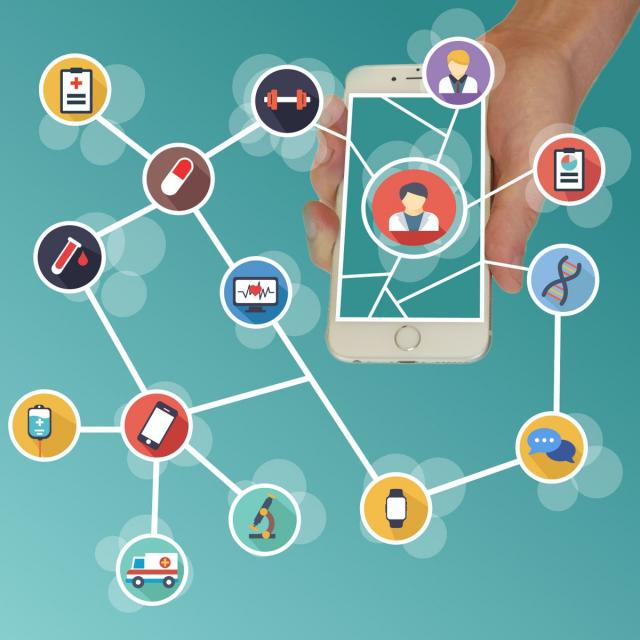
The MOOC, "eHealth: More than just an electronic record!", is multidisciplinary in nature, and aims to equip the global audience of health clinicians, students, managers, administrators, and researchers to reflect on the overall impact of eHealth on the integration of care. It explores the breadth of technology application, current and emerging trends, and showcases both local and international eHealth practice and research.

Class Deals by MOOC List - Click here and see Coursera's Active Discounts, Deals, and Promo Codes.

The entire eHealth Course consists of 5 modules and takes about 5 weeks to complete. Completion certificates are issued on the basis of participation in all 5 modules. Completing the health practice assignment in Module 5 entitles you to advanced standing in some of the eHealth courses run by the Faculty of Health Sciences, University of Sydney.

What you'll learn:

  • The fundamentals of eHealth and where it is heading
  • What kind of health data we are currently collecting and how it will transform healthcare in the future
  • How new technologies are helping health consumers participate in their own healthcare
  • How eHealth can improve the coordination and efficiency of healthcare and what the barriers might be

Syllabus

WEEK 1
What is eHealth?
Key question: “What are the fundamentals of eHealth and where is it heading?” To complete this introductory module you will need to view the video lectures for each lesson and complete the four listed ungraded learning activities. It is also recommended that you sample the module reference and further resource list to consolidate your learning.

WEEK 2
Health in our Hands
"How are new technologies helping consumers 'participate' in healthcare?" To complete this module you will need to view the video lectures for each lesson and complete the two listed ungraded learning activities. You are also required to complete the graded Peer Review Assignment 1 (40%) for submission as per the assignment instructions. It is also recommended that you sample the module reference and further resource list to consolidate your learning.

WEEK 3
Data and the "Quantified Self"
"What kind of health data do we collect now and how will it transform healthcare in the future?"

WEEK 4
Interacting with Health Professionals using New Technologies
"How can eHealth improve the coordination and efficiency of healthcare and what are the barriers?"

WEEK 5
Module 5 - eHealth in Professional Practice
"How can eHealth principles and technologies be applied in my own professional practice?"
Go to Class
MOOC List is learner-supported. When you buy through links on our site, we may earn an affiliate commission.

Related Courses

Positive Psychology Specialization Project: Design Your Life for Well-hebeing (Coursera) Coursera
University of Pennsylvania

Positive Psychology Specialization Project: Design Your Life for Well-hebeing (Coursera)

You are encouraged to take the first four courses of the Foundations of Positive Psychology Specialization before starting this course and completing the Specialization Project. This course, taught by Dr. Martin E.P. Seligman brings all the key concepts from the first four courses to practice as you develop and test a new positive intervention for an audience of your choice.

Jun 8th 2026
4 Weeks
Engaging in Enterprise Growth and Innovation (Coursera) Coursera
Northeastern University

Engaging in Enterprise Growth and Innovation (Coursera)

You will explore the challenges and processes for harnessing technological innovation for new-business development, with special focus on digital healthcare transformation. You will gain an understanding of enterprise growth and innovation topics through readings, cases, and exercises, including learning how firms from different industries gain competitive advantage through distinctive products and services. The vast expertise of faculty combined with topic perspectives from the Mayo Clinic make this an engaging and unique course.

Jun 10th 2026
4 Weeks
Overcoming Dyslexia (Coursera) Coursera
Yale University

Overcoming Dyslexia (Coursera)

Dyslexia is everywhere, touching so many children and adults, and while science has made extraordinary progress in understanding and clarifying the condition, this incredible powerful knowledge rarely reaches those who most need to know and would greatly benefit from it. Our goal is to change all this with the Coursera you are about to view, produced by Dr. Sally Shaywitz, the Audrey G. Ratner Professor in Learning Development, both the leading scientist studying dyslexia and the most devoted advocate for helping those who are dyslexic.

Jun 13th 2026
5-12 Weeks
Living with Dementia: Impact on Individuals, Caregivers, Communities and Societies (Coursera) Coursera
Johns Hopkins University

Living with Dementia: Impact on Individuals, Caregivers, Communities and Societies (Coursera)

Health professionals and students, family caregivers, friends of and affected individuals, and others interested in learning about dementia and quality care will benefit from completing the course. Led by Drs. Nancy Hodgson and Laura Gitlin, participants will acquire foundational knowledge in the care of persons with Alzheimer’s Disease and other neurocognitive disorders.

Jun 8th 2026
5-12 Weeks
HI-FIVE: Health Informatics For Innovation, Value & Enrichment (Social/Peer Perspective) (Coursera) Coursera
Columbia University

HI-FIVE: Health Informatics For Innovation, Value & Enrichment (Social/Peer Perspective) (Coursera)

HI-FIVE (Health Informatics For Innovation, Value & Enrichment) Training is an approximately 10-hour online course designed by Columbia University in 2016, with sponsorship from the Office of the National Coordinator for Health Information Technology (ONC). The training is role-based and uses case scenarios. Our nation’s healthcare system is changing at a rapid pace. Transformative health care delivery programs depend heavily on health information technology to improve and coordinate care, maintain patient registries, support patient engagement, develop and sustain data infrastructure necessary for multi-payer value-based payment, and enable analytical capacities to inform decision making and streamline reporting.

Jun 8th 2026
4 Weeks
PrEParing: PrEP for Providers and Patients (Coursera) Coursera
Johns Hopkins University

PrEParing: PrEP for Providers and Patients (Coursera)

Pre-Exposure Prophylaxis (PrEP) using the antiretroviral medication emtricitibine/tenofovir approved in countries around the world is a highly effective means of reducing transmission of HIV through sexual encounters and needle sharing. This Johns Hopkins University course PrEPares you with essential information, concepts and practical advice regarding PrEP from leaders in the field. A first of its kind learning opportunity, both providers and patients learn from the same experts through content that meets the needs of both audiences, while facilitating the opportunity for a shared community space.

Jun 8th 2026
5-12 Weeks
HI-FIVE: Health Informatics For Innovation, Value & Enrichment (Administrative/IT Perspective) (Coursera) Coursera
Columbia University

HI-FIVE: Health Informatics For Innovation, Value & Enrichment (Administrative/IT Perspective) (Coursera)

HI-FIVE (Health Informatics For Innovation, Value & Enrichment) Training is an approximately 10-hour online course designed by Columbia University in 2016, with sponsorship from the Office of the National Coordinator for Health Information Technology (ONC). The training is role-based and uses case scenarios. No additional hardware or software are required for this course. Our nation’s healthcare system is changing at a rapid pace.

Jun 8th 2026
4 Weeks
Genomics: Decoding the Universal Language of Life (Coursera) Coursera
University of Illinois at Urbana-Champaign

Genomics: Decoding the Universal Language of Life (Coursera)

What is a genome? A genome contains all of the information that a cell needs to develop, function, and reproduce itself, and all the information needed for those cells to come together to form a person, plant, or animal. Genomes contain an organism’s complete set of genes, and also the even tinier genetic structures that help regulate when and how those genes are used. The ability to regrow a torn ligament, the clues that might predict the onset of mental illness, the nutritional potential of crops, and even the history of life itself, are all encoded in genomes. By taking this course, you will discover how scientists are deciphering the language of genomes to learn how to develop sustainable food and fuel supplies, improve disease treatment and prevention, and protect our environment.

Jun 8th 2026
5-12 Weeks
Doping : Sports, Organizations and Sciences (Coursera) Coursera
University of Lausanne

Doping : Sports, Organizations and Sciences (Coursera)

The objective of this course is to encourage a critical understanding of doping. To achieve this goal, this course will rely on a multidisciplinary approach that allow you to see how different disciplines get into a single object, in different perspectives and in often complementary ways. This approach will also allow us to appreciate the complexity of a subject like doping. Doping in sports is a complex practice whose definition and identification is the result of socially and historically constructed norms. This course offers to shed light on the processes that led to the use and prohibition of doping substances.

Jun 8th 2026
4 Weeks
Design and Interpretation of Clinical Trials (Coursera) Coursera
Johns Hopkins University

Design and Interpretation of Clinical Trials (Coursera)

Clinical trials are experiments designed to evaluate new interventions to prevent or treat disease in humans. The interventions evaluated can be drugs, devices (e.g., hearing aid), surgeries, behavioral interventions (e.g., smoking cessation program), community health programs (e.g. cancer screening programs) or health delivery systems (e.g., special care units for hospital admissions). We consider clinical trials experiments because the investigators rather the patients or their doctors select the treatment the patients receive.

Jun 8th 2026
5-12 Weeks
Voice Disorders: What Patients and Professionals Need to Know (Coursera) Coursera
Icahn School of Medicine at Mount Sinai

Voice Disorders: What Patients and Professionals Need to Know (Coursera)

Knowledge regarding vocal production physiology and management options for voice disorders have experienced rapid growth over the past 40 years. This growth has resulted in a knowledge gap amongst patients and practitioners. Entirely new subspecialties of laryngology under otolaryngology and vocology under speech-language pathology have developed in response to this gap. This MOOC (Massive Open Online Course) is designed to educated patients, allied healthcare providers, vocal trainers/coaches, general medical practitioners and otolaryngologists.

Jun 8th 2026
5-12 Weeks
Diagnosing Health Behaviors for Global Health Programs (Coursera) Coursera
Johns Hopkins University

Diagnosing Health Behaviors for Global Health Programs (Coursera)

Health behavior lies at the core of any successful public health intervention. While we will examine the behavior of individual in depth in this course, we also recognize by way of the Ecological Model that individual behavior is encouraged or constrained by the behavior of families, social groups, communities, organizations and policy makers. We recognize that behavior change is not a simplistic process but requires an understanding of dimensions like frequency, complexity and cultural congruity. Such behavioral analysis is strengthened through the use of a toolkit of theoretical models and practical frameworks.

Jun 8th 2026
4 Weeks