EdX

Biomedical Equipment: Repairing and Maintaining Biomedical Devices (edX)

Biomedical Equipment: Repairing and Maintaining Biomedical Devices (edX)

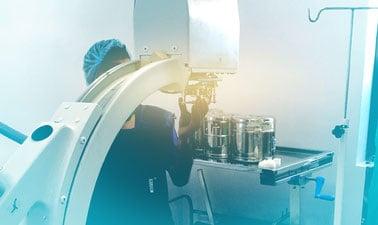
Understand the working of biomedical devices that are frequently used in a hospital setting. Develop the skills required to effectively maintain and troubleshoot hospital-based devices to increase their availability and usage in hospitals

Class Deals by MOOC List - Click here and see EdX's Active Discounts, Deals, and Promo Codes.

Maintaining and troubleshooting sophisticated medical instruments is not an easy task. In order to deliver effective care, the technician requires the knowledge of different aspects of biology and engineering. The different devices work in so many different ways and the literature about repair and troubleshooting is often hard to come by. It can be quite frustrating to search for solutions every time the operator encounters a problem. There is added pressure because the availability of medical devices is critical for therapeutic and diagnostic care. The longer a device stays out of operation, the slower the hospital would be able to deliver care to the patients.
This course has been designed by the interdisciplinary collaboration of both TU Delft biomedical engineers as well as the local expertise of the medical technicians of the Nick Simons Institute in Nepal to help new and emerging biomedical engineers/technicians working in low-income hospitals to care for biomedical equipment.
This course provides a compilation of the techniques hospitals use to effectively maintain and troubleshoot the medical devices so that repair time is reduced and the availability and safety of the medical devices is improved. Completing this course adds a complementary skill set to prior competence of the learner to perform maintenance routines and diagnose problems in sophisticated equipment with care. A faster service routine will help smoothen the process flow of the hospital and help extend the care to more patients. On a personal level, the learner can rely on the knowledge gained from this course as ‘the blueprint’ for whenever they have to maintain/troubleshoot any medical device.
This course is part of the Biomedical Equipment: Repair, Maintenance and Healthcare Technology Management Professional Certificate.

What you'll learn

  • Understand the basics of a variety of commonly used diagnostic, therapeutic and laboratory instruments
  • Effectively maintain, troubleshoot and repair biomedical instruments
  • Sharpen the skill set of troubleshooting a biomedical instrument in a short period of time
  • Reduce the repair time and cost by using effective proven strategies and practices

Syllabus

Week 1:
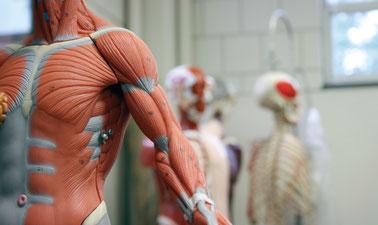
Basics of anatomy and physiology
Basic physical phenomena driving biomedical devices
The need for proper and effective maintenance
The need for swift and efficient troubleshooting

Week 2:
maintenance, troubleshooting, and repair of diagnostic instruments. (Patient monitors, X-ray, and digital radiography)

Week 3:
maintenance, troubleshooting, and repair of diagnostic instruments. (Ultrasonography, Otoscope)

Week 4:
maintenance, troubleshooting, and repair of therapeutic instruments. (Ventilators, Oxygen concentrators)

Week 5:
maintenance, troubleshooting, and repair of therapeutic instruments. (Electrosurgical units, suction machines, anesthesia machines, Operating Theatre lights)

Week 6:
maintenance, troubleshooting, and repair of laboratory instruments. (autoclave, centrifuge, analyzer and colorimeter)

Week 7:
maintenance, troubleshooting, and repair of laboratory instruments. (microscope, haematometer, electrolyte analyzer, incubator water bath)

Go to Class
MOOC List is learner-supported. When you buy through links on our site, we may earn an affiliate commission.

Related Courses

Voice Disorders: What Patients and Professionals Need to Know (Coursera) Coursera
Icahn School of Medicine at Mount Sinai

Voice Disorders: What Patients and Professionals Need to Know (Coursera)

Knowledge regarding vocal production physiology and management options for voice disorders have experienced rapid growth over the past 40 years. This growth has resulted in a knowledge gap amongst patients and practitioners. Entirely new subspecialties of laryngology under otolaryngology and vocology under speech-language pathology have developed in response to this gap. This MOOC (Massive Open Online Course) is designed to educated patients, allied healthcare providers, vocal trainers/coaches, general medical practitioners and otolaryngologists.

Jun 8th 2026
5-12 Weeks
Vital Signs: Understanding What the Body Is Telling Us (Coursera) Coursera
University of Pennsylvania

Vital Signs: Understanding What the Body Is Telling Us (Coursera)

The vital signs – heart rate, blood pressure, body temperature, respiration rate, and pain – communicate important information about the physiological status of the human body. In this six-part course we explore the anatomy and physiology underlying the vital signs so that you will develop a systematic, integrated understanding of how the body functions.

Jun 1st 2026
5-12 Weeks
Biomedical Equipment: A Practical Approach to Healthcare Technology Management (edX) EdX
Delft University of Technology,DelftX

Biomedical Equipment: A Practical Approach to Healthcare Technology Management (edX)

Enhance your knowledge and skills in effective methods of managing the lifespan of biomedical equipment in a limited-resource environment. With limited resources increasingly prevalent, healthcare technology management is often a challenge. Through this course we offer a practical approach to healthcare management that is tailored to this particular healthcare environment. The course will help you to manage uncertainties, defects and/or the unavailability of resources and personnel that may prevent proper and effective healthcare.

Feb 15th 2024
5-12 Weeks
Anatomy: Gastrointestinal, Reproductive and Endocrine Systems (Coursera) Coursera
University of Michigan

Anatomy: Gastrointestinal, Reproductive and Endocrine Systems (Coursera)

In this anatomy course, part of the Anatomy Specialization, you’ll learn about the various digestive, endocrine, and reproductive organs, their functions, and pathways of nerves and blood vessels serving these organs. Clinical correlations and vignettes will be used to highlight the importance of these anatomical structures and their relationships. Images and videos from cadaveric and artistic materials will be used to illustrate these concepts.

Jun 1st 2026
3 Weeks
Anatomy & Physiology: Support & Movement (Coursera) Coursera
Rice University

Anatomy & Physiology: Support & Movement (Coursera)

The second course begins the systems-based approach to human anatomy and physiology at the organ, organ system, and organism level. Three major body systems related to support and movement will be explored in detail: the skeletal and muscular systems. Course material will cover both the structure (anatomy) and function (physiology) of each system with direct application to human development and disease.

Jun 1st 2026
4 Weeks
Medical Terminology and the Human Body Fundamentals (Coursera) Coursera
MedCerts

Medical Terminology and the Human Body Fundamentals (Coursera)

In this Introduction to Medical Terminology and the Human Body course, you will learn about the medical language that is used to describe the human body. Throughout each Lesson, the roots of terms are explained to help students understand how medical terminology works in healthcare and to increase their knowledge and understanding of the material discussed.

Jun 8th 2026
4 Weeks
Biomaterials and Biofabrication: Design, Engineering and Innovation (edX) EdX
University of Bayreuth,BayreuthX

Biomaterials and Biofabrication: Design, Engineering and Innovation (edX)

Take our MOOC to expand your knowledge about biomaterials, biomedical engineering, additive manufacturing, tissue engineering and to obtain insights on the future of biofabrication. This MOOC will benefit individuals working in the biomedical sector to discover emerging trends and achieve their next career step.

Self Paced
Self-Paced
Anatomy of the Chest, Abdomen, and Pelvis (Coursera) Coursera
Yale University

Anatomy of the Chest, Abdomen, and Pelvis (Coursera)

Human structure is important to all of us as it has been for millennia. Artists, teachers, health care providers, scientists and most children try to understand the human form from stick figure drawings to electron microscopy. Learning the form of people is of great interest to us – physicians, nurses, physician assistants, emergency medical services personnel and many, many others. Learning anatomy classically involved dissection of the deceased whether directly in the laboratory or from texts, drawings, photographs or videos. There are many wonderful resources for the study of anatomy. Developing an understanding of the human form requires significant work and a wide range of resources.

Jun 8th 2026
4 Weeks
Biostatistics for Big Data Applications (edX) EdX
University of Texas Medical Branch

Biostatistics for Big Data Applications (edX)

Learn data analysis basics for working with biomedical big data with practical hands-on examples using R. This course provides a broad foundation of statistical terms and concepts as well as an introduction to the R statistical software package. The topics covered are fundamental components of biostatistical methods used in both omics and population health research.

No sessions Available
5-12 Weeks
Medical Neuroscience (Coursera) Coursera
Duke University

Medical Neuroscience (Coursera)

Medical Neuroscience explores the functional organization and neurophysiology of the human central nervous system, while providing a neurobiological framework for understanding human behavior. In this course, you will discover the organization of the neural systems in the brain and spinal cord that mediate sensation, motivate bodily action, and integrate sensorimotor signals with memory, emotion and related faculties of cognition. The overall goal of this course is to provide the foundation for understanding the impairments of sensation, action and cognition that accompany injury, disease or dysfunction in the central nervous system. The course will build upon knowledge acquired through prior studies of cell and molecular biology, general physiology and human anatomy, as we focus primarily on the central nervous system.

May 25th 2026
13-24 Weeks