Beneath the Blue: The Importance of Marine Sediments (FutureLearn)

Beneath the Blue: The Importance of Marine Sediments (FutureLearn)

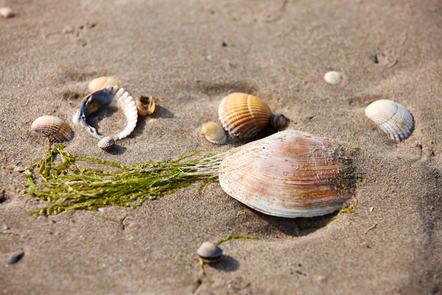
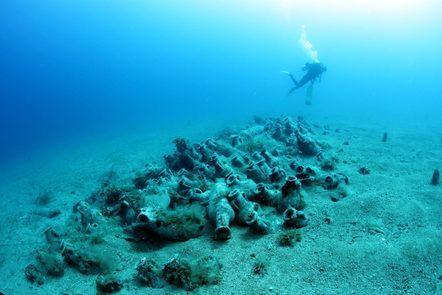
Understand the importance of our planet's seafloor and get an introduction to the exciting field of ocean science. Discover fascinating seafloor habitats and learn how humans affect them. Exactly what lies beneath our oceans? Why is the sea floor, and its marine sediments, so important? And how are humans affecting them? On this course you’ll answer these questions and more.

Class Deals by MOOC List - Click here and see FutureLearn's Active Discounts, Deals, and Promo Codes.

You will consider the importance of the seafloor and learn about its part in global ecological, chemical and physical processes. You will learn about the vital role that the seafloor plays in providing ecosystem services to society, the current rate at which humans are exploiting seafloor habitats and the need to conserve these systems.

What topics will you cover?

  • The composition and global distribution of marine sediments.
  • Biodiversity; how it is measured and how it has changed though geological time.
  • Scientific illustration and taxonomy (the classification of living organisms)
  • Defining and classifying functional groups.
  • How humans benefit from, and impact on, marine benthic ecosystem processes.

What will you achieve?
By the end of the course, you'll be able to...

  • Explain what biodiversity is and how it evolved over geological time
  • Discuss why biodiversity is important and how marine communities deliver important services that benefit humans.
  • Explore the diversity of marine sediments and how communities of organisms inhabit them.
  • Identify marine organisms using a taxonomic key
  • Discuss the challenges of measuring and quantifying biodiversity in marine environments
  • Demonstrate an understanding of functional groups
Go to Class
MOOC List is learner-supported. When you buy through links on our site, we may earn an affiliate commission.

Related Courses

Introduction to Biology: Ecology (Coursera) Coursera
Rice University

Introduction to Biology: Ecology (Coursera)

Ecology is all about connections. In this course, we’ll see how interdependent every living thing is and how people are impacting the natural world. Like all sciences, ecology isn’t just a list of known facts– it’s also a process. I love telling stories, and I’ve included many stories about how we’ve come to know what we know about ecology through observations and experiments.

Aug 3rd 2026
4 Weeks
Introduction to Environmental Science (edX) EdX
DartmouthX,Dartmouth College

Introduction to Environmental Science (edX)

A scientific study of the natural world and how it is influenced by people. Major topics include: food, energy, human population, biodiversity and global change. Environmental science is the study of patterns and processes in the natural world and their modification by human activity. To understand current environmental problems, we need to consider physical, biological and chemical processes that are often the basis of those problems.

Self Paced
4 Weeks
Ocean Science in Action: Addressing Marine Ecosystems and Food Security in the Western Indian Ocean (FutureLearn) FutureLearn
National Oceanography Centre

Ocean Science in Action: Addressing Marine Ecosystems and Food Security in the Western Indian Ocean (FutureLearn)

Explore how innovative marine technologies can tackle the challenges of the sustainable management of marine ecosystems. Discover the new technologies that can aid marine resource management. Journey to the Western Indian Ocean alongside experts at the UK’s National Oceanography Centre to learn how we can measure and monitor the oceans in order to better protect them.

Nov 1st 2021
4 Weeks
Environmental Humanities: Remaking Nature (FutureLearn) FutureLearn
UNSW Sydney - University of New South Wales

Environmental Humanities: Remaking Nature (FutureLearn)

Learn how the new Environmental Humanities field is shaping how we understand environmental issues, with this free online course. In Environmental Humanities: Remaking Nature, you’ll get a broad overview of an emerging area of interdisciplinary research that reframes contemporary environmental challenges using approaches from philosophy, literature, language, history, anthropology, cultural studies and the arts.

No sessions available
5-12 Weeks
Exploring Our Oceans (FutureLearn) FutureLearn
University of Southampton

Exploring Our Oceans (FutureLearn)

Explore the half of our world covered by deep ocean, and how our lives affect the hidden face of our planet. Discover how you can play a part in the safe keeping of the future of our ocean. What lies in the half of our world covered by water more than two miles deep? How are our everyday lives connected to the ocean depths, and what challenges and opportunities does this previously hidden realm hold for our future?

Nov 21st 2022
4 Weeks
Women in environmental biology (Coursera) Coursera
Universitat Autònoma de Barcelona

Women in environmental biology (Coursera)

Have you ever wondered how humans relate to other living beings and what do you need to know to be able to understand current environmental problems? Do you know that many of these researches and knowledge have been described by women? This course gives answers to these questions and it is addressed to anyone interested in the relationship between humans and other living beings, as well as all those concerned about the global change situation that the planet is suffering.

Jul 27th 2026
4 Weeks
AI and Climate Change (Coursera) Coursera
DeepLearning.AI

AI and Climate Change (Coursera)

In Course 2: AI and Climate Change, you will begin by learning the basics of anthropogenic climate change — why it is happening, its projected impacts, and how it is already driving extreme weather around the globe. You will then learn how machine learning techniques can lessen climate change’s impacts and help communities prepare for those that do occur.

Jul 27th 2026
4 Weeks