The Great Sustainability Transition: Global Challenges, Local Actions (FutureLearn)

Offered by Leiden University,
The Great Sustainability Transition: Global Challenges, Local Actions (FutureLearn)

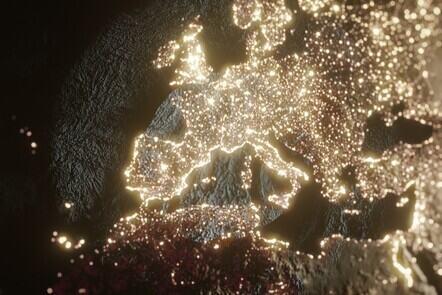
Discover how global environmental crises are connected, their impacts, and how to take action in your local community. Learn from experts in environmental science at Leiden University. We are living in an era of unprecedented environmental change. As a result, we are experiencing biodiversity loss, climate change, and overuse of freshwater resources, to name just a few. All of these affect fundamental ecosystem processes, causing change on a local and global scale. On this four-week course from Leiden University, you’ll learn how these huge environmental crises are interconnected and how they impact our planet.

Class Deals by MOOC List - Click here and see FutureLearn's Active Discounts, Deals, and Promo Codes.

By the end, you’ll be empowered to take action in your local environment by engaging in real-world activities within your community.

Understand the risk of biodiversity loss
You’ll start by examining the planetary boundaries and how we could exceed key boundaries, risking an increasingly uninhabitable planet.
Next, you’ll explore biodiversity to understand its value and threats. With this knowledge, you’ll learn more about the biodiversity in your community and how to promote it.

Explore climate breakdown and environmental change
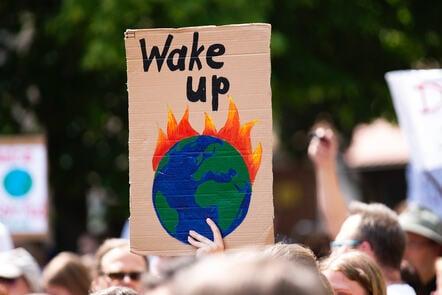
As you delve into the environmental changes happening to our planet, you’ll unpack the consequences of climate breakdown.
You’ll look at the big picture and learn how to debunk climate misinformation before exploring what you can do to take local action.

Learn how to take collective action to tackle big issues such as pollution
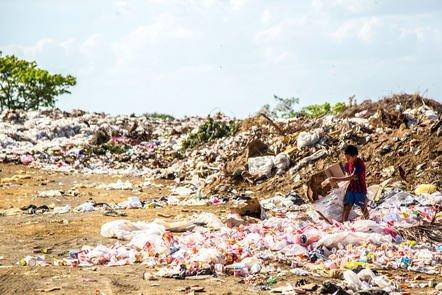
You’ll gain insights into how pollution affects the planet as you develop the skills to assess the different risks associated with this threat. This knowledge will help you understand how to take collective action against issues such as plastic pollution.
Finally, you’ll explore the global and local transitions needed for a better future. This knowledge will ensure you finish the course with the skills to tackle local issues in your community which will help have a global impact.

Syllabus

Week 1: Biodivesity
Week 2: Climate Breakdown
Week 3: Pollution
Week 4: The Great Transitions

What will you achieve?
By the end of the course, you‘ll be able to...

  • Explain Planetary Boundaries and their link to affluence and population
  • Reflect on the intrinsic value of biodiversity and ecosystem services
  • Describe the basic mechanics of climate change and the extreme effects of climate change on human systems
  • Explore the known and unknown solutions to climate change with the concepts of mitigation, adaptation and suffering
  • Describe the different kinds of pollution and provide details on effect and impact
  • Apply what was learned to local issues, through analysis of local, community, national and global levels
  • Explain possible reasons for why we have not acted faster to climate change
  • Explore solutions to common action problems

Who is the course for?
This course is designed for anyone interested in the global environmental crises and how to translate this to a local setting.
You’ll learn, skill up, and become engaged with important environmental issues.
Go to Class
MOOC List is learner-supported. When you buy through links on our site, we may earn an affiliate commission.

Related Courses

Climate Solutions: India (FutureLearn) FutureLearn
University of Edinburgh,Climate Solutions,Edinburgh Climate Change Institute(ECCI)

Climate Solutions: India (FutureLearn)

Explore the effects of climate change and how to address the biggest challenge to our civilisation in the 21st century. Tackle the climate emergency in India. Climate Change is one of the greatest threats we face. The impacts of climate change are already being felt around the world, affecting both natural and human systems, and these impacts are expected to become greater in years to come.

Self Paced
5-12 Weeks
Teaching Climate and Sustainability in Primary Schools: An Outdoor Learning Approach (FutureLearn) FutureLearn
University of Reading

Teaching Climate and Sustainability in Primary Schools: An Outdoor Learning Approach (FutureLearn)

Build your confidence teaching climate and sustainability outdoors and develop ideas to implement in your school. Discover the importance of climate education and outdoor learning. Children around the world are demanding comprehensive and up-to-date education on climate and sustainability. Most teachers agree climate change education should be compulsory in schools, yet many feel ill-equipped to teach it.

Self Paced
2 Weeks
IUCN Red List of Ecosystems: The Global Standard for Assessing Risks to Ecosystems (FutureLearn) FutureLearn
Deakin University

IUCN Red List of Ecosystems: The Global Standard for Assessing Risks to Ecosystems (FutureLearn)

This course introduces the IUCN Red List of Ecosystems and its successful use and policy impact through real-world case studies. Learn how the Red List of Ecosystems is helping to sustain global biodiversity. Nature is under threat around the world. Understanding where ecosystems are at greatest risk allows us to act to sustain species and ecosystems.

Self Paced
2 Weeks
Medical Equipment Donations to Low Resource Settings (FutureLearn) FutureLearn
St George's, University of London

Medical Equipment Donations to Low Resource Settings (FutureLearn)

Learn how to plan a medical equipment donation to a low-resource setting that's appropriate, sustainable, and has a real impact. Navigate the pitfalls of planning and organising donations of medical equipment. Unavailability of essential clinical equipment can be a serious problem in low-resource settings. On this course, developed in collaboration with the Tropical Health Education Trust (THET), you‘ll learn best practices in planning a donation of medical equipment to a low-resource setting.

Self Paced
2 Weeks
Sustainable Cities: Governing Urban Adaptation Under Climate Change (FutureLearn) FutureLearn
University of Groningen,Global Center on Adaptation

Sustainable Cities: Governing Urban Adaptation Under Climate Change (FutureLearn)

Discover expert governance strategies for preparing urban areas to face the challenges posed by climate change. Learn how cities can successfully adapt to environmental change. In this course, you will investigate how governance strategies and policies for making cities more sustainable and resilient in the face of increasing climate risks can be financed and implemented.

Self Paced
3 Weeks
Transforming Urban Mobility: Introduction to Transport Planning for Sustainable Cities (FutureLearn) FutureLearn
University College London,Transforming Urban Mobility Initiative - TUMI,GIZ

Transforming Urban Mobility: Introduction to Transport Planning for Sustainable Cities (FutureLearn)

Discover the different dimensions of sustainable urban mobility, including the Avoid-Shift-Improve (ASI) framework. Good transport systems and projects are critical to the development of environmentally sustainable and socially inclusive cities. This course considers the impacts of motorisation, our current unsustainable travel patterns, and the framework for changing to sustainable urban mobility.

Self Paced
4 Weeks
Environmental Challenges: Scarcity and Conflict in the Natural Environment (FutureLearn) FutureLearn
University of Leeds

Environmental Challenges: Scarcity and Conflict in the Natural Environment (FutureLearn)

War and conflict can severely disrupt the governance of the environment. What is the impact on both people and the environment? This course explores three aspects of conflict and resource scarcity, and applies these to explore decision making and negotiation skills. Human conflict has both short and long term effects on the natural world.

Self Paced
2 Weeks
Environmental Challenges: Rights and Values in Ecosystem Services (FutureLearn) FutureLearn
University of Leeds

Environmental Challenges: Rights and Values in Ecosystem Services (FutureLearn)

Differences in values can create conflict. How can we learn to manage our natural resources with integrity? Humans are very innovative, but we’ve also created many ecological problems. We’ve changed the face of the planet, fished the oceans, and we’re causing climate change through emissions. Designing institutional arrangements that recognise ecosystem services in the values we place upon natural systems will be an important way to help governing the planet, for both present and future generations.

Self Paced
2 Weeks
Climate Change and Resilience in Food Systems (FutureLearn) FutureLearn
University of Leeds,Africap

Climate Change and Resilience in Food Systems (FutureLearn)

Learn new research-led strategies designed to mitigate the effects of climate change on agriculture and food systems. Learn about the effects of climate change and how to build resilience in agriculture and food systems. Even small climate changes can have large-scale consequences in agriculture and food systems with devastating effects for the people and their economies. On this course, you will learn strategies designed to mitigate the impact of climate change, develop resilient food systems and create sustainable development in local communities.

Self Paced
2 Weeks
Ecology and Wildlife Conservation (FutureLearn) FutureLearn
University of Leeds

Ecology and Wildlife Conservation (FutureLearn)

Discover ecology and how we can protect wildlife and conserve the natural world. Do you worry about the effects of climate change on nature? This course will show you how the work of conservation biologists and study of ecosystems can help with conserving the world’s biodiversity. You’ll explore the impact that the presence of wind farms on populations of seabirds and understand how the use of advanced techniques can be used to study different populations.

Self Paced
2 Weeks