Causes of Climate Change (FutureLearn)

Offered by University of Bergen,
Causes of Climate Change (FutureLearn)

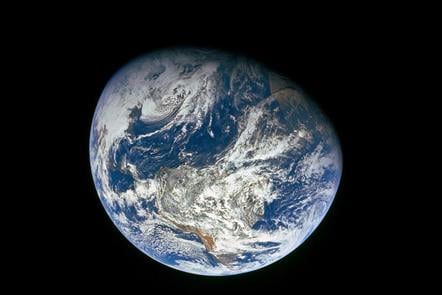
Learn the physical processes behind climate variation around the world to better understand the causes of climate change. Uncover the past, present, and future of the causes of climate change. This free online course provides the basis for understanding the underlying physical processes governing climate variations in the past, present and future.

Class Deals by MOOC List - Click here and see FutureLearn's Active Discounts, Deals, and Promo Codes.

This free online course provides the basis for understanding the underlying physical processes governing climate variations in the past, present and future.
On this course, you’ll explore the main external forcing mechanisms such as the sun, volcanoes, and changes in greenhouse gasses and aerosols, which can contribute to changing the global energy budget and initiate climate variations.
You’ll also consider the role of internal feedback mechanisms and the energy transport in the atmosphere and ocean, in order to understand regional variations in climate.
You’ll gain an in-depth understanding of the complexities of the climate system, and be able to put the recently observed, man-made changes in climate in the context of past natural changes.
To uncover the true causes of climate change, you’ll learn with experts from The University of Bergen. They host the Bjerknes Centre for Climate Research, the largest centre for natural science-based climate research in Scandinavia.

What topics will you cover?

  • Radiative forcing
  • Climate feedbacks and heat transport
  • Past changes in climate and ocean heat uptake

What will you achieve?
By the end of the course, you'll be able to...

  • Reflect on the complexities of the climate system, and be able to put the recently observed, man-made changes in climate in the context of past natural changes.
  • Explain the underlying physical processes governing climate variations in the past, present and future.
  • Describe the role of atmosphere and ocean energy transport and their impact on regional variations in climate.
  • Summarise the main feedback mechanisms in the climate system.
  • Describe the role of ocean heat uptake for the timescales of response to changes in climate forcing.

Who is the course for?
This course is intended for those with an interest in the physical aspects of climate variations and change.
It does not require any previous experience of studying the causes of climate change, but high school level mathematics and physics is recommended.

Go to Class
MOOC List is learner-supported. When you buy through links on our site, we may earn an affiliate commission.

Related Courses

Bushfires: Response, Relief and Resilience (FutureLearn) FutureLearn
The University of Newcastle, Australia

Bushfires: Response, Relief and Resilience (FutureLearn)

Discover strategies in preparing for, responding to and recovering from bushfire natural disasters from the world's leading minds. This course is significant for individuals and the public interested in gaining knowledge about reducing their vulnerability to bushfires, effective coping strategies in the aftermath of a bushfire event and building resilience in the face of future disasters.

Aug 24th 2020
3 Weeks
Planet Earth: Understanding and Protecting our Environment (FutureLearn) FutureLearn
University of Leeds

Planet Earth: Understanding and Protecting our Environment (FutureLearn)

Learn about the physical geography of Earth and discover how to use this knowledge to protect our natural environment. Discover the Earth’s natural systems and how human activity affects them. On this two-week course from the University of Leeds, you will discover the processes of the hydrosphere, the geosphere, and the biosphere and explore the impact of human activity and climate change on our planet.

Feb 16th 2026
2 Weeks
Climate Intelligence: Using Climate Data to Improve Business Decision-Making (FutureLearn) FutureLearn
University of Reading

Climate Intelligence: Using Climate Data to Improve Business Decision-Making (FutureLearn)

Build climate resilience in your business as you learn how climate intelligence helps make decisions that mitigate risks. How exposed is your organisation to climate risk? Climate and weather projections hold the data that businesses need both to evaluate the risk climate change poses and to mitigate that risk. However, interpreting this data can be challenging. On this two-week course, you’ll learn how to identify relevant and reliable climate data for your business and explore how that raw data can be converted into information that connects with the particular operational and financial decisions you face.

Jul 25th 2022
2 Weeks
Sustainable Cities: Governing Urban Adaptation Under Climate Change (FutureLearn) FutureLearn
University of Groningen,Global Center on Adaptation

Sustainable Cities: Governing Urban Adaptation Under Climate Change (FutureLearn)

Discover expert governance strategies for preparing urban areas to face the challenges posed by climate change. Learn how cities can successfully adapt to environmental change. In this course, you will investigate how governance strategies and policies for making cities more sustainable and resilient in the face of increasing climate risks can be financed and implemented.

Dec 6th 2021
3 Weeks
Green Travel and Climate Change: An Introduction to Low Carbon Road Transport (FutureLearn) FutureLearn
Cenex

Green Travel and Climate Change: An Introduction to Low Carbon Road Transport (FutureLearn)

Find out the impact of road transport on carbon emissions and climate change, and how low carbon transport technologies can help. Explore the role of low carbon transport technologies in tackling climate change. This course explores the key transport technologies, trends, and policies that are enabling a transition to low emission vehicles.

Aug 2nd 2021
4 Weeks
Monitoring Climate from Space (FutureLearn) FutureLearn
European Space Agency

Monitoring Climate from Space (FutureLearn)

Explore our planet from space and learn how Earth observation is used to monitor climate change, with this free online course. It is increasingly essential for us to study climate change across the planet at the highest level of detail possible. But how can we achieve such a comprehensive worldwide view?

No sessions available
5-12 Weeks
Global Shocks: How to Manage Change in the Global Business Environment (FutureLearn) FutureLearn
Auckland University of Technology - AUT

Global Shocks: How to Manage Change in the Global Business Environment (FutureLearn)

Learn how to analyse the global business environment and adapt to technological, environmental, and economic changes. Discover how the COVID-19 pandemic has changed global business. The COVID-19 pandemic has highlighted the many ways that global business intersects our lives and, in many ways, seems to have ‘rewritten’ the rules of global business entirely. This course from the Auckland University of Technology (AUT) will help you understand and adapt to changes in the global business environment.

Jun 27th 2022
4 Weeks
Teaching Climate Change (FutureLearn) FutureLearn
National STEM Learning Centre,ESERO-UK,ESERO Ireland

Teaching Climate Change (FutureLearn)

Learn how to teach climate change to students aged 11-14 years old and engage them with the ESA Climate Detectives project. Teach the causes of climate change, and how we can mitigate global warming. On this course, you’ll learn how to successfully teach climate change to secondary school students aged 11-14 years old. You’ll learn about the key facts behind the climate crisis, before going on to develop practical learning activities for your pupils.

May 9th 2022
3 Weeks
Learning for a Sustainable Future (FutureLearn) FutureLearn
University of Edinburgh,British Council,Learning for a Sustainable Scotland

Learning for a Sustainable Future (FutureLearn)

Join a personal and professional global learning journey towards a sustainable future. What on Earth could be more important? Grow your knowledge of sustainability. Climate change, gender equality, health, social equity, and inclusion are issues that affect us all, impacting human well-being and economic stability. How to live a sustainable life affects – and connects - us all.

Mar 13th 2023
5-12 Weeks