Monitoring Climate from Space (FutureLearn)

Offered by European Space Agency,
Monitoring Climate from Space (FutureLearn)

Explore our planet from space and learn how Earth observation is used to monitor climate change, with this free online course. It is increasingly essential for us to study climate change across the planet at the highest level of detail possible. But how can we achieve such a comprehensive worldwide view?

Class Deals by MOOC List - Click here and see FutureLearn's Active Discounts, Deals, and Promo Codes.

Introducing Earth observation
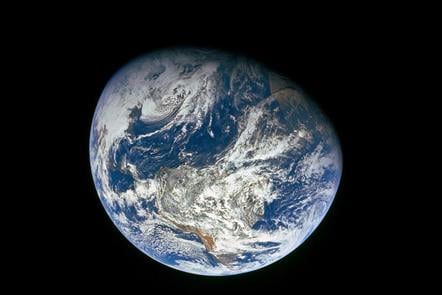
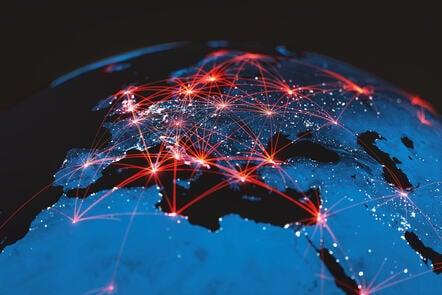
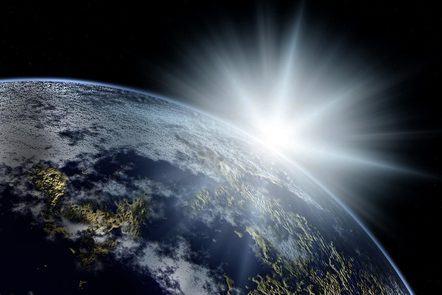
Seeing the Earth from space allows us to gain this global perspective. By using Earth observation techniques, we can now monitor global environmental change on a scale that has never before been possible.

Earth observation has not only revolutionised the way we perceive our home, but changed the way we understand our profound impact on the environment. This technology has brought on a transformation in the way we observe, monitor and study our planet.

Learn with experts from ESA and leading European research centres
In this free online course, you will join leading experts and scientists from ESA and key European research centres, to explore the science that underpins Earth observation.
We will look at recent and current satellite missions that are providing an archive of essential data; and find out how this data is used in local and international policy and planning.
The course consists of five themed weeks:

Week 1 - Observing Climate Change from Space
What is Earth observation? How do we observe the Earth with satellites? And what role does Earth observation play in climate policy and planning?

Weeks 2 & 3 - Earth Observation Techniques and Technology
How do we use different types of mission, instrumentation and data to study changes to our atmosphere, land, oceans and ice?

Week 4 - Earth Observation in Action
How does Earth observation help us set policy; plan for climate risk, resilience and adaptation; and manage resources and biodiversity?

Week 5 - Managing Earth Observation Data
How do we make sense of the large amount of data produced by Earth observation? Can crowdsourcing and citizen science play a role in developing climate change models?
Go to Class
MOOC List is learner-supported. When you buy through links on our site, we may earn an affiliate commission.

Related Courses

Learn About Weather (FutureLearn) FutureLearn
University of Exeter,Royal Meteorological Society - RMetS,Met Office

Learn About Weather (FutureLearn)

Explore all things weather - from storms to climate - with this course that looks at the basic processes behind the weather. Ever wondered what the difference between a hurricane, cyclone and typhoon is? Or what a ‘front’ is? Or asked how weather warnings are issued? Maybe you’ve even spoken about the weather today. The weather is one of the most popular topics of conversation, yet not many of us actually know how it works.

Sep 27th 2021
4 Weeks
Climate Solutions: India (FutureLearn) FutureLearn
University of Edinburgh,Climate Solutions,Edinburgh Climate Change Institute(ECCI)

Climate Solutions: India (FutureLearn)

Explore the effects of climate change and how to address the biggest challenge to our civilisation in the 21st century. Tackle the climate emergency in India. Climate Change is one of the greatest threats we face. The impacts of climate change are already being felt around the world, affecting both natural and human systems, and these impacts are expected to become greater in years to come.

Self Paced
5-12 Weeks
Come Rain or Shine: Understanding the Weather (FutureLearn) FutureLearn
University of Reading

Come Rain or Shine: Understanding the Weather (FutureLearn)

Understand and explore the physical processes behind the weather. Weather affects our lives almost every day through what we wear, what we eat and what we do. But why is it rainy, windy or sometimes even sunny? Explore some of the physical processes driving UK weather systems and get hands on in the world of weather with practical activities and fieldwork.

Self Paced
3 Weeks
Artificial Intelligence (AI) for Earth Monitoring (FutureLearn) FutureLearn
EUMETSAT,Copernicus Atmosphere Monitoring Service - CAMS,European Centre for Medium-Range Weather Forecasts - ECMWF,Mercator Ocean International - MOi,European Environment Agency - EEA

Artificial Intelligence (AI) for Earth Monitoring (FutureLearn)

Explore how artificial intelligence (AI) and machine learning (ML) technologies are helping to advance Earth monitoring. Learn to use AI and ML to improve the use of big data in Earth Monitoring. This is a fast-changing and critical time for Earth Observation (EO), especially for those involved in its use for climate and meteorology.

Oct 18th 2021
5-12 Weeks
Sustainable Food Teach-Out (FutureLearn) FutureLearn
University of Michigan

Sustainable Food Teach-Out (FutureLearn)

Discover the link between food and climate change and learn about the collective journey towards a sustainable global diet. Explore the importance of food choices in reducing greenhouse gas emissions. What we choose to eat matters. Did you know that a quarter of all greenhouse gas emissions come from food and agricultural systems? One way each and every one of us can reduce our impact on the environment is to change what is on the end of our forks.

Nov 1st 2021
2 Weeks
Green Travel and Climate Change: An Introduction to Low Carbon Road Transport (FutureLearn) FutureLearn
Cenex

Green Travel and Climate Change: An Introduction to Low Carbon Road Transport (FutureLearn)

Find out the impact of road transport on carbon emissions and climate change, and how low carbon transport technologies can help. Explore the role of low carbon transport technologies in tackling climate change. This course explores the key transport technologies, trends, and policies that are enabling a transition to low emission vehicles.

Aug 2nd 2021
4 Weeks
The Great Sustainability Transition: Global Challenges, Local Actions (FutureLearn) FutureLearn
Leiden University

The Great Sustainability Transition: Global Challenges, Local Actions (FutureLearn)

Discover how global environmental crises are connected, their impacts, and how to take action in your local community. Learn from experts in environmental science at Leiden University. We are living in an era of unprecedented environmental change. As a result, we are experiencing biodiversity loss, climate change, and overuse of freshwater resources, to name just a few. All of these affect fundamental ecosystem processes, causing change on a local and global scale. On this four-week course from Leiden University, you’ll learn how these huge environmental crises are interconnected and how they impact our planet.

Jan 16th 2023
4 Weeks
How to Measure, Reduce, and Offset your Company’s Carbon Footprint (FutureLearn) FutureLearn
BIMA,MSQ

How to Measure, Reduce, and Offset your Company’s Carbon Footprint (FutureLearn)

Help tackle climate change with this guide to carbon footprint measurement, offsetting, and reduction strategies for your company. Explore the different carbon footprint modelling tools No matter how many green practices you have in place, companies still produce at least some carbon in their operations.

Sep 6th 2021
5-12 Weeks
Planet Partners: Tackling the Climate Crisis Together (FutureLearn) FutureLearn
University of Reading

Planet Partners: Tackling the Climate Crisis Together (FutureLearn)

Investigate the impact of climate change, the research being done to tackle it, and what you can do to take meaningful action. Explore the different areas affected by climate change. The impacts of climate change are being felt worldwide and across many areas of life. This includes our food, our physical and mental health, where and how we live, wildlife and environmental systems, and political direction.

Self Paced
2 Weeks
The Challenge of Global Water Security (FutureLearn) FutureLearn
Cardiff University

The Challenge of Global Water Security (FutureLearn)

An introduction to the challenges of water security on a local and global scale. How do we achieve water security for everyone? Over the next 30 years it is estimated that 80% of the world’s population will live in areas with high levels of water scarcity. How do we manage this so that we can ensure global water security for both people and ecosystems?

Self Paced
4 Weeks