Introduction to Biology: Ecology (Coursera)

Offered by Rice University,
Introduction to Biology: Ecology (Coursera)

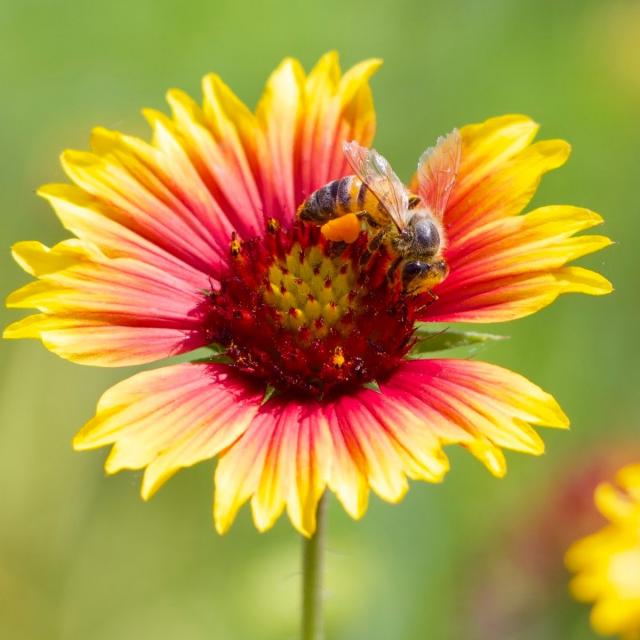
Ecology is all about connections. In this course, we’ll see how interdependent every living thing is and how people are impacting the natural world. Like all sciences, ecology isn’t just a list of known facts– it’s also a process. I love telling stories, and I’ve included many stories about how we’ve come to know what we know about ecology through observations and experiments.

Class Deals by MOOC List - Click here and see Coursera's Active Discounts, Deals, and Promo Codes.

Course 1 of 3 in the Introduction to Biology: Ecology, Evolution, & Biodiversity Specialization.

Syllabus

WEEK 1
Welcome to Introduction to Biology - Ecology
Module 1: What is Ecology?
In this module, we will learn about the goals of the science of ecology and some of the ways in which ecology can be applied to help people.
Module 2: Community Ecology
In this module, we will Learn about the factors that influence the distribution of life on Earth, some of the approaches that ecologists use to study ecological communities, and how the concept of an ecological niche can be used to understand the outcome of competition between species.

WEEK 2
Module 3: Island Biogeography
In this module, we will learn about the development of the equilibrium theory of island biogeography and how it can be applied both to real islands and to protected areas.
Module 4: Species Interactions
In this module, we will learn about the various ways that species interact with one another, the role of keystone species in natural ecosystems, and how disturbances like floods and fires affect ecological communities.

WEEK 3
Module 5: Population Ecology
In this module, we will learn how ecologists estimate population sizes of wild animals, the factors that affect population size in animals and people, and the history and recent trends in human population growth.
Module 6: Conservation Biology
In this module, we will learn about the major threats to living species and the impacts of habitat loss, invasive species, and climate change on the natural world.

WEEK 4
Module 7: The Future of the Biosphere
In this module, we will learn about the current declines in biodiversity and how biodiversity loss affects ecosystems and people.
Final Assessment and Course Summary
Go to Class
MOOC List is learner-supported. When you buy through links on our site, we may earn an affiliate commission.

Related Courses

Les transitions énergétique-écologiques dans les pays du Sud (Coursera) Coursera
École normale supérieure

Les transitions énergétique-écologiques dans les pays du Sud (Coursera)

Ce MOOC co-produit par l'Agence Française de Développement et l'ENS se situe à la confluence du développement des pays du Sud et le développement durable. Il a : une dimension macroéconomique et financière portée notamment par Gael Giraud et Alain Grandjean en tant qu’intervenants; une dimension écologique et climatique portée notamment par David Claessen et les intervenants de l’ENS, et une dimension de focus sur les pays du Sud portée notamment par les intervenants de l’AFD.

Jun 22nd 2026
5-12 Weeks
Dino 101: Dinosaur Paleobiology (Coursera) Coursera
University of Alberta

Dino 101: Dinosaur Paleobiology (Coursera)

Dino 101: Dinosaur Paleobiology is a 12-lesson course teaching a comprehensive overview of non-avian dinosaurs. Topics covered: anatomy, eating, locomotion, growth, environmental and behavioral adaptations, origins and extinction. Lessons are delivered from museums, fossil-preparation labs and dig sites. Estimated workload: 3-5 hrs/week.

Jun 27th 2026
5-12 Weeks
The Science of the Solar System (Coursera) Coursera
Caltech

The Science of the Solar System (Coursera)

Learn about the science behind the current exploration of the solar system in this free class. Use principles from physics, chemistry, biology, and geology to understand the latest from Mars, comprehend the outer solar system, ponder planets outside our solar system, and search for habitability in our neighborhood and beyond. This course is generally taught at an advanced level assuming a prior knowledge of undergraduate math and physics, but the majority of the concepts and lectures can be understood without these prerequisites.

Jun 22nd 2026
5-12 Weeks
Introduction to Biology: Evolution (Coursera) Coursera
Rice University

Introduction to Biology: Evolution (Coursera)

Evolution is one of the most interesting fields within biology, and one that’s central to a complete understanding of modern biology. We begin by tracing how Charles Darwin developed a theory of evolution by natural selection and the many ways that biologists have advanced the science of evolution since his lifetime. We then go on to learn about the many applications of evolutionary biology to our everyday lives.

Jun 22nd 2026
4 Weeks
Western Religions & Ecology (Coursera) Coursera
Yale University

Western Religions & Ecology (Coursera)

At first glance the fields of religion and ecology may seem and unlikely pairing, but a deeper consideration reveals the two have a great deal to contribute to one another and are indeed inextricably linked. Religions recognize the unity and interdependence of humans with nature. Ecological sciences affirm this deep interconnection with the natural world. This partnership can inspire work for the wellbeing of the Earth community

Jun 22nd 2026
5-12 Weeks
Bugs 101: Insect-Human Interactions (Coursera) Coursera
University of Alberta

Bugs 101: Insect-Human Interactions (Coursera)

Of all the animals on earth, which are the strongest for their size? What about the fastest? Who were the first animals to evolve flight? Insects take all of these titles and more! As the most abundant animals on the planet, insects and other arthropods affect our lives in so many ways. From beneficial interactions like pollination and biological pest control, to the transmission of life threatening diseases; this course will teach you about the big ways that these little arthropods impact our lives.

Jun 22nd 2026
13-24 Weeks
South Asian Religions & Ecology (Coursera) Coursera
Yale University

South Asian Religions & Ecology (Coursera)

At first glance the fields of religion and ecology may seem and unlikely pairing, but a deeper consideration reveals the two have a great deal to contribute to one another and are indeed inextricably linked. Religions recognize the unity and interdependence of humans with nature. Ecological sciences affirm this deep interconnection with the natural world. This partnership can inspire work for the wellbeing of the Earth community

Jun 22nd 2026
5-12 Weeks
The Worldview of Thomas Berry: The Flourishing of the Earth Community (Coursera) Coursera
Yale University

The Worldview of Thomas Berry: The Flourishing of the Earth Community (Coursera)

Thomas Berry (1914-2009) was a historian of world religions and an early voice awakening moral sensibilities to the environmental crisis. He is known for articulating a “new story” of the universe that explores the implications of the evolutionary sciences and cultural traditions for creating a flourishing future. This course investigates Berry’s life and thought in relation to the Journey of the Universe project.

Jun 22nd 2026
5-12 Weeks
Biosphere 2 Science for the Future of Our Planet (Coursera) Coursera
University of Arizona

Biosphere 2 Science for the Future of Our Planet (Coursera)

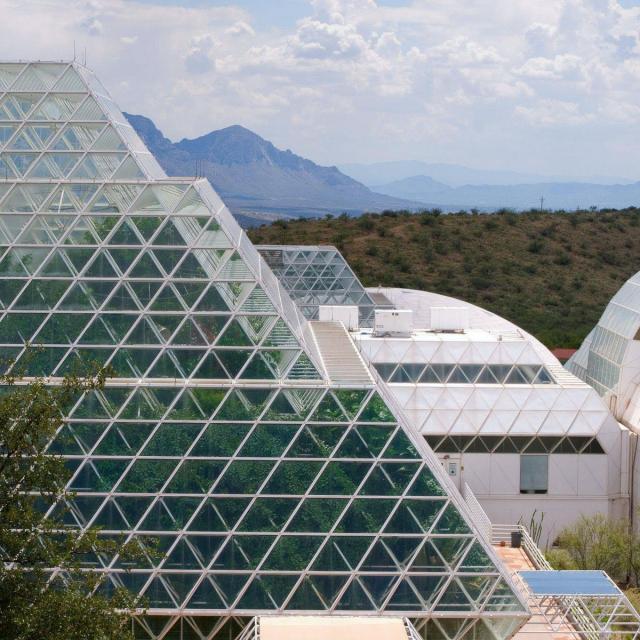
Are you ready to take an incredible journey around Planet Earth and beyond? In this course, you will delve into a world of innovative science and learn from a team of Biosphere 2 and University of Arizona researchers. From plants and soils, to oceans and rainforests, the Moon, Mars, and more, this course is an exciting opportunity for anyone interested in science and Earth stewardship.

Jun 22nd 2026
5-12 Weeks
Environmental Science (Coursera) Coursera
Dartmouth College

Environmental Science (Coursera)

The Introduction to Environmental Science course explores the field of environmental science and encourages participants to understand how environmental scientists think. It addresses some important questions such as: 1. What is the difference between environmental science and environmental studies? 2. How do both differ from environmentalism? 3. Why is energy so important in environmental science? 4. What do you mean by biodiversity?

Jun 22nd 2026
4 Weeks
Agroforestry III: Principles of Plant and Soil Management (Coursera) Coursera
University of Florida

Agroforestry III: Principles of Plant and Soil Management (Coursera)

Agroforestry III: Principles of Plant and Soil Management is a detailed review of fundamental principles and best practices for successful agroforestry projects through understanding plant and soil interactions. This interdisciplinary module, presented by leading experts in the field, is the third in the five-module course covering the various aspects of agroforestry including the global distribution of the practices, their underlying principles, and major scientific advances during the past nearly five decades.

Jun 22nd 2026
3 Weeks